
Global leadership examples are real-world instances of executives who successfully navigate cross-cultural complexities to drive international growth and innovation. Key examples include Satya Nadella of Microsoft, recognized for fostering a culture of empathy, and Mary Barra of General Motors, praised for steering a legacy company through a major technological transition toward electric vehicles.
In 2025, the global business world is filled with new challenges and major opportunities. Technology is advancing quickly, especially in areas like AI and fintech. At the same time, global politics and customer needs are changing. These shifts place more pressure on leaders than ever before. In this fast-moving environment, it’s not enough to simply react. True leaders must look ahead, innovate, and guide their companies through complex situations with a clear vision.
At EnterpriseZone.cc, we study the strategies of the world’s most influential leaders. This article highlights 7 powerful global leadership examples. These individuals are not just adapting to change; they are actively shaping their industries. By looking at how they handle innovation, culture, and tough decisions, we can find useful lessons. This provides a clear guide for executives wanting to scale their careers and businesses in 2025 and beyond.
Before we dive into these examples, it is important to build a solid foundation. We will first outline the key principles of effective global leadership in today’s world. This will provide the context needed to understand the real impact these leaders have.
What Defines Effective Global Leadership in the Modern Era?
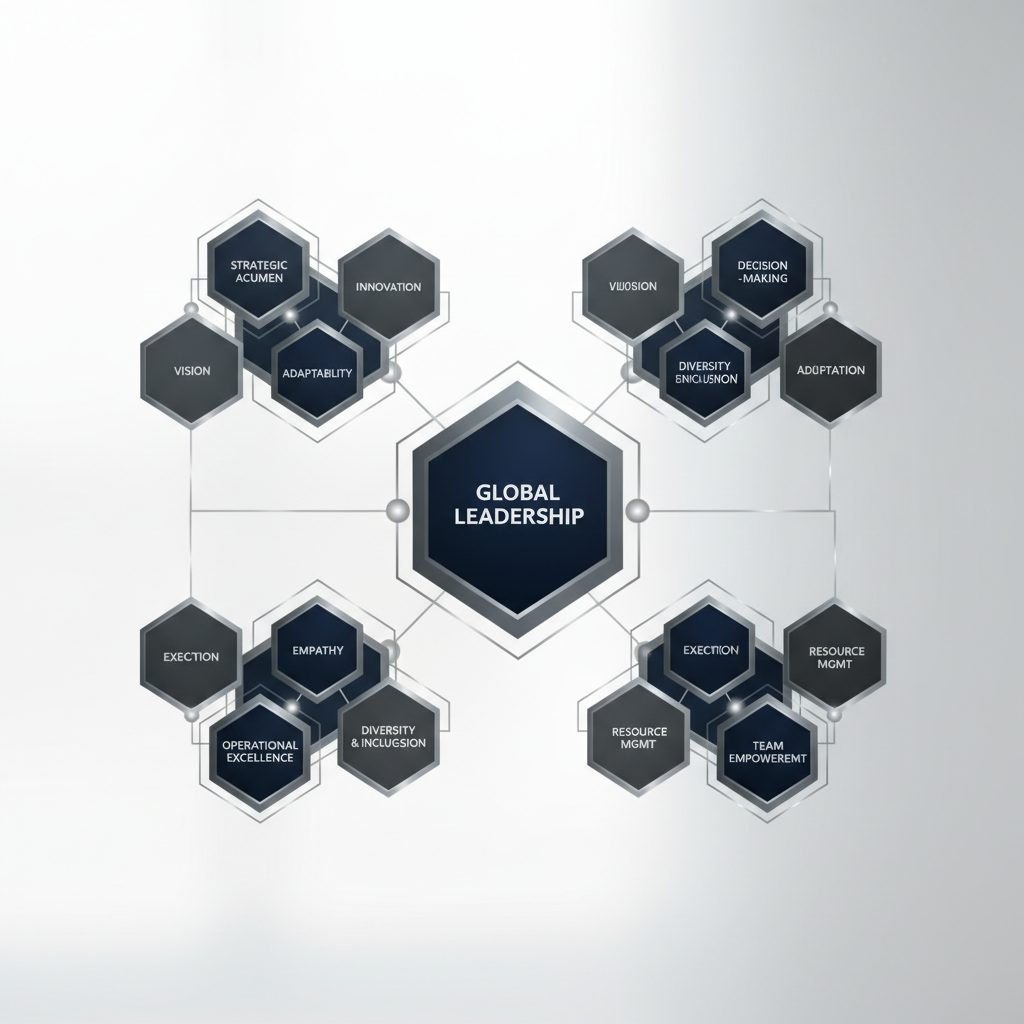
The modern world is changing quickly. Technology, politics, and society’s expectations are all shifting. This means leadership must change too. The old command-and-control style no longer works. To lead well in 2025 and beyond, leaders need a smart mix of future planning, deep empathy, and a real commitment to sustainable growth.
At EnterpriseZone.cc, we study how top executives handle these complex challenges. We’ve learned that the best global leaders do more than just run a good business. They connect with people from different cultures, drive meaningful innovation, and follow strong ethical principles. This big-picture view is key to growing your career and your company in today’s fast-paced world.
Agility and Adaptability in a Volatile World
The global business world is always changing. Political tensions, new technology, and economic uncertainty mean leaders must adapt quickly. Good global leaders are agile. They can see disruptions coming and adjust their plans ahead of time.
- Strategic Foresight: They look ahead for new risks and opportunities. This means they track major economic trends and new technologies.
- Organizational Resilience: Building strong teams and systems is essential. This helps the business keep running, even during a global crisis.
- Continuous Learning: Leaders have a growth mindset. They know that yesterday’s solutions might not work today. This dedication to learning is key to long-term success. A recent study found that companies with agile leadership structures are 2.9 times more likely to outperform their competitors in times of crisis [1].
Empathy and Cultural Intelligence
To lead a global team and serve diverse customers, you need deep empathy. Understanding different cultures, ways of communicating, and what motivates people is not just a “soft skill.” It is a business must-have.
- Inclusive Leadership: Successful leaders create a workplace where everyone feels heard and valued. They build diverse teams on purpose to get a wider range of ideas.
- Cross-Cultural Communication: Handling language and cultural differences is key. It builds trust and makes global teamwork stronger.
- Stakeholder Centricity: Global leaders consider the impact of their decisions on all stakeholders. This includes employees, customers, communities, and shareholders.
Visionary Digital Fluency
The digital revolution is moving faster than ever. From AI to blockchain, new technologies are changing entire industries. Good global leaders don’t just use technology; they have a vision for how to apply it to their business.
- AI and Data-Driven Decision Making: Leaders use data analytics and AI to make smarter choices. This helps them create better strategies for their global business.
- Digital Transformation Catalyst: They lead the charge in bringing new technology to their company. This gives them an edge over competitors and improves how they work.
- Ethical Tech Stewardship: It’s vital to understand how new technology affects society. Leaders must guide their companies responsibly through these changes. By 2026, over 70% of global business leaders expect AI to completely change their industries, which means leaders must be comfortable with digital tools [2].
Principled Decision-Making and Ethical Governance
Global leaders are watched closely. Their decisions affect more than just the company’s finances. They also impact environmental, social, and governance (ESG) factors. Ethical leadership builds trust and ensures long-term success.
- ESG Integration: Leaders make ESG factors a central part of their business plan. This shows they are committed to running their business responsibly.
- Transparency and Accountability: Operating with integrity is non-negotiable. Leaders uphold high standards of ethical conduct in all global dealings.
- Long-Term Value Creation: Putting sustainable growth before short-term profits is key. This attracts smart investors and helps keep the best employees.
Fostering a Culture of Innovation and Resilience
Innovation is essential for any global company. Leaders need to create a culture where people can experiment. Setbacks should be treated as chances to learn. This builds organizational resilience.
- Empowering Experimentation: Leaders encourage smart risks and support new ideas. This leads to major progress and helps the company stay competitive.
- Learning from Failure: They create a safe space for teams to learn from mistakes. This prevents stagnation and promotes continuous improvement.
- Inspiring Vision: Good leaders share a clear and exciting vision for the future. This inspires teams to work together toward big goals, even when things are tough.
In short, effective global leadership in the modern era combines all these skills. A great leader must be a strategist, an empath, a tech expert, and an ethical guide all at once. As we explore the 7 Global Leadership Examples Redefining Business Strategy in 2025, you will see how these principles create real, powerful business results. Develop these skills to grow your career and make a lasting impact on the world.
7 Actionable Global Leadership Examples for Executives
Satya Nadella (Microsoft): Leading with Empathy and Cultural Intelligence
Satya Nadella’s time at Microsoft marks a big change. He moved the company from a “know-it-all” to a “learn-it-all” culture [3]. This shift focuses on empathy and a growth mindset. Nadella knew that company culture affects market success. His leadership shows that empathy drives new technology and market leadership.
Strategic Takeaways for Executives:
- Cultivate a Growth Mindset: Encourage your teams to always learn and adapt. This drives innovation.
- Prioritize Empathy in Leadership: Understand the needs of employees and customers. This builds trust and stronger relationships.
- Foster Cultural Intelligence: Recognize and value different viewpoints. This improves problem-solving and helps the company grow worldwide.
Actionable Insight for 2025: Leaders must use AI ethically. Nadella supports AI’s potential but stresses using it responsibly. His approach guides how Microsoft develops AI tools to make sure they help society [4]. Executives should do the same. They can create clear ethical rules for new technologies. This forward-thinking approach protects the company’s reputation and builds long-term customer loyalty.
Mary Barra (General Motors): Transforming a Legacy Industry with Forward-Thinking Strategy
Mary Barra is leading General Motors through a major shift to an all-electric future. She guides a complex and long-established industry. Her vision is not just about cars. It includes future transportation solutions [5]. Barra’s leadership shows bold decision-making. She proves that even big, old companies can move toward new technologies.
Key Lessons for Business Leaders:
- Embrace Disruptive Change: Be a leader in your industry’s transformation. Waiting can make you vulnerable.
- Invest Heavily in R&D: Put significant resources into new technologies. GM’s multi-billion-dollar EV investment shows this commitment [6].
- Reinvent Supply Chains: Change your current systems to work with new technologies. This helps operations run smoothly during a transition.
Actionable Insight for 2025: Executives in older industries must plan for the next decade. Barra’s bold plan to make GM all-electric by 2035 is a clear, ambitious goal. Leaders should also share a clear vision for the future. This motivates partners and helps attract the talented people needed for growth.
Jensen Huang (NVIDIA): Visionary Leadership in a High-Stakes Tech Race
Jensen Huang, co-founder and CEO of NVIDIA, is a visionary leader. He saw that GPUs could do much more than just graphics. This insight led NVIDIA to become a leader in AI and supercomputing [7]. Huang can predict future tech needs. This makes NVIDIA a key player in the 2025 digital world. His focus on core technologies creates a lasting impact.
Strategies for Cultivating Visionary Growth:
- Anticipate Future Trends: Invest in deep research that looks 5-10 years into the future.
- Build a Foundational Ecosystem: Create platforms and tools that help others innovate. NVIDIA’s CUDA platform is a perfect example.
- Maintain Agility and Focus: Quickly adapt to market changes while staying focused on your core technological strengths.
Actionable Insight for 2025: Leaders must build a company culture that rewards long-term vision. Huang often talks about NVIDIA’s long-term investments. Executives should encourage big, bold ideas. This leads to major breakthroughs, not just small improvements. It helps companies stay relevant in fast-moving areas like AI.
Tim Cook (Apple): Mastering Global Supply Chains and Principled Stances
Tim Cook, Apple’s CEO, is an expert in two key areas: global supply chains and principled leadership. His operational skill improved Apple’s production and delivery network to a very high level [8]. In addition, Cook has consistently stood up for privacy and human rights. He shows that strong values and strong business results can go together.
Lessons in Operational Excellence and Values-Based Leadership:
- Optimize Supply Chain Resilience: Use different suppliers and have backup plans. This lessens the impact of global problems.
- Integrate Ethics into Operations: Make sure your supply chain matches your company’s core values. Apple’s transparency reports show this commitment [9].
- Lead with Conviction: Speak out on important social and environmental issues. This strengthens your brand and attracts employees who share your values.
Actionable Insight for 2025: Executives must carefully check their supply chains for weak spots. Global events continue to put pressure on these systems. Cook’s focus on efficiency and ethics is a good model. Leaders should focus on making their operations both strong and principled. This builds brand value and trust with investors over the long run.
Ajay Banga (World Bank): Driving Global Economic Development with a New Vision
Ajay Banga is the President of the World Bank. He uses his deep business experience to tackle global problems. He wants to change how the bank fights poverty and climate change. Banga focuses on new funding methods and public-private partnerships [10]. He shows that a fresh viewpoint can energize a large global organization. His leadership focuses on practical solutions that can be scaled up.
Strategies for Impactful Global Initiatives:
- Leverage Cross-Sector Expertise: Combine ideas from business, government, and non-profits to create complete solutions.
- Innovate Financing Models: Find new ways to fund large projects. This often means mixing public and private money.
- Prioritize Sustainable Development: Make sure economic growth also protects the environment and is fair to all people.
Actionable Insight for 2025: Executives should look for ways their companies can help society. Banga’s work shows that global problems are all connected. Leaders can find business benefits in sustainability projects. These efforts appeal to customers who care about social issues. They also attract employees who want their work to have a purpose. This improves the brand and makes hiring easier.
Rosalind Brewer (formerly Walgreens): Championing Diversity and Inclusive Growth
Rosalind Brewer’s career, especially as CEO of Walgreens, shows the power of diversity and strong operations. She is a well-known supporter of inclusion in company leadership [11]. Brewer often says that diverse teams lead to better business results. Her leadership proves that focusing on DEI boosts both innovation and profits.
Building Diverse and Inclusive Organizations:
- Embed DEI into Core Strategy: Make diversity, equity, and inclusion a key part of your business plan, not just an HR task.
- Actively Mentor and Sponsor Diverse Talent: Create clear ways for people from underrepresented groups to get promoted.
- Measure and Report Progress: Track your DEI numbers openly. This makes people accountable and helps you keep getting better.
Actionable Insight for 2025: Leaders must do more than just meet diversity numbers. Brewer’s work shows the need for true inclusion. Executives should use full DEI plans. These plans should include fair hiring, equal chances for promotion, and a culture where everyone feels they belong. Diverse leadership teams perform better than teams where everyone is similar. They drive better innovation and understand the market more deeply [12].
Elon Musk (Tesla, SpaceX): Fostering a Culture of Radical Innovation and Resilience
Elon Musk of Tesla and SpaceX is known for bold innovation. He relentlessly pursues huge goals. His companies are always pushing the limits of technology. He shakes up established industries with his focus on the future [13]. Musk’s leadership shows a deep commitment to solving very difficult problems. He inspires his teams to do what people thought was impossible.
Principles for High-Stakes Innovation:
- Set Audacious Goals: Challenge the usual way of doing things. Aim for game-changing results.
- Embrace Risk and Failure: See setbacks as chances to learn, not as the end. This encourages new ideas.
- Foster Extreme Ownership: Give teams full responsibility for a project’s success and for solving problems.
Actionable Insight for 2025: Executives who want big breakthroughs should look at Musk’s methods. He builds and tests new ideas quickly. He supports a culture that puts engineering first. Leaders should create a workplace where taking smart risks is encouraged. This speeds up product development. It also helps a company stay competitive in fast-changing fields like AI and renewable energy.
What Core Strategies Can We Synthesize From These Leaders?

Synthesizing Cross-Cultural Communication for Unified Teams
In 2025, leading globally means more than just translating words. It requires a deep understanding of different cultures. Our featured leaders show this is true. They work hard to build connections between their diverse teams and markets.
Satya Nadella at Microsoft, for example, leads with empathy. He believes in learning from every culture [14]. This helps create a welcoming workplace around the world. In the same way, Ajay Banga at the World Bank deals with complex global politics. His success comes from careful conversation and respect for local ways of doing things.
From their work, we can see some key ideas for good cross-cultural communication:
- Practice Empathy and Listen Actively: Try to understand different points of view. Leaders should listen more than they talk. This builds trust on global teams.
- Invest in Cultural Intelligence (CQ) Training: Give your teams the right tools. Help them learn the skills to handle different cultural norms. This leads to fewer mistakes and better teamwork.
- Create Clear Global Communication Rules: Set up common ways to communicate. Make sure messages are clear and the same in all regions. This reduces confusion and brings people together.
- Empower Local Leaders: Let local leaders make decisions when it makes sense. They know their markets best. This helps them feel more involved and stay relevant.
Using these ideas helps create a strong global team that works well together. It helps the team succeed across any distance.
Building Resilient and Adaptive Organizational Structures
The world of business is hard to predict. Because of this, companies must be resilient in 2025 and beyond. Our featured leaders show how to build companies that do well even when things are disrupted.
Mary Barra changed General Motors. She shifted the long-standing car company toward an electric future, even though the industry was slow to change [15]. This took major changes to the company’s structure. At Apple, Tim Cook is a master of managing complex global supply chains. He makes sure the company can adapt, even in a crisis. Jensen Huang at NVIDIA pushes for constant innovation in a tough tech race. His company is built for speed and steady improvement.
These leaders build strong companies in several ways:
- Use Agile Methods and Give Teams Power: Let smaller, independent teams make their own decisions. This makes the company faster. It also helps it react quickly to changes in the market.
- Build Strong, Varied Supply Chains: Do not rely on just one source. Find suppliers in different regions. This lowers risks from politics or shipping problems [16].
- Plan for Different Scenarios: Think about what could go wrong. Make backup plans ahead of time. This allows for fast and smart responses.
- Invest in Digital Tools: Use AI and automation to get better data. Good data helps leaders make faster, better changes to how the company works.
Leaders need to build companies that are both strong and flexible. They must be ready to change as the world changes.
Driving Sustainable Innovation Through a Global Lens
Innovation is more than just new inventions. It’s about creating real value that has a global impact. Our leaders show how to innovate in a responsible way for 2025 and beyond.
Jensen Huang’s NVIDIA is always advancing AI. He also cares about saving energy and helping society. Elon Musk is often controversial, but he pushes for bold new ideas at Tesla and SpaceX that shape the future. He changes entire industries. During her time at Walgreens, Rosalind Brewer focused on growth that included everyone. She made sure new ideas served all kinds of communities.
Their methods show us important ways to achieve sustainable global innovation:
- Include ESG Principles: Build Environmental, Social, and Governance (ESG) ideas into products from the very start. Global customers and investors care about this. Global ESG assets are expected to pass $50 trillion by 2025 [17].
- Build a Culture of Trying New Things: Encourage smart risk-taking. See failures as chances to learn. This leads to faster breakthroughs.
- Focus on Inclusive Design and Diverse Teams: Make sure products and services are useful to people everywhere. Diverse teams create better solutions that help more people.
- Work with R&D Teams Around the World: Use talent from everywhere. Partner with groups in other countries. This speeds up innovation and brings in new ideas.
Sustainable innovation leads to profits and positive change in the world. It is necessary for staying competitive over the long run.
Implementing Principled Decision-Making on the World Stage
True global leadership is about more than just making money. It requires strong ethics. Our exemplary leaders consistently make decisions based on clear principles.
At Apple, Tim Cook often takes a stand on issues like privacy and human rights. This helps shape the company’s global reputation. Ajay Banga pushes for economic growth that includes everyone. He makes sure the World Bank’s work helps people in need. Rosalind Brewer was a champion for diversity and inclusion. Her leadership showed the importance of being ethical in business.
From their examples, we see what is needed for principled decision-making:
- Define and Follow Core Company Values: Write down clear ethical rules. Make sure they guide how the company works with everyone, everywhere.
- Focus on All Stakeholders, Not Just Shareholders: Think about how decisions affect everyone. This includes employees, customers, communities, and the planet.
- Lead with Honesty and Take Responsibility: Explain decisions clearly. Be accountable for the results. This builds trust with people around the world.
- Review the Ethical Impact of Decisions: Before making a choice, think about how it will affect society. Work to avoid any negative results. This helps a company make a positive mark.
Leadership based on principles builds a strong reputation that lasts. It also attracts talented people and loyal customers. These are major advantages in our connected world of 2025.
How Can You Apply These Global Leadership Principles to Your Career?

To advance your career in 2025’s fast-changing world, you need more than skill. You need the same mindset as the world’s top leaders. We can learn key lessons by studying leaders like Satya Nadella, Mary Barra, and Jensen Huang. Their strategies offer a guide for anyone who wants to make a lasting impact and get ahead.
Develop Global Awareness and Empathy
Today’s leaders must think beyond borders. They need to understand different markets and cultures. Empathy is a key part of their success.
- Understand Different Cultures: Look for chances to work on global projects. Talk with colleagues from other backgrounds. Knowing about cultural differences helps you communicate and work together better.
- Lead with Empathy: Look at Satya Nadella’s work at Microsoft. He built a culture of empathy, which led to better teamwork and new ideas [source: https://hbr.org/2014/10/the-top-10-must-reads-on-leadership-culture]. You can do this by listening to your team and understanding their views.
- Build a Diverse Network: Grow your professional connections around the world. This will bring new ideas and chances to work together. A diverse network makes you more creative and stronger in your field.
Lead with Groundbreaking Innovation
The global economy favors people who see the future and help create it. Leaders like Mary Barra and Jensen Huang show this kind of big-picture thinking. They are always pushing for what’s next.
- Always Be Learning: Never stop looking for new knowledge and skills. Technology changes fast, so you must keep learning. This helps you spot new trends early.
- Support Big Ideas: Don’t be afraid of new technology. Mary Barra bravely moved GM toward electric and self-driving cars. This was a bold move in an old industry. Nearly 70% of top companies are now focused on sustainability, often using new tech to do so [source: https://www.cdp.net/en/companies/companies-disclosing].
- Create a Culture of Innovation: Encourage your teams to try new things. Learn from mistakes and move on. This trial-and-error method helps you improve faster. Big breakthroughs, like those from Elon Musk, require taking smart risks.
Manage Global Operations and Partnerships
To succeed long-term, you must understand how global systems work. Leaders like Tim Cook and Ajay Banga show why planning ahead is so important. They are experts at getting things done worldwide.
- Improve Your Global Supply Chain: Learn the complex details of global operations. Tim Cook’s work with Apple’s supply chain is a great example of how to be efficient and strong. Problems with supply chains can cost companies a lot of money over time [source: https://www.mckinsey.com/capabilities/operations/our-insights/risk-resilience-and-rebalancing-in-global-value-chains].
- Build Key Partnerships: Find good partners in other countries. Working together can open up new markets and provide new resources. Ajay Banga’s plan at the World Bank is to create partnerships between many countries to support global growth.
- Manage Political and Economic Risks: Keep up with changes in world politics and economies. It’s vital to manage risks before they become problems. Have backup plans ready in case of trouble.
Build Inclusive and Strong Teams
Good leaders build strong and inclusive companies. Rosalind Brewer and Satya Nadella show how important diversity is. They build teams where all people can succeed.
- Focus on Diversity, Equity, and Inclusion (DEI): Hire and support people from all backgrounds. Diverse teams earn 36% more profit than teams that are not diverse [source: https://www.mckinsey.com/featured-insights/diversity-and-inclusion/diversity-wins-how-inclusion-matters]. Rosalind Brewer’s work at Walgreens showed that being inclusive is good for business.
- Empower Your Team: Give tasks to others and trust them to do the work. Give them the freedom and tools they need. This helps them feel confident and responsible for their work.
- Build a Resilient Team: Get your team ready for surprises. Help them learn to adapt and solve problems. A strong team can handle tough times and come out even better.
Lead with Clear Values and Vision
Ethical leadership is essential today. Leaders must make decisions based on strong values. They also have to think about how their actions affect society.
- Maintain High Ethical Standards: Honesty builds trust with your team and your customers. Making decisions openly is very important. Your reputation for being an ethical leader is your most valuable asset.
- Lead with Purpose: Connect your company’s work to a bigger goal. This inspires employees and attracts partners. Customers are much more likely to support companies that have a clear purpose [source: https://www.conecomm.com/news-blog/2019-cone-purpose-study-press-release].
- Share a Clear Vision: Explain your long-term goals well. Inspire your team with an exciting vision for the future. A clear vision gives everyone direction, even when things are complicated.
Frequently Asked Questions
What are Some Global Leadership Examples in Business?
In 2025, global leadership is more than just management. Leaders need to understand different markets and cultures. The best leaders show this with smart planning and great execution.
Here are some leading examples:
- Satya Nadella (Microsoft): He changed Microsoft’s culture. He moved the company toward cloud computing and AI. Nadella focuses on empathy and a growth mindset. This helps drive new ideas around the world. His approach led to major growth and more varied products [source: Harvard Business Review: https://hbr.org/2024/09/the-era-of-empathetic-leadership].
- Mary Barra (General Motors): Barra is leading an old car company into the future. She supports electric vehicles (EVs) and self-driving cars. Her vision keeps GM important in a fast-changing industry.
- Jensen Huang (NVIDIA): Huang is behind NVIDIA’s lead in AI and fast computing. He made bold decisions about technology. This put NVIDIA at the top of its field. He is always pushing the limits in the tech world.
- Tim Cook (Apple): Cook is an expert at managing global supply chains. He also maintains strong company values. His leadership keeps Apple a market leader and an ethical company.
- Ajay Banga (World Bank): Banga is leading big changes at the World Bank. He wants to solve global problems like poverty and climate change. His vision is changing how the world funds development.
- Rosalind Brewer (formerly Walgreens): Brewer supports diversity and inclusive growth. Her strategies focus on fair access and helping communities. This makes the company stronger and helps it reach more people.
- Elon Musk (Tesla, SpaceX): Musk encourages bold new ideas and strength. He pushes the limits of electric vehicles, space travel, and AI. His companies are changing many industries worldwide.
Who Are Some Famous Leaders of Today?
Today’s famous leaders are more than just names. They are planners who shape the world’s economy and technology. Their impact is felt across different countries and industries. These leaders are shaping the future of business.
Here are some key leaders known for their impact:
- Satya Nadella: Known for turning Microsoft around. His focus on AI and empathy has a big impact.
- Mary Barra: Praised for leading General Motors into the electric car era. She is a great example of a leader changing an industry.
- Jensen Huang: Respected for his vision at NVIDIA. He is a major force in the AI revolution.
- Tim Cook: Known worldwide for his careful leadership at Apple. He keeps the brand strong and the company innovative.
- Ajay Banga: A major leader on the world stage. He guides the World Bank’s important work.
- Elon Musk: Famous for his bold goals with Tesla and SpaceX. He always pushes the limits of new ideas and business.
These leaders show they can adapt and plan for the future. They solve tough global problems. They also inspire the next generation of leaders.
What is a Real Life Example of Leadership?
Real-life leadership is about taking action and having a clear vision. It often means leading a company through big changes. Mary Barra’s work at General Motors is a great example. Her move toward electric vehicles (EVs) shows this well.
- Strategic Pivot: Barra committed GM to an all-electric future. This meant big investments and rethinking how they build cars [source: McKinsey & Company: https://www.mckinsey.com/industries/automotive-and-assembly/our-insights/the-future-of-electric-vehicles].
- Overcoming Inertia: She faced pushback inside a 100-year-old company. She also faced tough competition from other companies. Sharing her vision clearly and often was key.
- Cultural Transformation: Barra built a culture that valued new ideas and quick changes. This helped GM adapt to new technology and what customers want. Her leadership helped teams feel safe to take risks.
- Tangible Outcomes: With her leadership, GM launched successful EV models. They are also creating new battery technology. This shows a leader can carry out a bold plan.
This example shows leadership that is both visionary and practical. It means making hard choices for long-term growth. It also means inspiring teams and getting real results in a tough market.
What Are Examples of Good Leaders?
Good leaders have a mix of key qualities and smart plans. They inspire trust and make real progress. Looking at top global leaders, a few traits are key for 2025.
Here are some qualities of good leaders:
- Visionary Foresight: They see future trends and problems early. Leaders like Jensen Huang show this. He invested early in new, game-changing technology.
- Empathetic Intelligence: It is vital to understand and value different points of view. Satya Nadella shows this by building inclusive cultures at his company. This makes teams stronger and more united.
- Strategic Adaptability: The skill to change direction quickly is very important. Mary Barra‘s bold moves in the car industry show this skill.
- Principled Decision-Making: Sticking to ethical standards, even when it’s hard, is key. Tim Cook shows this with the public positions Apple takes.
- Innovation Cultivation: They create a place where new ideas can grow. Elon Musk’s companies succeed with a culture of bold tests and big goals.
- Global Acumen: Working well across different cultures and rules is vital. Ajay Banga‘s work at the World Bank shows his deep global knowledge.
- Inclusive Growth Advocacy: Supporting diversity and fairness makes a company stronger. Rosalind Brewer supported these values. This led to a stronger and more diverse workforce.
These traits from top leaders help them handle tough situations. They lead their companies to long-term success and a global impact.
Sources
- https://www.mckinsey.com/capabilities/people-and-organizational-performance/our-insights/agility-for-a-new-era-of-business
- https://www.gartner.com/en/newsroom/press-releases/2023-10-18-gartner-says-generative-ai-hype-will-plateau-in-the-next-12-to-18-months
- https://news.microsoft.com/stories/satya-nadella-hit-refresh-book/
- https://blogs.microsoft.com/on-the-issues/2023/05/23/ai-microsoft-satya-nadella-responsible-ethical-innovation/
- https://www.gm.com/leadership/mary-barra
- https://investor.gm.com/investor-relations/news-and-events/news/news-details/2021/GM-Announces-Ambitious-Goals-to-Double-Revenues-and-Expand-Margins-by-2030/default.aspx
- https://www.nvidia.com/en-us/about-nvidia/executive-leadership/jensen-huang/
- https://www.apple.com/leadership/tim-cook/
- https://www.apple.com/supplier-responsibility/progress-report/
- https://www.worldbank.org/en/about/leadership/ajay-banga
- https://hbswk.hbs.edu/item/lessons-from-the-c-suite-rosalind-brewer-on-transformational-leadership
- https://www.mckinsey.com/capabilities/people-and-organizational-performance/our-insights/diversity-wins-how-inclusion-matters
- https://www.tesla.com/elon-musk
- https://www.microsoft.com/en-us/microsoft-365/blog/2023/10/02/the-ai-moment-and-the-future-of-work-a-reflection-from-satya-nadella/
- https://news.gm.com/newsroom/mary-barra/press-releases
- https://www.mckinsey.com/capabilities/operations/our-insights/building-resilience-in-supply-chains
- https://www.bloomberg.com/company/press/global-esg-assets-on-track-to-exceed-50-trillion-by-2025-accounting-for-more-than-a-third-of-total-aum/