
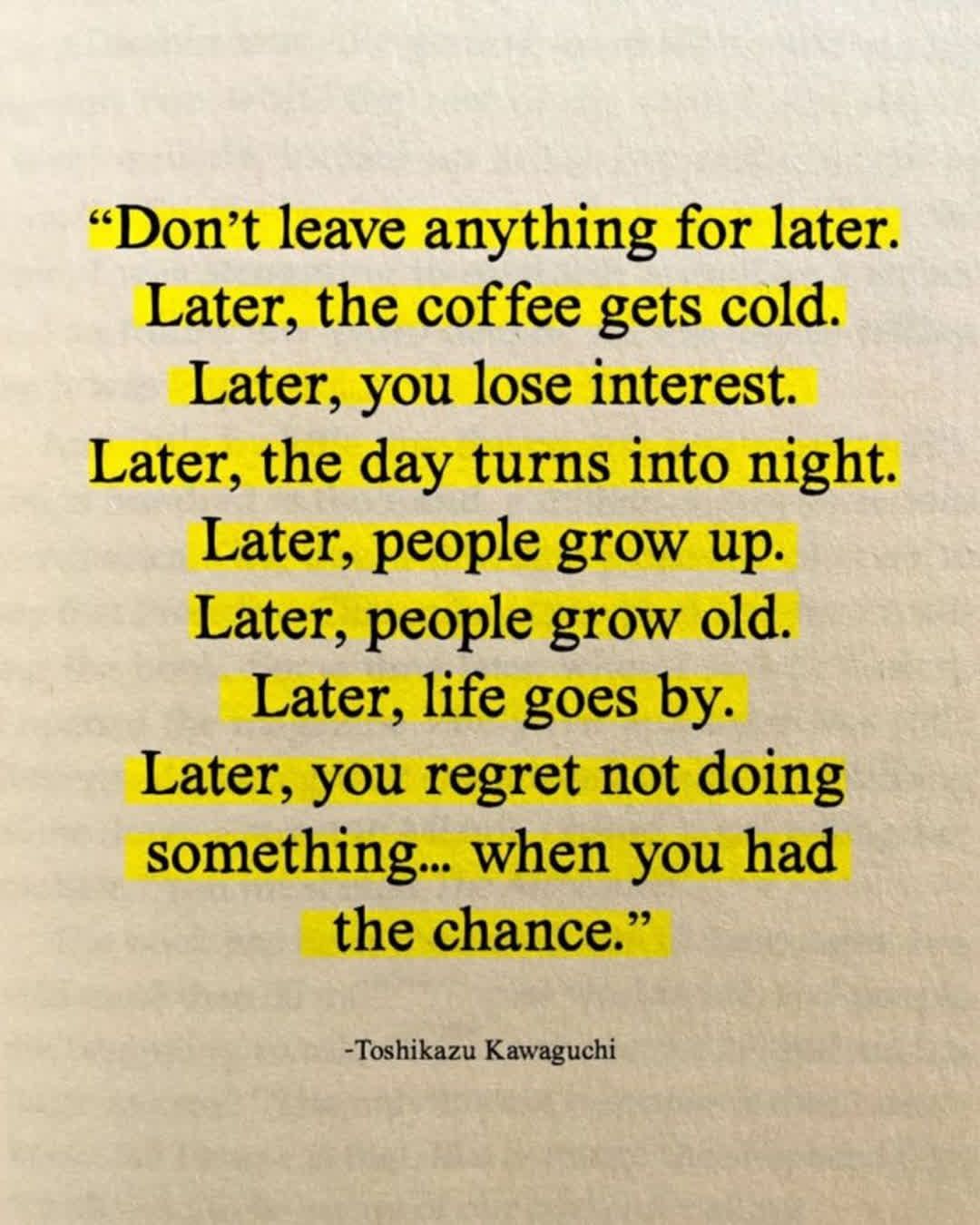
In a recent LinkedIn post, Ankur Warikoo challenges the notion of the “right time” for significant life or career decisions, arguing instead that action and hope are the only companions in the present moment. Warikoo shares a personal anecdote about how a chance encounter led him to his entrepreneurial journey, highlighting that without that spontaneous meeting, he might still be waiting for an idealized “right moment.”
The Illusion of the Perfect Moment
Warikoo contends that the concept of “right time” is often a construct of hindsight, a perspective gained only after events have unfolded. In the thick of decision-making or initiation, individuals are typically driven by action and a degree of hope, rather than a clear, preordained optimal moment. He illustrates this with his own experience:
The right time is always in hindsight. In the moment, there is only action and hope.
This sentiment underscores a core theme in Warikoo’s message: the inherent uncertainty and ambiguity of starting something new. He points out that in the nascent stages of any endeavor, every step can feel fraught with doubt, either seeming uncertain or premature. However, he posits that this very feeling is often the precursor to significant achievements.
Clarity Through Movement, Confidence Through Doing
A central argument presented by Warikoo is that clarity and confidence are not prerequisites for action, but rather outcomes of it. He advocates for movement as the catalyst for understanding, suggesting that insights emerge from engaging with a task or idea, not from passive contemplation beforehand. Similarly, confidence is cultivated not through endless thinking, but through the tangible experience of taking action.
Warikoo criticizes the common tendency to seek external signs or perfect conditions before making a move. He suggests that the most potent indicator that action is needed is the internal discomfort of not starting at all. As he writes:
We wait for signs, when the only real sign is the discomfort of not starting.
This perspective reframes procrastination and hesitation not as caution, but as a missed opportunity to gain momentum and learn. The process, according to Warikoo, is iterative and dynamic.
The Action-Learning Cycle
Warikoo outlines a clear cycle that leads to what appears, in retrospect, as perfect timing. This cycle involves taking action, learning from the results of that action, and then adapting based on those learnings. This continuous loop transforms initial uncertain steps into a well-timed progression.
He elaborates on this process:
You act → you learn → you adapt → and that action, in hindsight, becomes perfect timing.
This framework suggests that rather than searching for the elusive “right moment,” individuals should focus on initiating action, embracing the learning process, and adapting as they go. In Ankur Warikoo’s view, this proactive and adaptive approach is what ultimately creates the conditions for success, making any moment, when viewed retrospectively, the perfect time.
📝 About This Content
This article is based on insights shared by Ankur Warikoo on LinkedIn.
📅 Originally posted on November 25, 2025 | View original post on LinkedIn →