
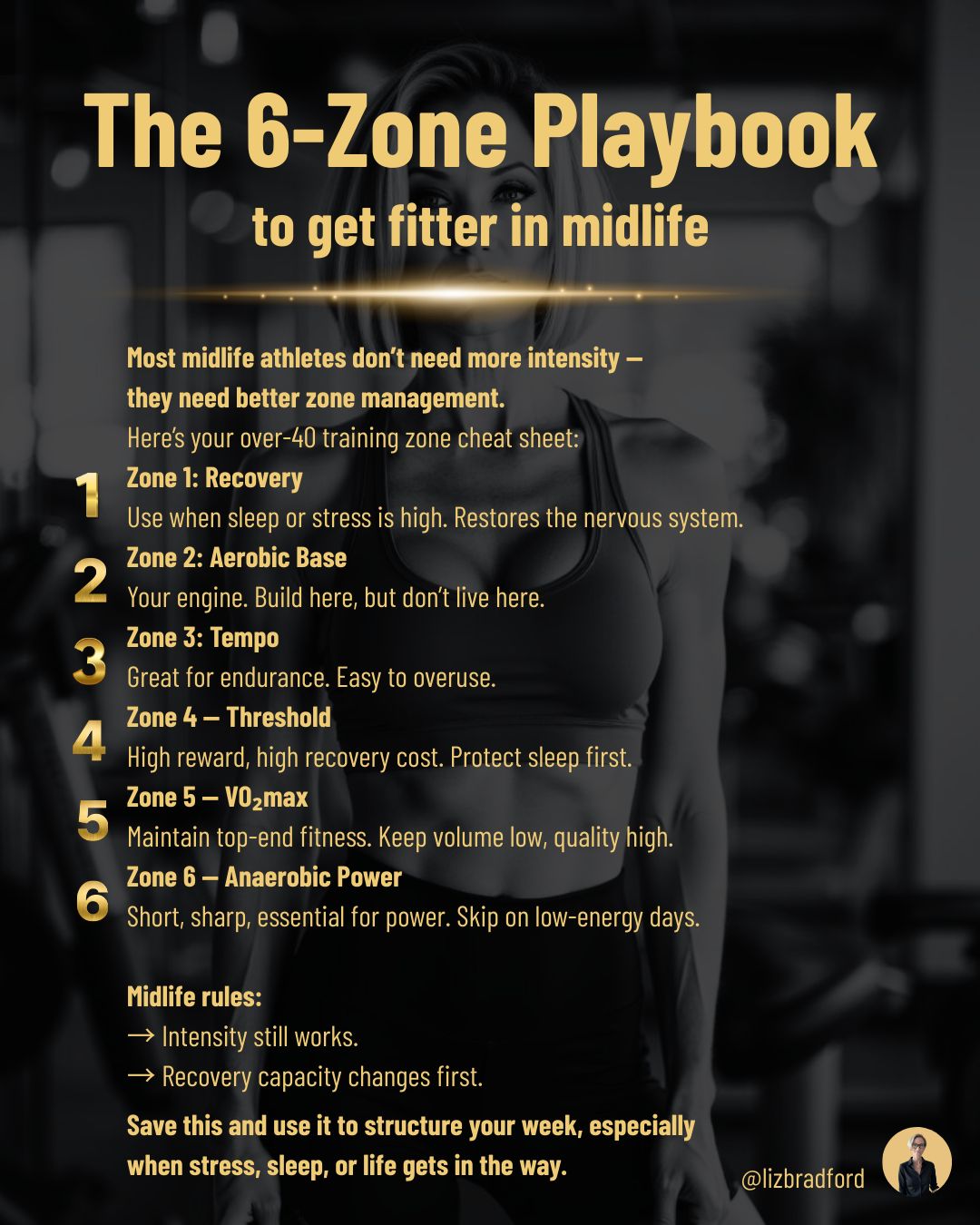
In a recent LinkedIn post, Liz Bradford explores how individuals over 40 can optimize their fitness routines by adjusting their training intensity zones, moving away from the “one-size-fits-all” approach often used by younger athletes. Bradford emphasizes that physiological changes after midlife necessitate a smarter, not necessarily harder, training strategy.
Rethinking Training Intensity Zones for Midlife Physiology
Bradford highlights that while the fundamental training zones remain the same, the body’s ability to recover from them shifts significantly after the age of 40. This is due to changes in muscle repair capacity, hormonal fluctuations, and overall stress tolerance.
“After 40, nothing about your physiology is ‘the same as it used to be.’ Recovery shifts. Hormones shift. Stress tolerance shifts.”
She breaks down how each of the six common training zones should be approached differently in midlife:
Understanding the Six Zones Post-40
- Zone 1 (Active Recovery): Essential for circulation but should not be the primary focus due to age-related changes in muscle repair for men and hormonal shifts impacting nervous system stress for women.
- Zone 2 (Aerobic Base): Crucial for long-term endurance and mitochondrial support, aligning with women’s natural fat-metabolism efficiency. However, relying solely on Zone 2 training can lead to plateaus.
- Zone 3 (Tempo): Offers a sustainable challenge that can build endurance without the hormonal strain of higher zones, particularly beneficial for women. Bradford cautions that moderate intensity yields moderate results.
- Zone 4 (Threshold): Represents a “comfortably hard” effort that helps preserve ventilatory threshold in men and counteract mitochondrial decline in women. She stresses the importance of adequate recovery, especially when sleep is compromised.
- Zone 5 (VO₂max): Involves hard intervals at near-maximum capacity, vital for slowing cardiac-output decline in men and maintaining fast-twitch muscle fiber recruitment in women. This zone demands significant recovery.
- Zone 6 (Anaerobic Power): Focuses on short, maximal efforts to preserve glycolytic power and support bone density in women. Bradford advises skipping this zone when stress levels are high due to increased injury risk.
The Crucial Role of Recovery and Adaptation
A core argument from Bradford is the discrepancy between current training programming and the physiological realities of aging. “And yet… most programming still uses the same zone structure we learned 20 years ago,” she observes. The critical adaptation, according to Bradford, lies not in changing the zones themselves, but in adjusting the approach to recovery from them.
“Your zones haven’t changed. Your ability to recover from them has.”
Bradford encourages her audience to reflect on their current training and consider one actionable change they can implement to optimize performance and recovery. She suggests saving her post as a guide for structuring weekly training, especially during periods of high stress or disrupted sleep.
Ultimately, Liz Bradford’s insights on LinkedIn underscore the need for personalized and adaptive training strategies for individuals over 40, emphasizing that understanding and respecting the body’s evolving recovery capabilities is key to sustained fitness and well-being.
📝 About This Content
This article is based on insights shared by Liz Bradford on LinkedIn.
📅 Originally posted on November 28, 2025 | View original post on LinkedIn →