
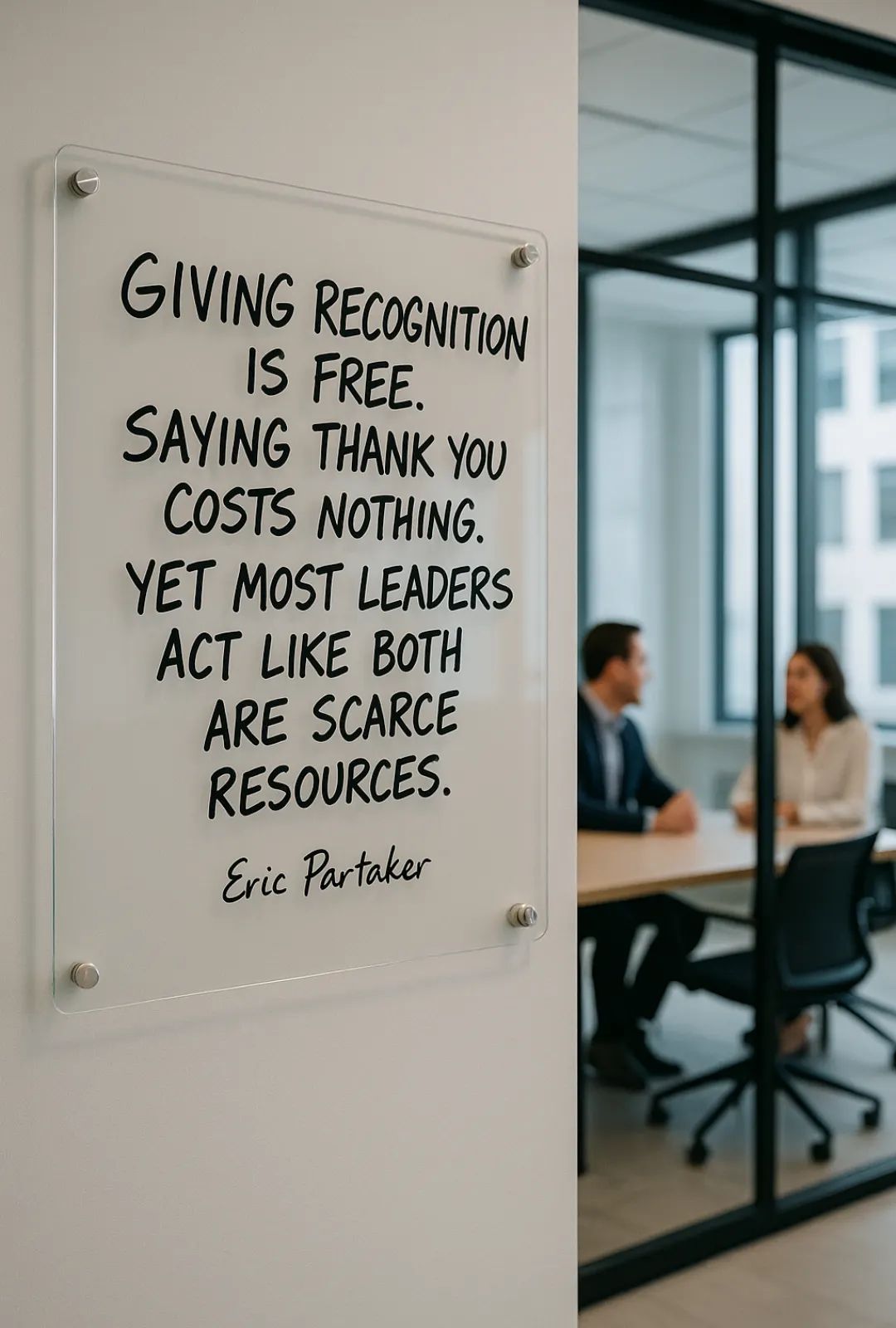
In a recent LinkedIn post, Eric Partaker delves into the critical importance of employee recognition and feeling valued within organizations, arguing that it is a fundamental driver of retention and performance. Partaker challenges leaders to prioritize this aspect before launching new initiatives, suggesting that a lack of appreciation is a primary reason why top talent seeks new opportunities.
Partaker emphasizes that recognition is not merely a perk but a necessity for team morale and productivity. He states:
“Recognition isn’t a nice-to-have. It’s oxygen for your team. Without it, even the most talented people suffocate.”
The post highlights the stark contrast between investing in tools and training versus investing in the human element of appreciation. Partaker shares a poignant observation from his experience:
“I’ve seen companies spend millions on tools and training. While their best people quietly updated their resumes. Because they felt invisible.”
He asserts that employees leave feeling unseen, not just jobs, and that the silence following exceptional effort speaks volumes. To combat this, Partaker outlines five actionable strategies leaders can implement immediately to make their teams feel valued.
Making Employees Feel Seen: Actionable Strategies
Eric Partaker outlines a practical framework for leaders to foster a culture of appreciation. He stresses that these actions are not costly but profoundly impactful.
1. Specificity in Thanks
Partaker advises moving beyond generic expressions of gratitude. He suggests being specific to show genuine attention to an individual’s contribution. An example provided is:
“Great work on the client presentation. Your research made all the difference.”
This level of detail, according to Partaker, validates the employee’s effort and makes the recognition more meaningful.
2. Celebrating Small Wins
The post encourages leaders to acknowledge daily efforts and minor achievements, not just major project completions. Partaker believes that consistent, small-scale appreciation can significantly boost morale over time.
3. Seeking and Implementing Input
A key element highlighted by Partaker is the power of asking employees for their input and, crucially, acting on it. He argues that when an employee’s ideas are implemented, it sends a powerful message that their perspective is valued and relevant.
4. Public Recognition
Partaker recommends acknowledging employees publicly within team meetings or company-wide communications. This not only celebrates the individual but also sets a positive example for the rest of the team, reinforcing the value placed on contributions.
5. Prioritizing Time and Attention
Perhaps the most powerful, yet simplest, form of recognition, according to Partaker, is dedicating undivided attention. This can mean canceling a meeting or putting away distractions to engage fully with an employee. Partaker notes:
“Your attention is the ultimate recognition.”
He concludes by reinforcing that the absence of appreciation carries a significant cost, impacting retention and overall performance. Partaker urges leaders to start implementing these practices immediately, emphasizing that effective retention strategies are rooted in making people feel seen and valued, rather than solely relying on financial incentives.
📝 About This Content
This article is based on insights shared by Eric Partaker on LinkedIn.
📅 Originally posted on December 15, 2025 | View original post on LinkedIn →