
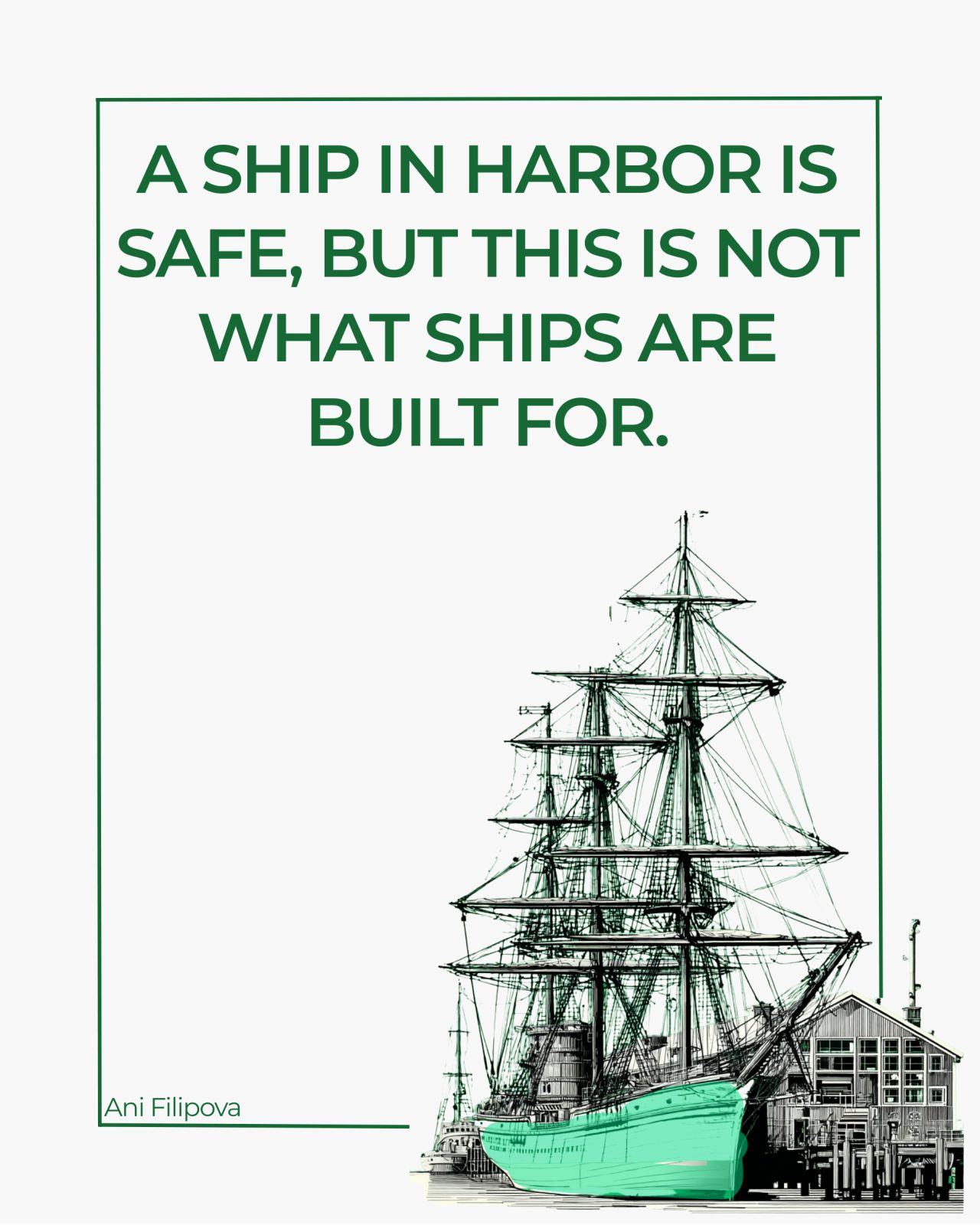
In a recent LinkedIn post, Ani Filipova explores the detrimental effects of prolonged comfort and the importance of embracing calculated risks for personal and professional growth. Filipova uses the metaphor of ships rusting in harbors to illustrate how individuals can stagnate when they remain in overly safe environments for too long.
Filipova begins by challenging the notion of perpetual safety, stating:
“Ships rust and decay when they are stuck in harbors too long. So do people.”
The post emphasizes that while seeking refuge during difficult times – a “storm” – is understandable and necessary, remaining in that “safe harbor” indefinitely can be corrosive. Filipova points out that our brains are inherently wired for survival, often triggering a “DANGER. STAY PUT. YOU MIGHT DIE.” alarm when we consider stepping out of our comfort zones.
The Corrosive Nature of Comfort
Filipova argues that comfort, while valuable during crises, becomes a detriment when it transforms into a lifestyle. “Comfort is useful in storms. It’s corrosive when it becomes a lifestyle,” Filipova writes, highlighting the subtle yet damaging impact of prolonged stagnation.
The author distinguishes between necessary periods of rest and detrimental inertia. The key, according to Filipova, is recognizing when a “safe harbor” has become a trap rather than a temporary refuge. The fear of discomfort or potential failure often keeps individuals rooted, even when the perceived danger is minimal compared to the long-term cost of inaction.
Strategies for Navigating Out of Stagnation
To combat this tendency to remain stuck, Filipova offers several practical strategies designed to “force movement” and overcome the brain’s natural inclination towards safety:
1. The 10-10-10 Rule
Filipova advocates for the 10-10-10 rule as a tool to reframe risk assessment. This method involves considering the potential impact of a decision not just in the immediate future, but also in 10 months and 10 years. As Filipova notes, “Short-term fear almost never outweighs long-term regret. Never, ever!!” This perspective shift helps to contextualize immediate anxieties against the backdrop of future consequences, often revealing that the fear of taking action is greater than the actual risk.
2. Embracing Reversible Risks
Recognizing that not all risks require a monumental leap, Filipova suggests starting with “reversible risks.” These are decisions or actions that can be undone if they don’t yield the desired results. Examples include launching a side project, enrolling in a course, or initiating contact with someone. “You can usually go back. You just rarely want to,” Filipova explains, implying that the act of starting and experiencing a small, manageable change is often more transformative than the risk itself.
3. Reflecting on Missed Opportunities
A powerful technique shared by Filipova involves creating and regularly reviewing a list of things one has “almost” done. This visual reminder, presented “in black and white,” serves to underscore what fear has prevented an individual from achieving. “When you see, in black and white, what fear keeps taking from you, you suddenly realise it wasn’t that frightening to make that change,” Filipova asserts. This practice aims to reframe past inaction not as a safe choice, but as a loss.
In conclusion, Ani Filipova’s insights on LinkedIn serve as a potent reminder that while harbors are essential for weathering storms, they are not intended as permanent residences. The post urges readers to recognize the subtle corrosion of prolonged comfort and to actively employ strategies that encourage movement and growth before stagnation takes hold.
📝 About This Content
This article is based on insights shared by Ani Filipova on LinkedIn.
📅 Originally posted on December 20, 2025 | View original post on LinkedIn →