
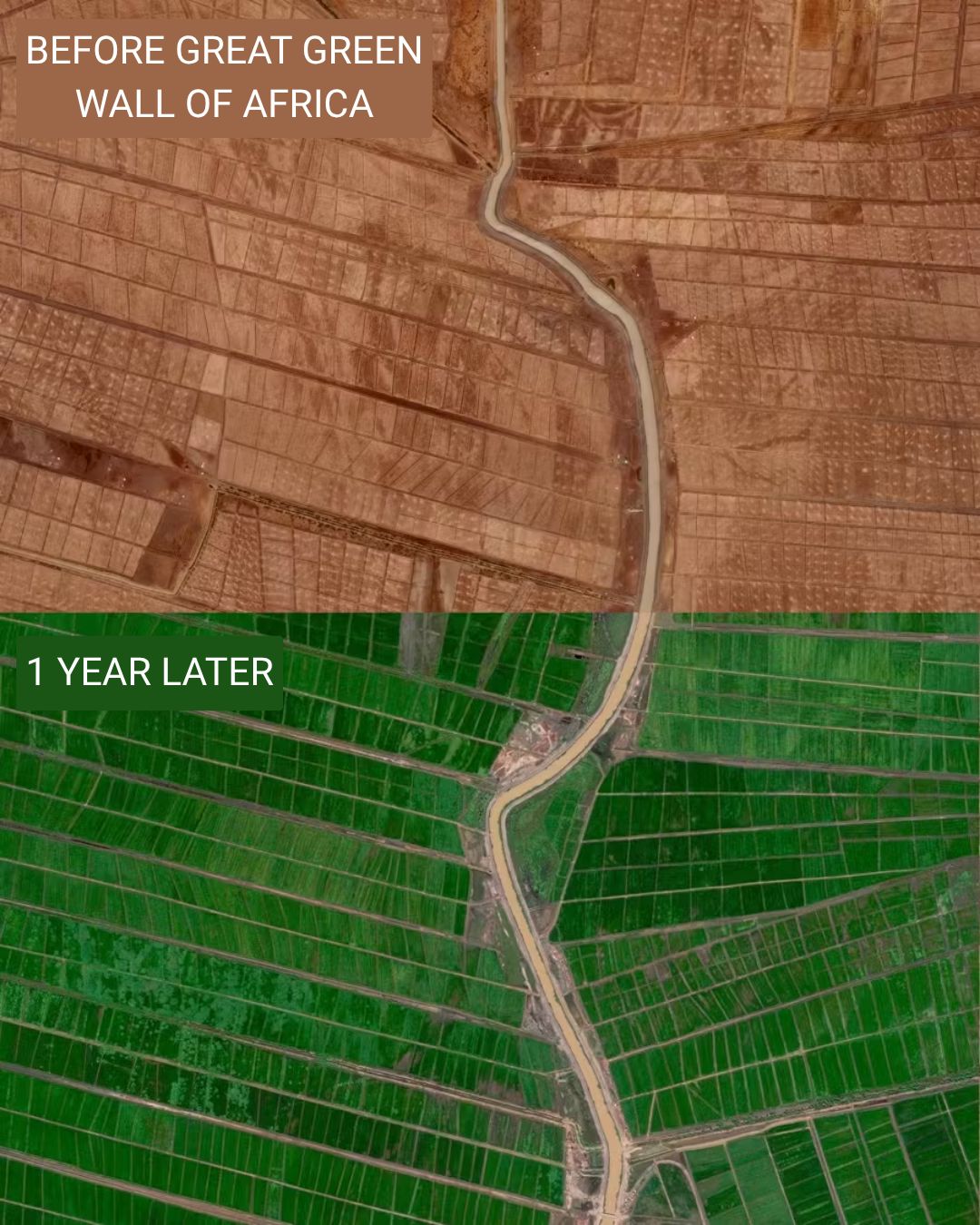
In a recent LinkedIn post, Dan Sherrard-Smith highlights critical issues facing the Great Green Wall of Africa, a massive environmental project aimed at combating desertification across the continent. Sherrard-Smith expresses concern that the project is failing to meet its ambitious goals and that this struggle is not receiving adequate public attention.
“The Great Green Wall of Africa is dying. And nobody’s talking about it.”
The initiative, which began with the vision of restoring 8,000 kilometers of land and re-greening 100 million hectares by 2030, creating millions of jobs and acting as a barrier against the desert, is facing significant setbacks, according to Sherrard-Smith. He points out that despite substantial funding, the project’s impact on the ground is far less than anticipated. In Senegal, for instance, only a small fraction of planted areas show significant greening compared to natural conditions.
Funding Mismanagement and Lack of Local Agency
A key issue raised by Sherrard-Smith is the mismanagement of funds. He notes that funds intended for local agencies are often redirected to international non-governmental organizations, making it difficult to track progress and ensure effective implementation. This diversion of resources, Sherrard-Smith suggests, undermines the project’s core objectives and local ownership.
“Billions have been raised, but staff at Chad’s official agency say the money has often bypassed them altogether. Instead going directly to international NGOs or other organisations running their own Great Green Wall projects, making it nearly impossible to track what’s happening on the ground.”
This top-down approach, Sherrard-Smith argues, mirrors historical colonial patterns where external entities dictate terms without fully empowering local communities. He quotes a local director who lamented,
“The hand that gives, commands,” but added, “they don’t give, and still want to command.”
This sentiment underscores a frustration with external control and a lack of genuine partnership.
Security Challenges and Slow Progress
Beyond funding issues, Sherrard-Smith also highlights the severe security challenges in regions like Niger, Burkina Faso, and Nigeria. Armed groups have made reforestation efforts impossible in many critical areas, placing environmental workers in dangerous situations. The slow pace of progress is starkly illustrated by Sherrard-Smith’s statistic that only 4% of the wall was complete as of 2022, after 15 years of effort.
A Missed Opportunity for African Leadership
The Great Green Wall was envisioned as a testament to Africa’s capacity for self-led climate action and the potential of pan-African cooperation. Sherrard-Smith contends that the project’s current struggles represent a missed opportunity and a cautionary tale about how international aid can inadvertently disempower local communities and sideline indigenous knowledge. He emphasizes that the project was designed in the West, rather than originating from the Sahel region it aims to serve.
As Sherrard-Smith concludes, with only five years remaining to salvage the project, there is an urgent need to reignite awareness and re-evaluate the strategies employed. The goal remains vital, but the current trajectory suggests a need for significant change to ensure the Great Green Wall can fulfill its promise of ecological restoration and sustainable development led by African communities.
📝 About This Content
This article is based on insights shared by Dan Sherrard-Smith on LinkedIn.
📅 Originally posted on December 19, 2025 | View original post on LinkedIn →