
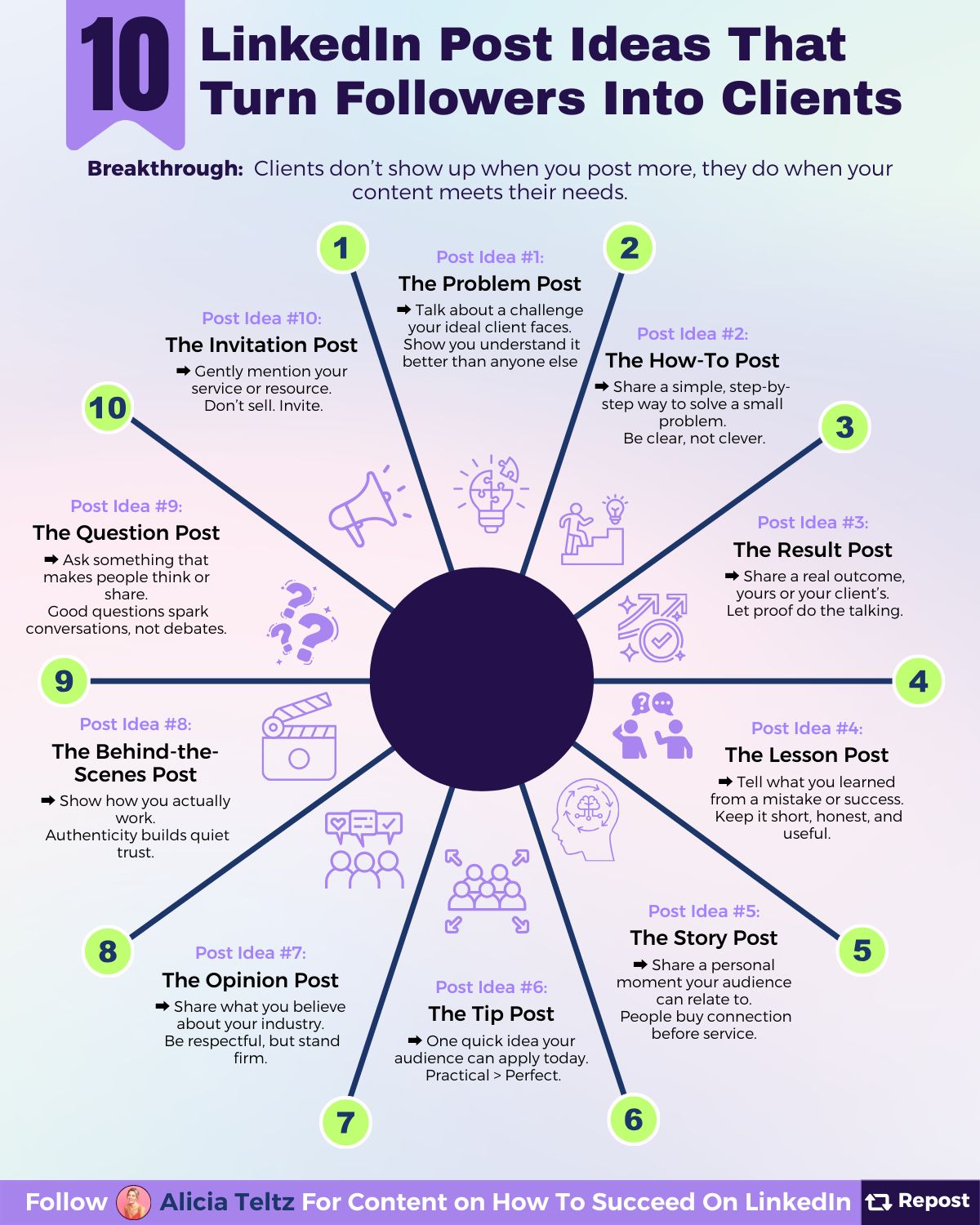
In a recent LinkedIn post, Alicia Teltz explores a common pitfall for content creators on the platform: posting for validation rather than client acquisition. Teltz, who reviewed hundreds of posts within her community, “The Hype Department 📣,” identifies ten specific post types that have a proven track record of converting followers into paying clients, contrasting them with less effective approaches.
The core of Teltz’s argument is that most individuals are “posting for applause, not clients. And then wonder why their DMs are empty.” She emphasizes that the focus should shift from generic content to addressing the specific pain points and desires of potential buyers.
“Your ideal client doesn’t care about your morning routine. They care about their problems getting solved.”
Teltz outlines ten distinct post types that, when executed correctly, can lead to conversions. She contrasts the ineffective “what most do” with the effective “what converts” for each category, providing actionable insights for business professionals aiming to leverage LinkedIn for sales.
Addressing Client Problems, Not Just Offering Solutions
One of Teltz’s key distinctions lies in how problems are framed. She argues that instead of offering generic tips, content should directly address the challenges potential clients face. For instance, a “Problem Post” should move beyond “5 tips for better productivity!” to something like, “Here’s why your team keeps missing deadlines despite working 60-hour weeks.” As Alicia Teltz notes, “Talk about THEIR problem, not your solution.” This approach immediately resonates with individuals experiencing those specific issues.
The Power of Specificity and Proven Results
In her analysis, Teltz highlights the effectiveness of “How-To Posts” that offer a single, actionable step rather than complex frameworks. “Clarity beats cleverness every time,” she states. Similarly, “Results Posts” should showcase tangible achievements rather than vague expressions of gratitude. Teltz advocates for presenting data, screenshots, and specific strategies, exemplified by a post detailing how a client went “from 200 to 10K impressions in 30 days.” This emphasis on concrete proof is crucial for building trust and demonstrating value.
“Client went from 200 to 10K impressions in 30 days. Here’s the exact strategy.”
Teltz also touches upon “Lesson Posts,” where personal failures can become valuable guides for others. “Your mess becomes their map,” she explains, encouraging vulnerability over polished perfection. This is echoed in her advice for “Story Posts,” where sharing relatable struggles, like a “failed launch,” is more effective than solely highlighting successes.
Standing Out with Originality and Strong Opinions
Originality and a willingness to take a stance are central to Teltz’s framework. She contrasts generic “Tip Posts” with those that share “weird tricks” discovered through unique experiences, stating, “Original > Optimal.” Furthermore, Teltz advises against fence-sitting in “Opinion Posts.” Instead, she encourages asserting a clear viewpoint, such as challenging the value of follower counts, to attract the right audience. “Take a stand. The right people will find you,” Teltz argues.
“Vulnerability sells. Perfection repels.”
Even “Behind-the-Scenes Posts” should offer genuine insight, moving beyond staged portrayals to reveal the actual, often chaotic, processes involved in client work. Teltz suggests showing “my actual Notion board with all my client chaos” rather than idealized settings. This authenticity, she implies, builds a stronger connection with potential clients.
Engaging Questions and Qualified Invitations
Teltz also critiques superficial engagement tactics. She differentiates “Question Posts” that ask “What are your thoughts?” (deemed “Lazy AF”) from those that pose thought-provoking questions, such as “What’s the one LinkedIn myth you believed until recently?” She believes these prompt deeper reflection. Finally, her “Invitation Posts” move away from generic calls to action like “DM me ‘SCALE'” towards a more qualified approach, such as announcing limited spots for a specific type of client. “Don’t beg. Qualify,” Teltz concludes.
Ultimately, Alicia Teltz’s insights on LinkedIn provide a clear roadmap for professionals looking to transform their social media presence from a popularity contest into a genuine client-generating engine. Her advice centers on understanding the buyer’s perspective and delivering content that speaks directly to their needs and aspirations.
📝 About This Content
This article is based on insights shared by Alicia Teltz on LinkedIn.
📅 Originally posted on December 18, 2025 | View original post on LinkedIn →