
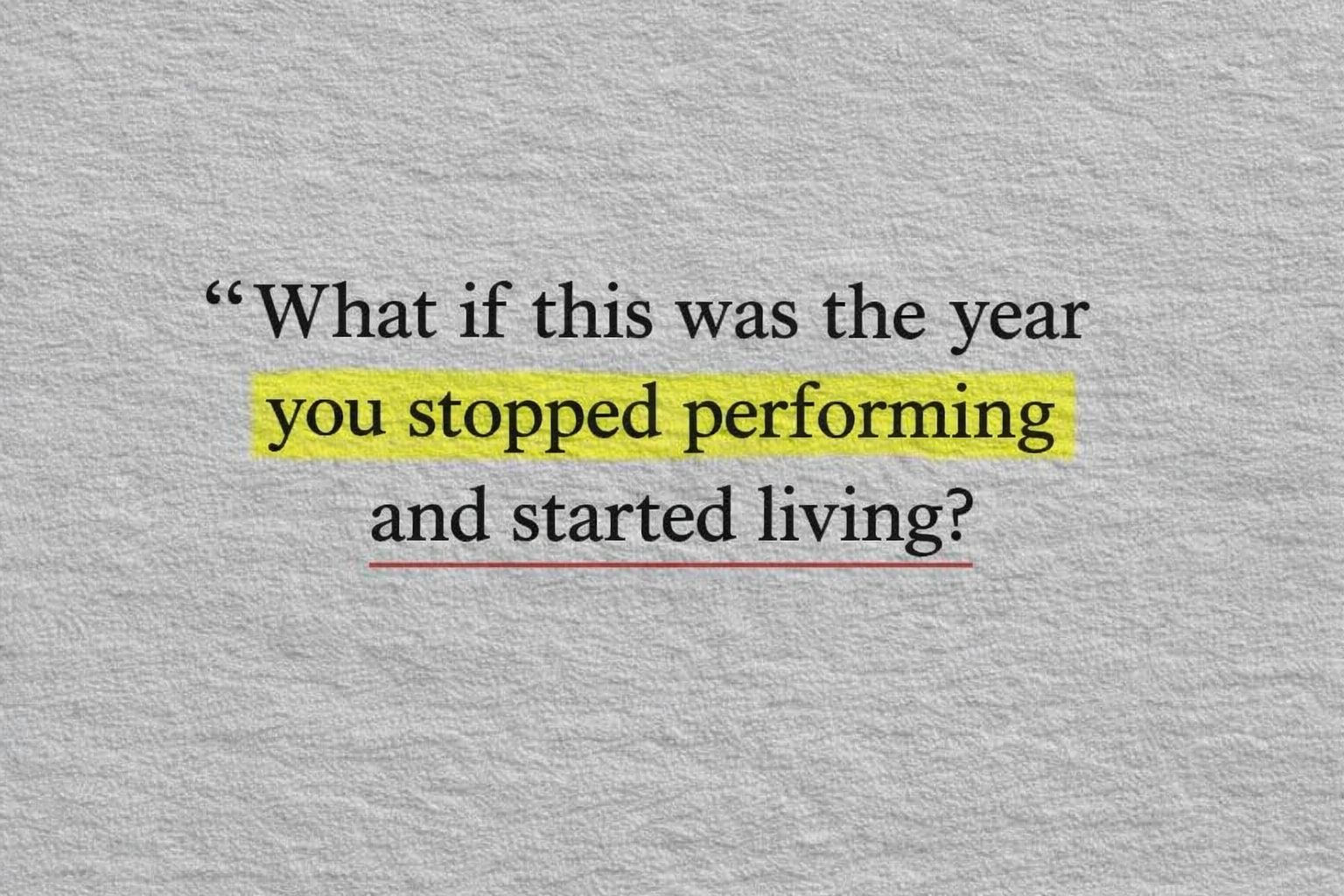
In a recent LinkedIn post, Liz Bradford delves into the pervasive issue of burnout among high-achievers, suggesting that the root cause often lies not in a lack of effort, but in performing a life that isn’t genuinely their own. Bradford challenges the conventional approach to goal-setting, particularly as the new year approaches, by highlighting how many individuals pursue careers, lifestyles, and goals designed to impress others rather than fulfill themselves.
Bradford introduces the uncomfortable truth that many successful individuals are not failing due to insufficient action, but are instead succumbing to burnout because they are “performing a life that was never theirs to begin with.” She elaborates on this by listing common scenarios:
“A career chosen to make parents proud, not you fulfilled. → A lifestyle curated for social media validation. → Goals that sound impressive at networking events but feel empty at home. → A personality you’ve perfected to be who others need you to be.”
The core of Bradford’s argument is that in January, these individuals tend to “pile more performance onto an already inauthentic foundation.” She posits a crucial question: what if the upcoming year, 2026, could be different? What if it could be the year individuals transition from performing to truly living?
The Cost of Inauthenticity
Bradford emphasizes that this shift doesn’t necessarily require a complete overhaul of one’s activities, but rather a deep examination of the motivations behind those actions. She draws on her experience working with senior executives who have achieved significant external success but still feel a void. According to Bradford, these leaders often find that “no achievement or external validation is enough to make them feel they’ve ‘got there’.” There’s a perpetual chase for a bigger number, a higher title, or another status symbol.
This relentless pursuit, driven by external expectations, comes at a significant cost. Bradford outlines the tangible benefits of stepping away from this performative existence:
“Your energy returns because you’re not constantly managing impressions. ✨ Your relationships improve because people finally meet the real you. ✨ Your decisions feel easier because they align with your actual values. ✨ Your confidence stabilises because it’s built on authenticity, not approval. ✨ Your work becomes more impactful because you’re operating from your strengths.”
Bradford asserts that identity is not fixed and that individuals have the power to rewrite their personal scripts at any point in their lives. She concludes with an encouraging message, suggesting that the version of oneself that 2026 awaits is the one that is actively chosen, rather than one dictated by external pressures.
Shifting Towards Authentic Living
The insights shared by Liz Bradford offer a compelling perspective on the nature of success and well-being. By framing burnout not as a failure of effort but as a consequence of inauthenticity, she provides a framework for introspection. As Bradford notes, the key lies in understanding the “why” behind our actions, rather than simply focusing on the “what.”
Her observation about senior executives underscores a common struggle where external markers of success fail to translate into internal fulfillment. This highlights a critical distinction: the difference between achievement measured by societal standards and satisfaction derived from living in alignment with one’s true self.
Bradford’s proposed benefits of embracing authenticity—restored energy, improved relationships, clearer decision-making, stable confidence, and more impactful work—present a powerful case for prioritizing genuine living over performance. She encourages readers to consider what aspects of their lives are dedicated to impressing others and to contemplate releasing them in the coming year. As Bradford puts it:
“Identity isn’t a life sentence. Your script can be rewritten at any stage. 2026 is waiting for the version of you that you actually choose to be.”
This perspective encourages a proactive approach to personal growth, emphasizing agency and the possibility of profound change. Bradford’s post serves as a timely reminder that true success may be found not in achieving more, but in becoming more authentically oneself.
📝 About This Content
This article is based on insights shared by Liz Bradford on LinkedIn.
📅 Originally posted on December 29, 2025 | View original post on LinkedIn →