
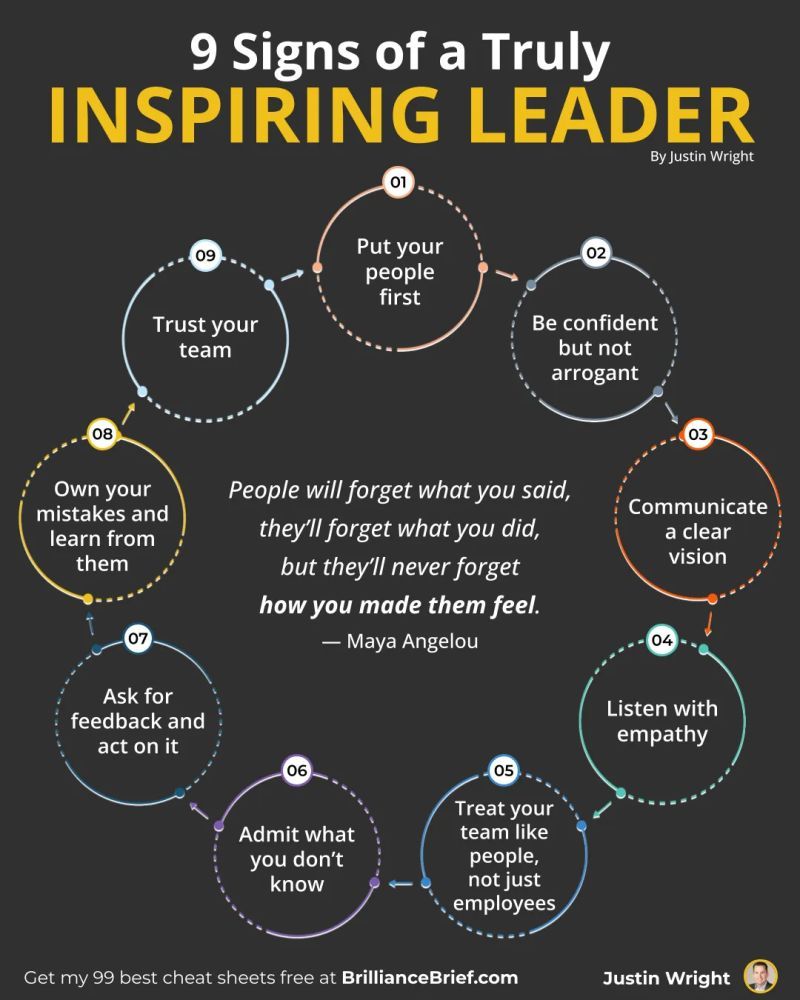
In a recent LinkedIn post, Justin Wright shares profound lessons learned about leadership, moving away from a traditional, often unattainable, model of perfection. Wright details his own evolution from a leader who believed in having all the answers and never admitting mistakes, to one who champions authenticity, humility, and putting people first. He emphasizes that true leadership strength lies not in flawlessness, but in genuine human connection and vulnerability.
Wright recounts a pivotal moment in his leadership journey: “One day, I messed up. Bad. I gathered the team and said: ‘I made the wrong call. Here’s what I learned.'” This act of admitting fault, he explains, led to an unexpected and positive shift within his team.
“And something incredible happened. People opened up. Trust deepened. Ideas flowed. The team got stronger.”
This experience, according to Wright, underscored a fundamental truth about effective leadership. He argues that demonstrating vulnerability doesn’t weaken a leader; instead, it fosters a more robust and trusting environment.
The Power of Humility and Humanity
Wright posits that the most impactful leadership is characterized by a willingness to be transparent and empathetic. He contrasts the outdated notion of a leader as a flawless hero with the modern understanding of leadership as a collaborative and human-centric endeavor.
“Leadership isn’t about being perfect,” Wright writes. “It’s about being real. Putting your people first. Having the confidence to trust (And the humility to know you’re not always right.)” This perspective suggests that leaders who embrace their imperfections and prioritize their team’s well-being create a more fertile ground for innovation and engagement.
Permission to Be Human
A key takeaway from Wright’s post is the idea that a leader’s humility can unlock similar qualities in their team. By admitting mistakes and showing humanity, leaders grant their team members the “permission to do the same.” This creates a psychologically safe environment where individuals feel comfortable taking risks, sharing ideas, and learning from their own missteps without fear of reprisal.
“Because when you lead with humility and humanity, you give others permission to do the same.”
Wright outlines nine specific indicators of an inspiring leader, none of which are tied to a formal title but rather to character and action:
- Put your people first
- Stay humble
- Share your vision clearly
- Listen with real empathy
- Treat people like people
- Admit when you don’t know
- Ask for feedback (and use it)
- Own your mistakes
- Trust your team
Beyond Flawless Presentations
In his concluding thoughts, Wright challenges leaders to consider their ultimate legacy. He suggests that while technical skills and strategic plans are important, they are not what truly resonate with people in the long run.
“Because at the end of the day, people won’t remember your flawless slides or 5-year strategy. They’ll remember how you made them feel.”
Wright’s insights offer a compelling argument for a more authentic and empathetic approach to leadership, emphasizing that courage and humanity are the true hallmarks of effective leadership, not infallibility. He prompts readers to reflect on the kind of leader they aspire to be remembered as, suggesting that impact is measured by emotional connection and trust built, rather than by a perfect facade.
📝 About This Content
This article is based on insights shared by Justin Wright on LinkedIn.
📅 Originally posted on January 9, 2026 | View original post on LinkedIn →