
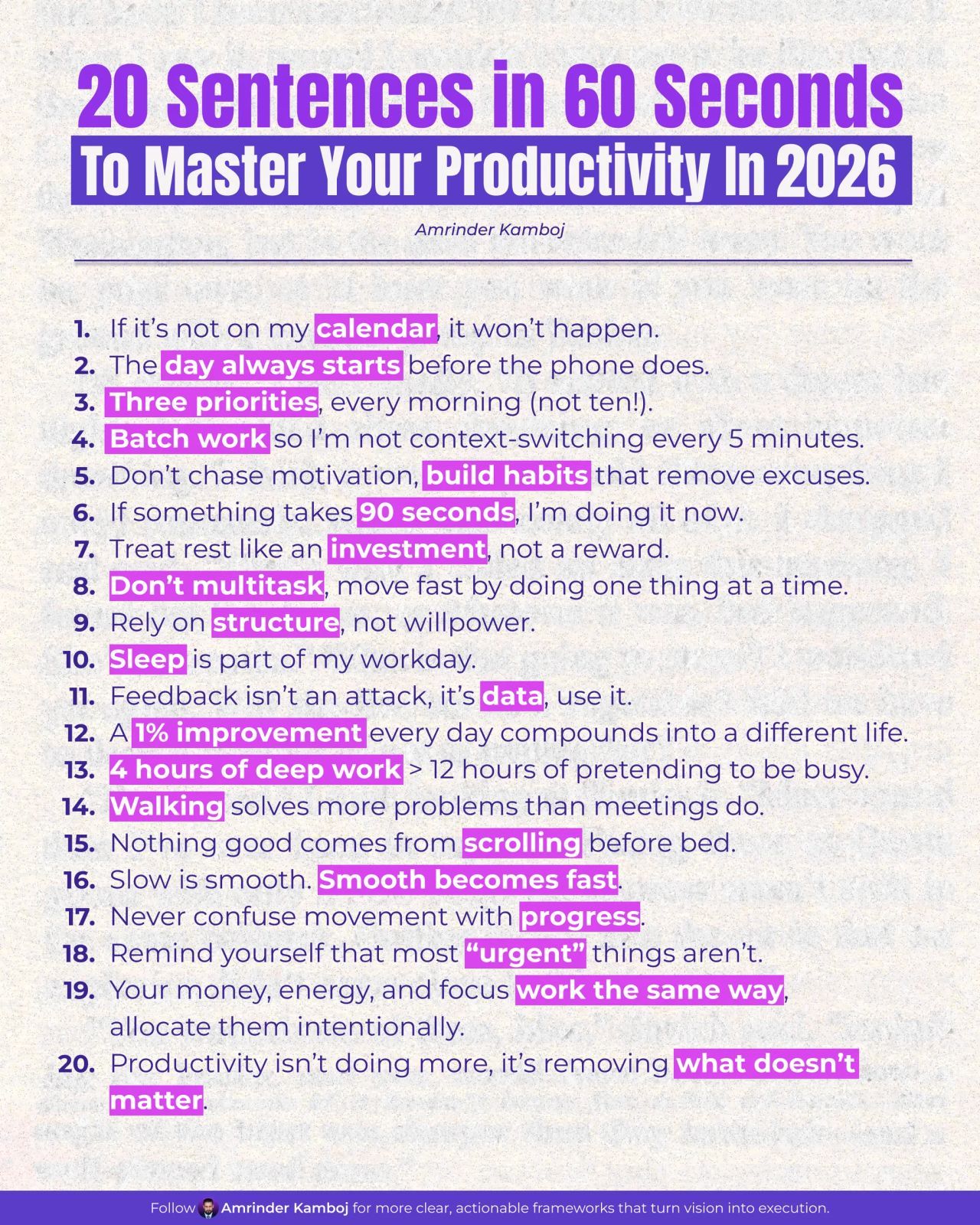
In a recent LinkedIn post, Mark O’Donnell discusses the often-misunderstood concept of productivity, arguing that it’s not about doing more, but about being more intentional with limited resources. He emphasizes that safeguarding one’s time is the true key to achieving more, a principle he has observed in successful entrepreneurs.
O’Donnell challenges the conventional view of productivity, stating,
Productivity isn’t about squeezing more into your day. It’s about being intentional with your time, energy and focus.
He further elaborates on this by highlighting the practices of successful entrepreneurs he has worked with. According to O’Donnell, these individuals have learned to build robust structures around their schedules and have mastered the art of saying no to distractions and non-essential tasks.
The Finite Nature of Resources
O’Donnell stresses that time, energy, and focus are finite resources that must be managed with deliberate care. This perspective shifts the focus from simply working harder to working smarter and more strategically.
Structure Over Willpower
A core theme in O’Donnell’s post is the idea that structure is a more reliable driver of productivity than sheer willpower. He presents a list of 20 principles designed to help individuals maintain focus and intentionality, even amidst chaos.
Among these principles, O’Donnell highlights the importance of prioritizing and scheduling:
If it’s not on the calendar, it’s not going to happen.
This simple yet powerful statement underscores the necessity of making commitments tangible through scheduling. He also advocates for a structured approach to the start of the day, suggesting that personal routines should precede the influx of external demands from digital devices.
Actionable Principles for Intentionality
O’Donnell’s list offers practical advice for cultivating a more productive and less chaotic work life. He advocates for batching similar tasks to minimize context switching, which he notes drains mental energy.
Furthermore, he advises tackling small tasks immediately if they take less than two minutes, a strategy that can prevent minor items from accumulating. O’Donnell also reframes rest not as a reward for hard work, but as a crucial investment in sustained performance.
Rest is an investment, not something you earn after burning out.
This principle directly combats the burnout culture prevalent in many industries. He also points out the fallacy of multitasking, arguing that focus on one task at a time leads to greater overall speed and efficiency.
The Power of Compounding and Reflection
O’Donnell champions the idea that small, consistent improvements lead to significant long-term gains, a concept akin to compound interest. He also distinguishes between mere activity and actual progress, urging readers to ensure their efforts are directed towards meaningful outcomes.
The entrepreneur also emphasizes the importance of regular reflection. He shares his personal practice of reviewing priorities weekly, planning the next day each night, and conducting quarterly assessments to ensure alignment with forward-moving goals. As O’Donnell puts it:
That pulse is what keeps things from drifting.
He encourages readers to identify a few principles that resonate with them, write them down, and actively protect their time as a valuable resource. O’Donnell extends these principles to those who coach or consult, suggesting they apply equally to managing one’s own practice.
📝 About This Content
This article is based on insights shared by Mark O'Donnell on LinkedIn.
📅 Originally posted on January 20, 2026 | View original post on LinkedIn →