
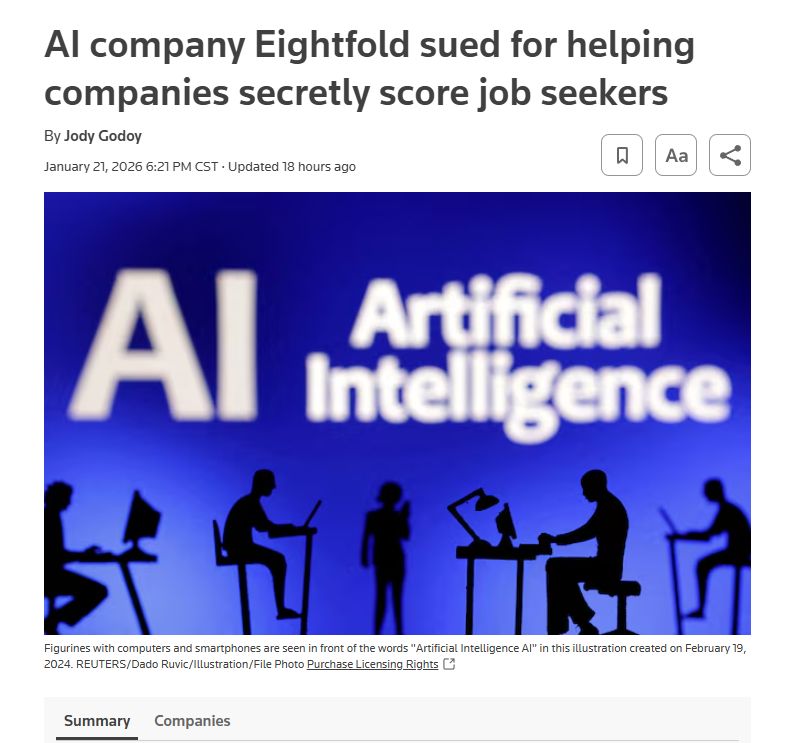
In a recent LinkedIn post, Ben Eubanks discusses a significant class-action lawsuit filed against Eightfold AI, highlighting its potential implications for the use of artificial intelligence in hiring processes. Eubanks frames the legal challenge not through the lens of traditional AI bias concerns, but through the framework of the Fair Credit Reporting Act (FCRA).
Eubanks points out the novelty of this legal approach, suggesting it may be easier for plaintiffs to prove than claims related to disparate impact or bias. He notes the core of the lawsuit revolves around allegations that Eightfold AI is generating reports and scores about job seekers without providing the legally mandated disclosures and rights afforded under consumer protection laws.
“When we think about AI screening risk we think about bias, disparate impact, or other types of treatment. There are laws there to protect people (and there have been for decades), but it’s sometimes difficult to tell the story and the data can be complex.”
Unpacking the Eightfold AI Lawsuit
According to Ben Eubanks, the lawsuit, as reported by Reuters, centers on two job seekers who allege that Eightfold AI assisted employers in secretly scoring and ranking applicants. This process, plaintiffs claim, occurred without the necessary transparency and rights typically associated with consumer reporting.
The Alleged Functionality of Eightfold’s AI
Eubanks details the types of information the lawsuit claims Eightfold AI generates, which employers then allegedly use for screening, sometimes before human review. These outputs include:
- Personality-style labels (e.g., “team player,” “introvert”)
- Rankings such as “quality of education”
- Predictions about future career paths (e.g., future titles, employers)
“The lawsuit alleges Eightfold generates talent profiles or reports about applicants that can include items such as: Personality-style labels (for example: “team player,” “introvert”), Rankings like “quality of education”, Predictions about future career trajectory (future titles, employers, etc.)”
The FCRA Connection
The crux of the legal argument, as highlighted by Eubanks, is that the AI-generated outputs function as a “consumer report” used for employment decisions. If this argument prevails, Eightfold and the employers using its technology could fall under the purview of the FCRA and relevant state laws, such as those in California.
Eubanks emphasizes the protections that the FCRA typically mandates for individuals when such reports are used. These protections generally include:
- Clear disclosure that a report is being generated and used.
- The right for the individual to access and review the report.
- A mechanism to dispute any errors or inaccuracies found in the report.
- Specific procedures and notifications required when an employer makes an adverse decision, such as not hiring someone based on the report.
“The core legal issue: The lawsuit is built around the argument that Eightfold’s AI outputs function like a ‘consumer report’ used for employment decisions, which would bring Eightfold under the Fair Credit Reporting Act (FCRA) and related California laws.”
The plaintiffs contend that these protections were bypassed, forming the basis of their suit. Ben Eubanks suggests that this case broadens the scope of previous legal challenges in this area, referencing the ‘Mobley v Workday’ case.
Broader Implications for Employers
As Eubanks points out, this legal strategy could have far-reaching consequences for how AI tools are deployed in recruitment. The focus on FCRA compliance shifts the conversation from AI’s potential for bias to its role in generating data that might be construed as a consumer report, triggering a different set of legal obligations.
“Employers, take note. This takes the Mobley v Workday case to a much broader place.”
Eubanks concludes by signaling that this is a developing area of law that employers and HR technology providers need to monitor closely. The lawsuit’s success could set a precedent for how AI-driven HR tools are regulated, potentially requiring greater transparency and consumer-like rights for job applicants.
📝 About This Content
This article is based on insights shared by Ben Eubanks on LinkedIn.
📅 Originally posted on January 22, 2026 | View original post on LinkedIn →