
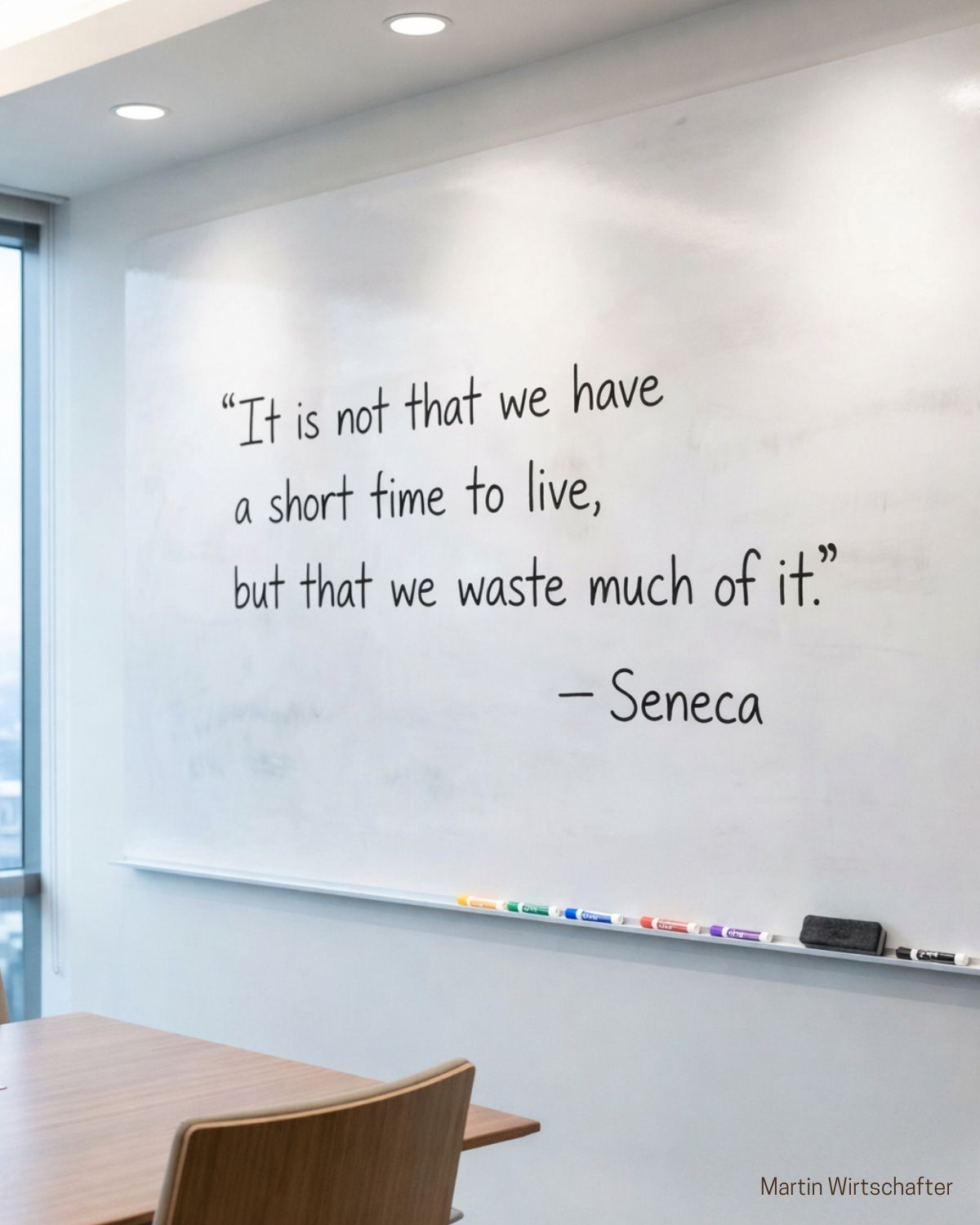
In a recent LinkedIn post, Martin Wirtschafter discusses a critical, often overlooked reason why successful businesses fail: founder dependency. Wirtschafter uses the poignant story of an 80-year-old entrepreneur who spent 55 years building a company with brilliant, patented technology, only to see it collapse when he became too ill to continue. The narrative serves as a stark warning about the dangers of delaying critical knowledge transfer and systemization.
Wirtschafter highlights the entrepreneur’s readiness to sell, noting the interest from potential buyers. However, the core issue was that the entire business operation, from nuances to exceptions, resided solely in the founder’s mind.
“But the business still ran through him. Every nuance. Every exception. Every ‘why’ lived in his head.”
The post emphasizes that the founder, despite having a valuable technology and a desire to sell, believed there was always more time – time for another product launch, time for the next quarter, time to eventually document and transition knowledge. This procrastination, Wirtschafter argues, proved fatal for the business’s future.
The Uncomfortable Truth: Founder as the System
As Wirtschafter details, the transition talks he had with the entrepreneur were focused not on valuation or market strategy, but on knowledge transfer. It quickly became apparent that none of the critical operational knowledge was documented or owned by the team; it was exclusively held by the founder.
“It became clear quickly: None of it was documented. None of it was owned by the team. It was all still him.”
This complete reliance on the founder created a fragile system. When life intervened and the entrepreneur fell seriously ill, the planned transfer never occurred. Wirtschafter points out that it wasn’t the technology or the market that failed, but the context – the lack of a robust, transferable operational framework.
‘Later Never Comes’: The Cost of Delay
The consequence of this founder dependency was severe. The business deal died, the technology’s future became uncertain, and decades of accumulated insight were lost. Wirtschafter frames this as an uncomfortable truth for many founders and business leaders.
When the Founder Disappears, So Does the Future
The core message, as articulated by Wirtschafter, is that great products don’t fail on their own; they are killed by founder dependency, not through neglect, but through the delay in establishing systems that can operate independently of the founder.
“Great products don’t die. Founder dependency kills them. Not from neglect. From delay.”
He powerfully concludes that the founder’s absence meant the collapse of the business’s future. The phrase, “I’ll do it later” eventually morphs into “Later never comes,” serves as a potent reminder of the irreversible consequences of postponing essential business continuity planning.
Freedom by Design: Building for Longevity
Wirtschafter suggests that true freedom for a business leader isn’t just about stepping away, but about ensuring that what they have built has the capacity to outlive them. This concept, which he terms “freedom by design,” underscores the importance of proactive knowledge management and systemization.
“Becoming optional isn’t about stepping away. It’s about giving what you’ve built the chance to outlive you.”
By emphasizing the need to build businesses that are not solely reliant on their originators, Wirtschafter provides a valuable lesson for entrepreneurs and leaders aiming for sustainable success and a lasting legacy.
📝 About This Content
This article is based on insights shared by Martin Wirtschafter on LinkedIn.
📅 Originally posted on January 29, 2026 | View original post on LinkedIn →