
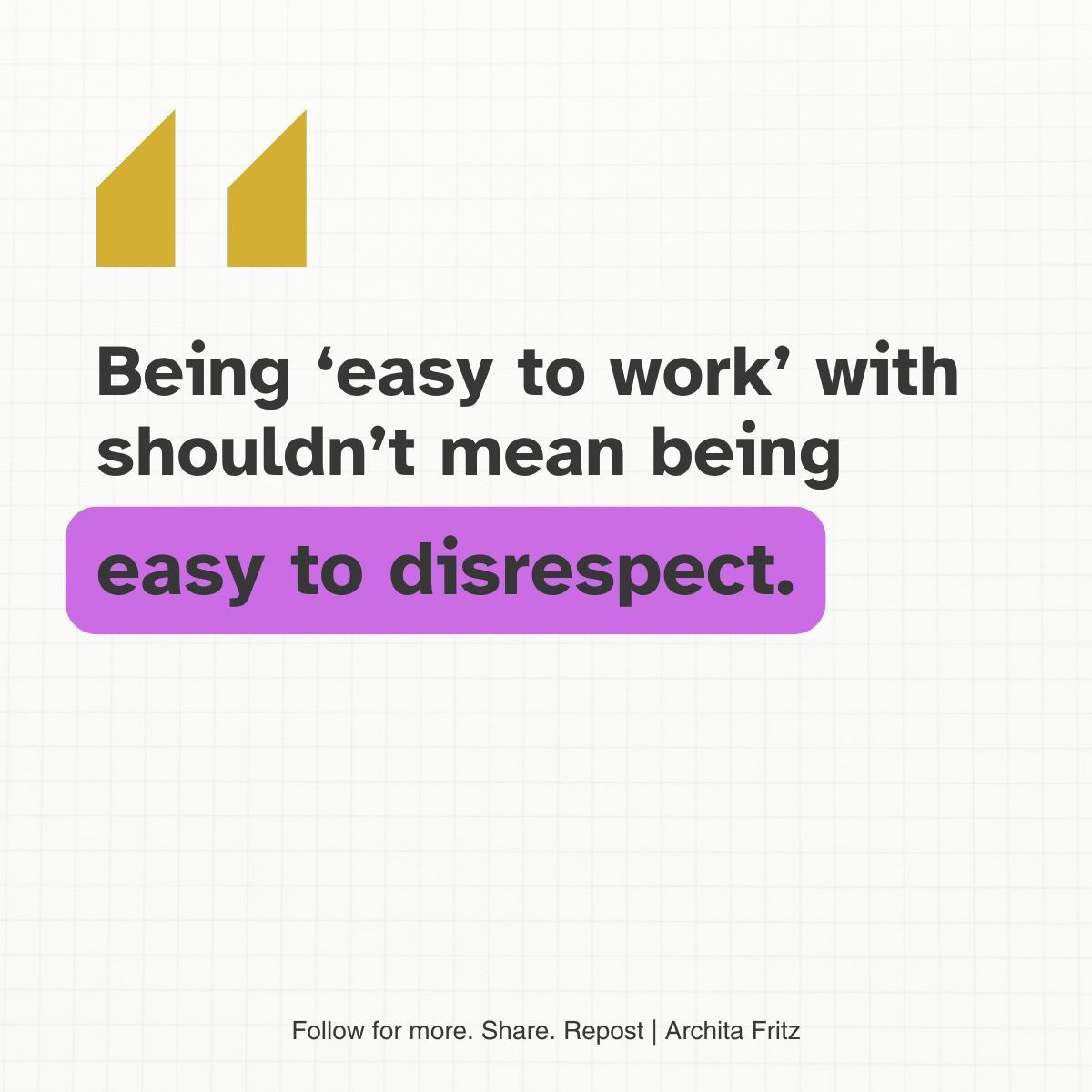
In a recent LinkedIn post, Archita Fritz discusses the common misconception of what it means to be “easy to work with” in a professional setting, particularly when encountering combative communication from senior colleagues. Fritz shares a personal anecdote to illustrate how prioritizing effectiveness over mere agreeableness can lead to more productive outcomes.
The Pitfalls of Misinterpreting “Easy to Work With”
Archita Fritz begins by highlighting a common workplace dynamic where individuals strive to be perceived as easy to collaborate with, but often adopt an ineffective approach. Fritz recounts an experience where a senior individual became defensive and combative via email simply when asked to schedule a meeting. Instead of succumbing to the pressure to over-explain or smooth over the situation, as Fritz might have done in the past, a different strategy was employed.
“In the past, I would have gone along with it. I would have been extra polite, over-explained and tried to smooth it over.”
Fritz emphasizes that this passive approach, while seemingly aimed at maintaining a positive working relationship, can be counterproductive. According to Fritz, this often stems from a desire to avoid conflict, but it can inadvertently signal an openness to being mistreated.
Shifting to Direct Communication for Resolution
The turning point in Fritz’s anecdote involved a deliberate shift from email to a direct phone call. This move was intended to address the underlying tension head-on. Fritz shared a clear statement on the call:
“We all want growth and a good way to work together. If that’s true, we’ll be fine. If what you actually want is friction or positioning, then this won’t be a good use of either of our time. Either outcome is okay, I just want it to be clear.”
As Archita Fritz explains, vocalizing this directly diffused the defensiveness. By clearly stating expectations and the potential consequences of unproductive behavior, the senior colleague’s stance shifted. Fritz notes that this directness allowed the conversation to move past the initial defensiveness and uncover the real constraints and objectives.
Effectiveness Over Passive Agreeableness
The core argument presented by Archita Fritz is that being “easy to work with” is not synonymous with being effective. Fritz points out that many tolerate poor behavior out of a misguided attempt to be agreeable.
“Most people tolerate bad behavior because they want to be easy to work with.”
Fritz advocates for a more assertive approach, suggesting that addressing off-putting tones or combative behavior early on is crucial. This proactive stance, according to Fritz, not only saves significant time and stress but also fosters stronger, more productive professional relationships.
In conclusion, Archita Fritz encourages professionals to distinguish between being genuinely easy to collaborate with and being easily manipulated or pushed around. The advice centers on addressing communication issues promptly to ensure that professional interactions are both effective and respectful, ultimately leading to better working relationships and outcomes.
📝 About This Content
This article is based on insights shared by Archita Fritz on LinkedIn.
📅 Originally posted on February 1, 2026 | View original post on LinkedIn →