
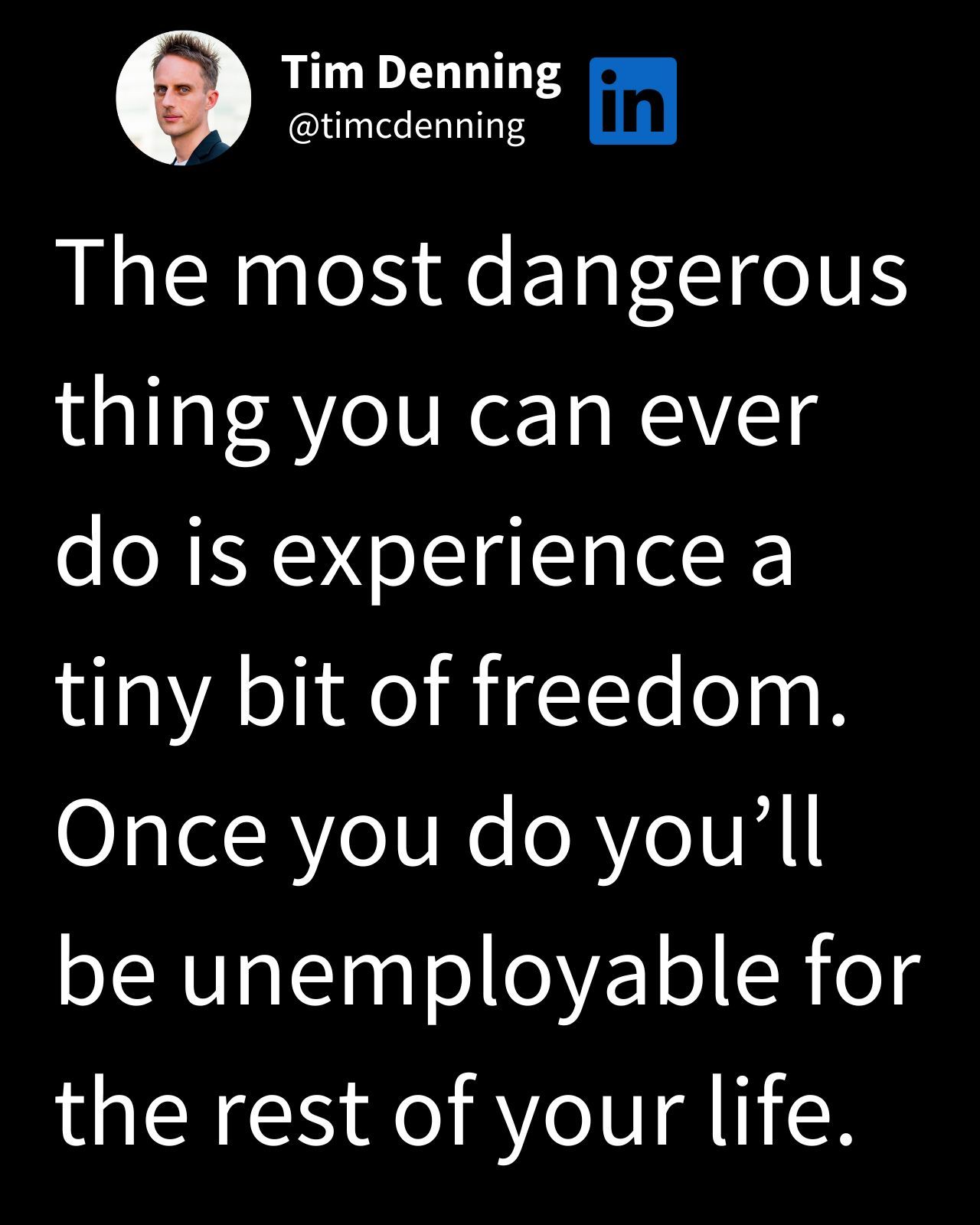
In a recent LinkedIn post, Tim Denning explores the profound shift that occurs when an individual tastes true professional freedom, arguing that this experience can render them effectively “unemployable” in traditional corporate roles. Denning, a prolific business writer, shared his personal journey after being fired in 2019, which he describes as the catalyst for discovering genuine autonomy.
Denning recounts his decade-plus career in banking, which he perceived as building security but ultimately felt was a “cage.” He elaborates on the stark contrast between his former corporate life and the liberation he felt upon losing his job.
“No alarm clock. No commute. No boss telling me what to work on. No meetings about meetings. No pretending to look busy when I wasn’t.”
This newfound freedom, though initially terrifying, proved to be an unparalleled experience for Denning. He recounts how, after a few months of self-directed work, he began receiving lucrative job offers. However, the prospect of returning to a conventional 9-to-5 structure, with its inherent constraints like commuting and seeking permission for time off, became physically unappealing.
As Tim Denning notes, this aversion isn’t due to a lack of skills but rather an acquired taste for something superior.
The Irreversible Impact of Experiencing Autonomy
Denning extends this observation beyond his personal experience, noting that he has witnessed this phenomenon in hundreds of individuals he has coached. He explains that once people achieve even modest success with their own ventures, like earning their first $1,000 on their own terms, a fundamental change occurs.
“They can never go back to the old way. They’ve seen behind the curtain. They know the game is rigged. They know there’s another option.”
According to Denning, society often discourages individuals from experiencing this level of freedom because it makes them less predictable and more inclined to question the status quo. He posits that those who taste autonomy begin to ask critical questions about the necessity of rigid schedules, office commutes, and trading time for a salary that may not fully reflect their value.
Challenging the Conventional Career Path
Denning emphasizes that he is not advocating for impulsive job resignations. Instead, he advises caution regarding exposure to alternative ways of working and living. He suggests actions like reading about successful entrepreneurs, conversing with business owners, and taking time off to truly appreciate the ownership of one’s schedule.
“Because once you experience even a tiny bit of freedom, you can’t unsee it. And you’ll spend the rest of your life trying to get more of it.”
In Denning’s view, this pursuit of freedom is not a warning but an invitation to explore a different path. He concludes by asking his audience if they have ever experienced this irreversible shift after tasting freedom, framing it as a powerful motivator for seeking greater control over one’s professional life.
📝 About This Content
This article is based on insights shared by Tim Denning on LinkedIn.
📅 Originally posted on February 11, 2026 | View original post on LinkedIn →