
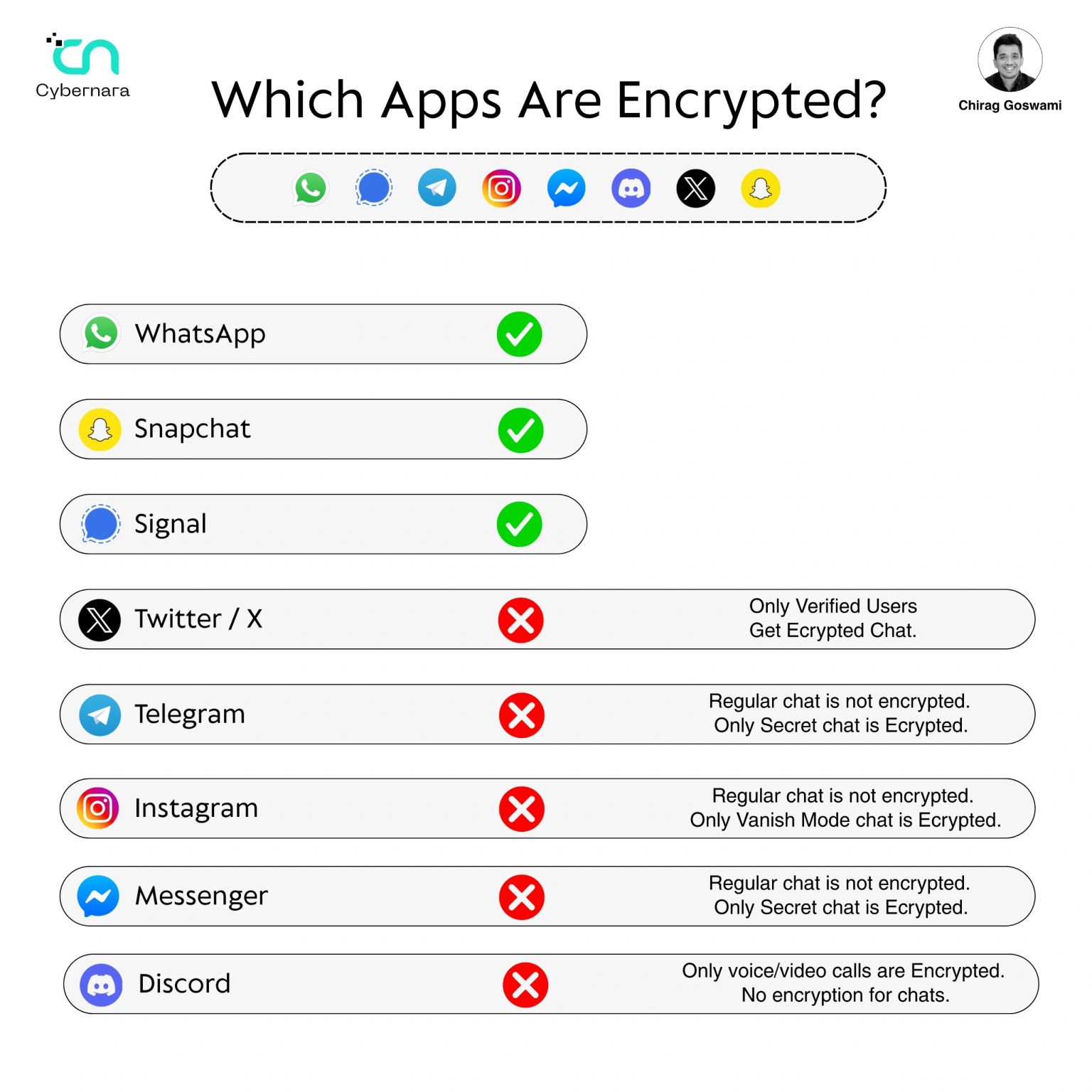
In a recent LinkedIn post, Chirag Goswami clarifies a common misconception about digital communication security, specifically addressing the nuances of encryption in popular messaging applications. Goswami, a voice in the digital security space, highlights that not all applications advertising “encrypted” services offer the same level of protection, urging users to look beyond surface-level claims.
Goswami points out the critical difference between encryption in transit and true end-to-end encryption (E2EE), a distinction many users may overlook. He states:
“Encryption in transit ≠ End-to-End Encryption (E2EE).”
This distinction is paramount, as Goswami explains, because E2EE ensures that only the sender and intended recipient can read the messages. This means the platform provider, their employees, or any potential intermediaries cannot access the content. As Goswami emphasizes:
“E2EE means only you and the recipient can read the messages. Not the platform. Not employees. Not attackers in between.”
Analyzing App Security Claims
Goswami breaks down the encryption status of several widely used platforms, providing a clear, albeit cautionary, overview. According to his analysis, applications like WhatsApp and Signal offer end-to-end encryption by default, positioning them as strong choices for users prioritizing privacy. Snapchat is also noted as encrypted, though Goswami adds a caveat regarding limitations that may depend on specific features.
However, Goswami raises significant concerns about other popular platforms. He highlights that Telegram’s regular chats are not end-to-end encrypted, with this level of security reserved only for its “Secret Chats” feature. Similarly, Instagram’s direct messages and Facebook Messenger’s standard conversations lack full E2EE, requiring users to actively enable “Secret Conversations” for enhanced privacy.
The Case of X (Twitter) and Discord
The security landscape for other platforms presents further complexities. Goswami notes that X (formerly Twitter) offers encrypted chat only to verified users, introducing a barrier to widespread private communication. Perhaps more concerning for many users, Goswami points out that Discord does not offer end-to-end encryption for its text chats at all.
This detailed breakdown serves as a vital public service announcement for digital consumers. Goswami’s core message is that users should not take encryption claims at face value. He advises a proactive approach:
“Before assuming your chats are private, check: • Is E2EE enabled by default? • Is it optional? • Is it limited to certain features?”
Goswami concludes by underscoring that robust privacy is not merely a marketing point but a fundamental aspect of a service’s configuration. As he succinctly puts it:
“Privacy is not a logo feature. It’s a configuration detail. 🔍”
Chirag Goswami’s post serves as an essential reminder for individuals and businesses alike to critically evaluate the security features of the communication tools they use daily, ensuring their digital conversations remain truly private.
📝 About This Content
This article is based on insights shared by Chirag Goswami on LinkedIn.
📅 Originally posted on February 13, 2026 | View original post on LinkedIn →