
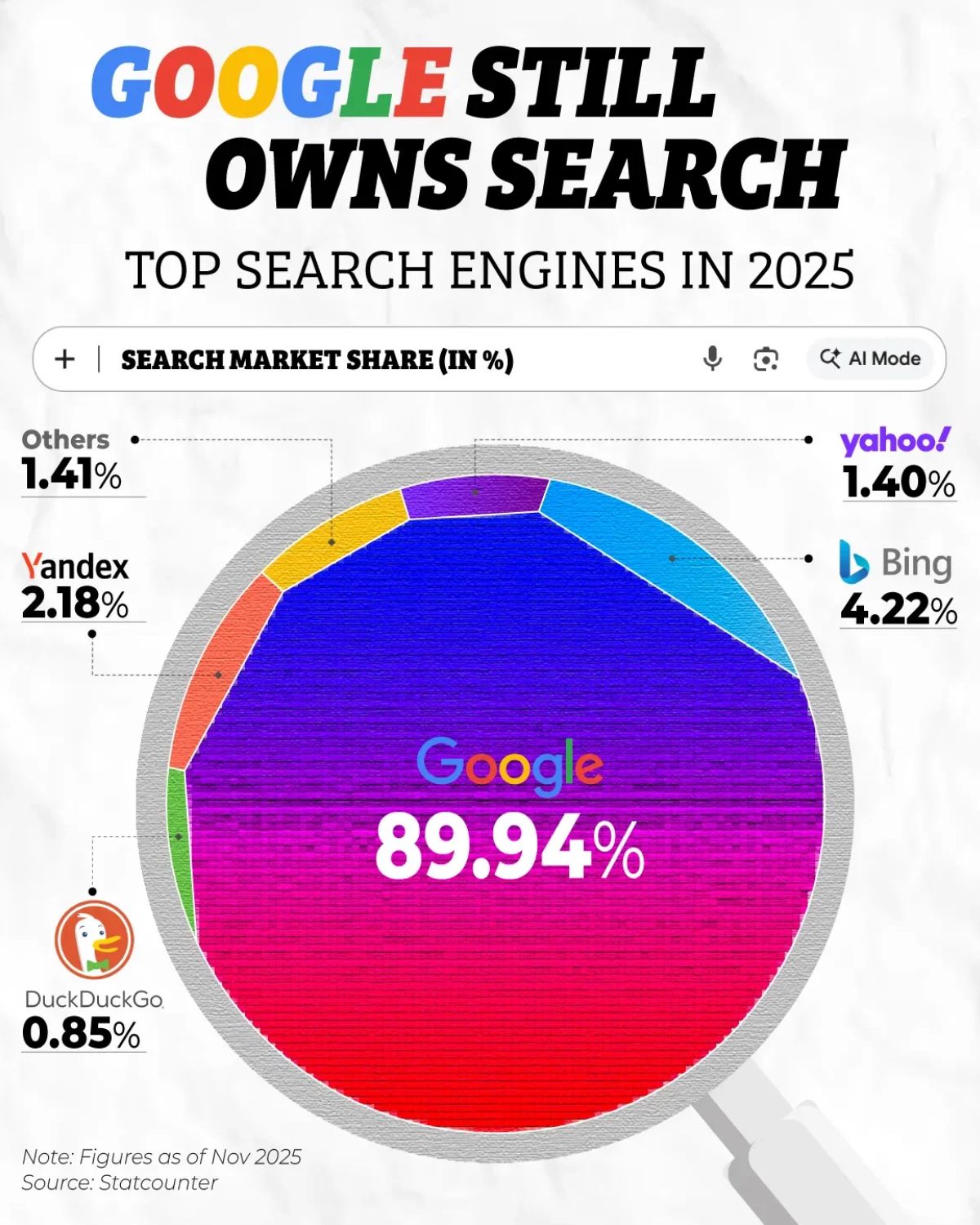
In a recent LinkedIn post, Nick Curum highlights the critical need for executive understanding of Google’s artificial intelligence capabilities, framing it not as mere upskilling but as essential “strategic hygiene.” Curum draws attention to Google’s commanding global search share, which he states will reach 89.94% in 2025, and its integration of AI directly into search functions. This dominance, he argues, necessitates a deeper dive into Google’s AI infrastructure.
“If one company controls almost all digital discovery… and that same company is embedding AI directly into search… Then understanding Google’s AI stack is not ‘upskilling’. It is strategic hygiene.”
Curum suggests that the structured AI curriculum available within Google’s Skills platform is often viewed simply as learning content. However, he reframes this for senior leadership, presenting it as a crucial “due diligence pack” for executives who are approving significant AI investments within Google’s ecosystem.
The Board’s AI Imperative
Nick Curum emphasizes that for boards and senior operators, understanding the mechanics of AI within dominant platforms like Google’s is a governance requirement. He posits that without this understanding, organizations risk funding complex technological initiatives they do not truly control.
Reframing Google’s AI Curriculum for Executives
Curum provides a reframed list of Google’s AI courses, tailored for executive review, focusing on their strategic implications:
- Introduction to Generative AI: Curum notes its importance for separating automation potential from marketing hype before funding.
- Innovating with Google Cloud Artificial Intelligence: This course, according to Curum, helps understand AI and ML’s transformative business potential before approving roadmaps.
- Introduction to Responsible AI: Curum argues that addressing bias, governance, and explainability is non-negotiable if AI interacts with customers.
- Introduction to Large Language Models: Understanding how models like ChatGPT and Gemini function is crucial before integrating them into workflows, as Curum points out.
- Gen AI: Unlock Foundational Concepts: This helps differentiate AI, ML, and generative AI before committing to vendor proposals.
- Google AI Essentials: Curum suggests this offers practical AI fluency for leadership teams without requiring a technical background.
- Prompt Design in Vertex AI: He raises the critical question of internal ownership for input quality, which directly impacts AI output.
- Introduction to Vertex AI Studio: Curum distinguishes between experimentation and the strategic imperative of deployment.
AI Literacy as Governance
The core of Curum’s message is that as Google reshapes digital discovery with AI, AI literacy within its ecosystem becomes a fundamental governance issue. He challenges leaders directly:
“You cannot outsource understanding and still claim oversight.”
Curum urges a shift in perspective, moving beyond superficial understanding. He poses a pointed question for AI steering committees:
“Does anyone at this table understand the mechanics behind what we are funding? If not, you are underwriting technological complexity you do not control.”
By reframing Google’s AI learning resources as a due diligence tool, Nick Curum is calling for a proactive and informed approach from business leaders to navigate the increasingly complex AI landscape, particularly within the dominant Google ecosystem.
📝 About This Content
This article is based on insights shared by Nick Curum on LinkedIn.
📅 Originally posted on February 19, 2026 | View original post on LinkedIn →