
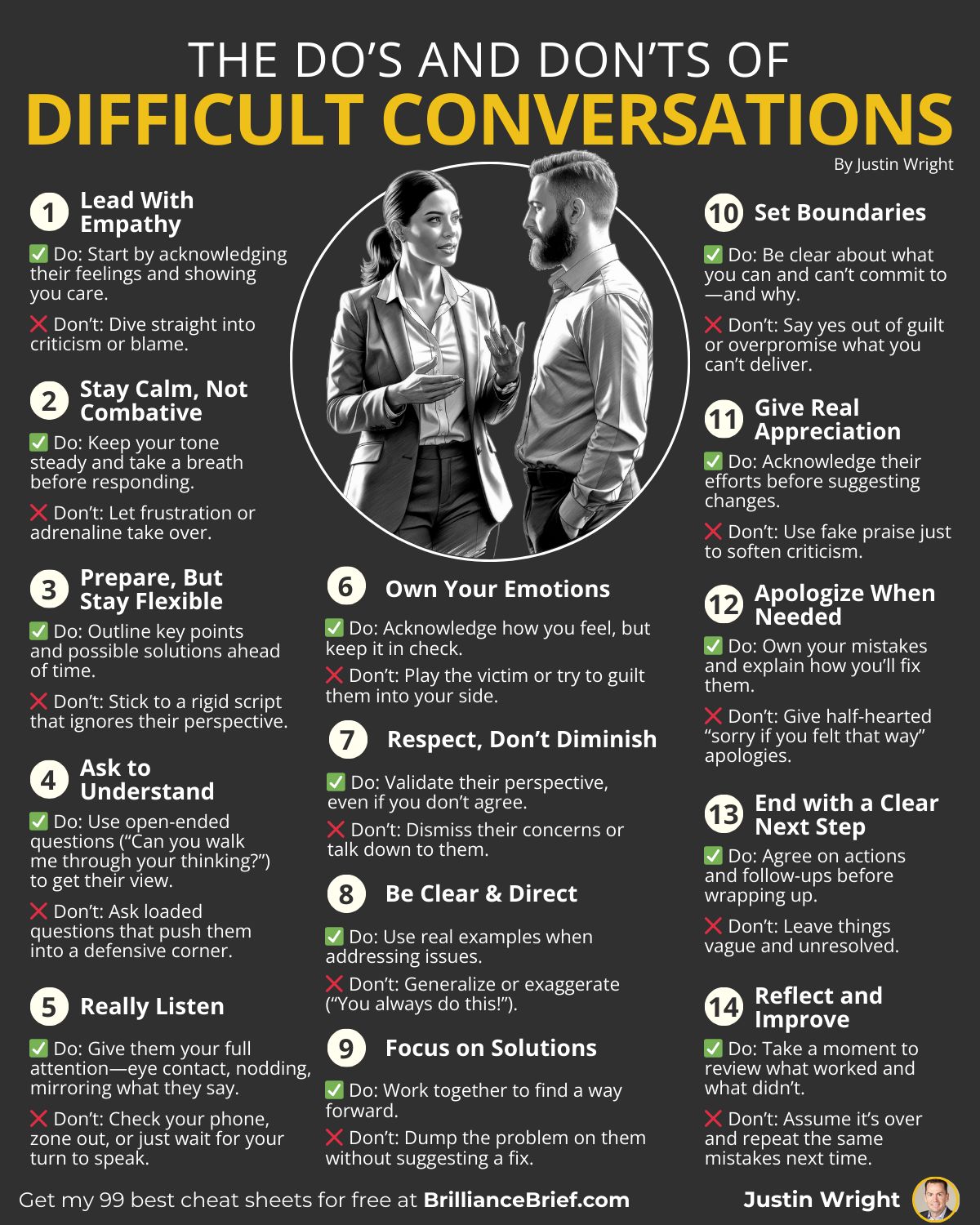
In a recent LinkedIn post, Justin Wright explores the detrimental impact of avoiding difficult conversations in the workplace, arguing that silence, often perceived as a peace-keeping strategy, can actually be a form of abandonment.
Wright shares a personal anecdote about his experience with a project manager whose work quality was declining. For months, Wright remained silent, believing he was maintaining harmony. This avoidance, however, proved counterproductive.
“I said nothing for months. When I finally had the conversation: ‘I’ve been waiting for you to bring this up,’ he said. ‘I know I’m struggling. I thought you didn’t care.'”
This interaction led Wright to a profound realization. He states that his silence was not an act of kindness but rather “abandonment disguised as peace-keeping.” What he thought was protecting their professional relationship was, in fact, eroding it.
The Paradox of Silence
Justin Wright highlights a common misconception: that avoiding conflict preserves relationships and maintains peace. He contends that this approach, while seemingly easier in the short term, creates deeper issues over time. According to Wright, choosing silence over a difficult conversation can lead to significant negative consequences for both individuals and the team.
Building Trust Through Courage
Wright posits that embracing difficult conversations, despite their inherent discomfort, is crucial for fostering a healthy and productive work environment. He outlines the benefits of choosing “courage over comfort,” which he believes builds valuable assets within an organization.
- A culture where honesty thrives.
- Relationships built on real trust.
- Solutions that actually solve problems.
As Justin Wright notes, while the immediate aftermath of a challenging discussion might feel awkward, the long-term rewards far outweigh the temporary discomfort. He emphasizes the lasting impact of inaction, stating,
“The awkward feeling might last a few mins. But regret can last a lifetime.”
Leading Through Difficulty
The core of Wright’s message is a call to leadership. He argues that true leadership involves guiding teams not around challenges, but directly through them. This requires the willingness to engage in conversations that are, by their nature, difficult.
“Your team is waiting for you to lead. Not around the hard stuff. But through it.”
Wright concludes by encouraging professionals to confront these challenging dialogues, asserting that the space beyond the difficulty is where genuine progress and stronger relationships are forged. He believes that by facing these moments head-on, leaders can cultivate an environment of authenticity and effectiveness.
📝 About This Content
This article is based on insights shared by Justin Wright on LinkedIn.
📅 Originally posted on February 19, 2026 | View original post on LinkedIn →