
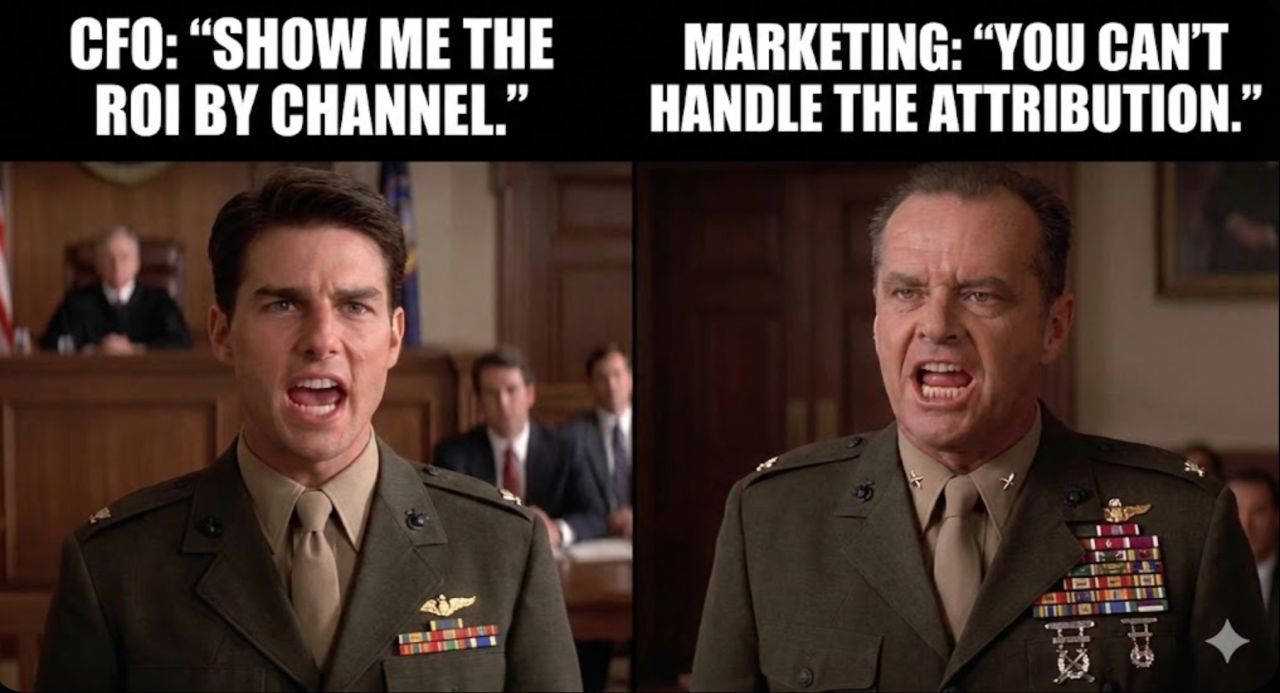
In a recent LinkedIn post, Lee McCabe challenges the prevailing methods of marketing attribution, likening it to a flawed system that often serves as an excuse rather than a solution. McCabe, a prominent voice in marketing and business strategy, argues that the complexities surrounding attribution are frequently used by those unable to clearly demonstrate financial return on investment.
McCabe opens his critique with a provocative statement:
Attribution is the last safe haven for people who can’t explain where the money went.
He elaborates on the disconnect between finance departments seeking clear ROI and marketing teams grappling with attribution models. According to McCabe, this often devolves into an argument rather than a constructive business process.
The Flaws in Traditional Attribution
McCabe likens marketing attribution to astrology, suggesting it’s effective at explaining past events but poor at predicting future outcomes. He points out a common tendency for attribution models to favor channels that align with individuals’ personal or departmental bonuses, rather than objective performance.
Attribution is the adult version of astrology. It’s brilliant at explaining the past and useless at predicting the future. And somehow it always “proves” the channel someone’s bonus depends on is undervalued.
The implication, as McCabe sees it, is that a marketing function that cannot account for its spending and its impact is not a true business function but more akin to an “arts grant.” He contends that a lack of clear financial accountability renders marketing efforts ineffective.
Rethinking Marketing’s Role
McCabe further argues that finance departments must accept that some marketing channels influence behavior over extended periods, not just through immediate, trackable clicks. He criticizes a reliance on superficial metrics and rigid financial frameworks that don’t account for long-term brand building or behavioral shifts.
If Finance can’t accept that some channels work because they change behaviour over time, not because someone clicked a tracked link, you don’t have rigour. You have spreadsheet cosplay.
This perspective suggests that a purely click-based attribution model is insufficient for understanding the true impact of marketing efforts.
A Practical Path Forward
The solution, according to McCabe, is straightforward but often ignored due to its lack of perceived glamour. He proposes a return to fundamental business principles:
- Focus on a single, critical business outcome like revenue, margin, or cash, rather than vanity metrics like “leads.”
- Establish clear rules and agreements on how marketing performance will be measured *before* campaigns begin.
- Implement rigorous testing methodologies, scaling what demonstrably works and cutting what doesn’t.
- Recognize that dashboards are tools, not substitutes for true governance and accountability.
Ultimately, McCabe asserts that marketing is not a unique discipline but a problem of capital allocation. He urges marketing professionals and leaders to approach their work with the discipline and accountability expected of any other investment area.
Marketing isn’t special. It’s just another capital allocation problem. Act like it.
By reframing marketing as a core capital allocation function, McCabe encourages a shift towards more rigorous, results-oriented strategies that align with overall business objectives.
📝 About This Content
This article is based on insights shared by Lee McCabe on LinkedIn.
📅 Originally posted on February 18, 2026 | View original post on LinkedIn →