
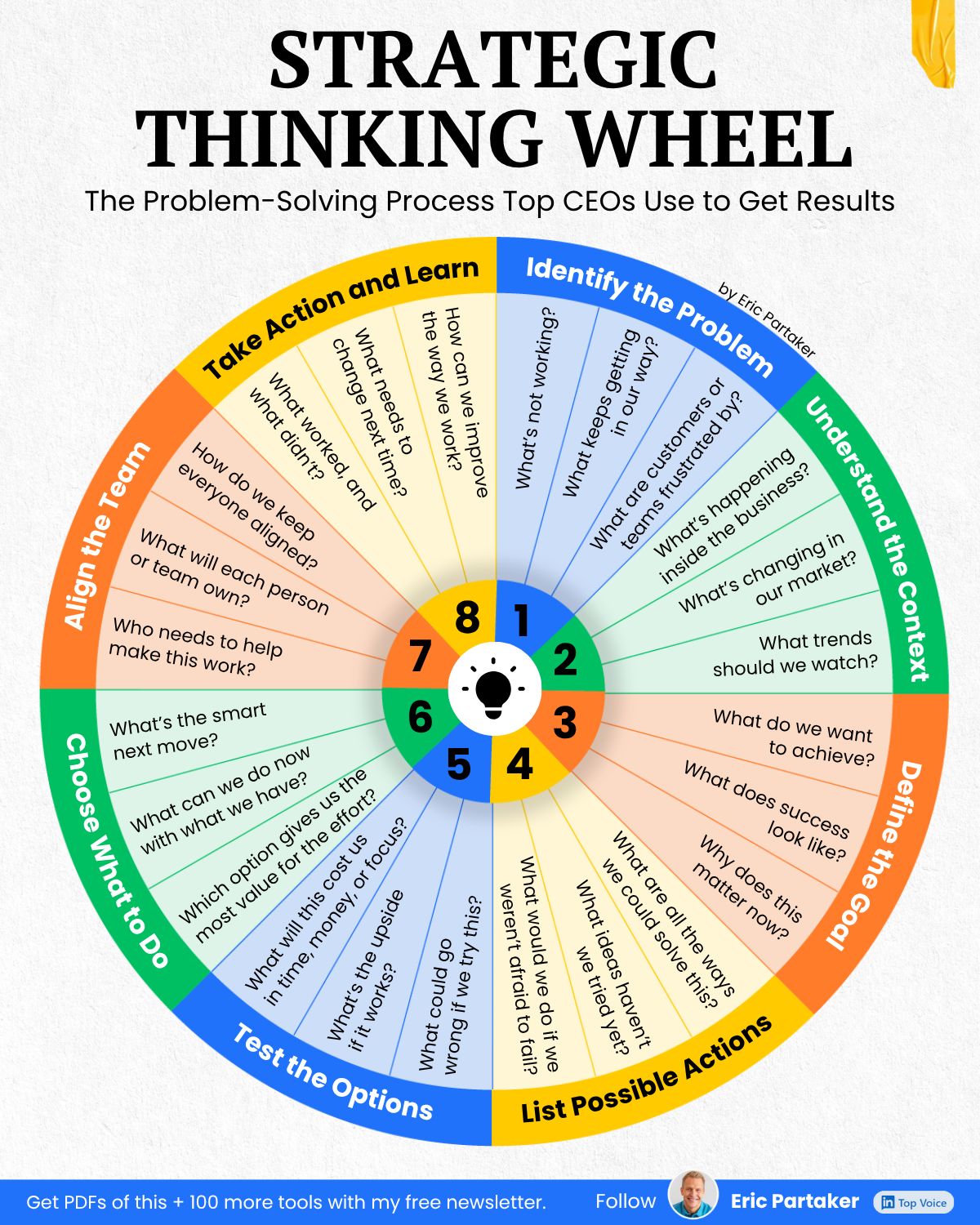
In a recent LinkedIn post, Eric Partaker explores a common pitfall for chief executives: making high-stakes decisions with an impulsive, reactive approach. Partaker, a seasoned business leader, argues that this “firefighter” mentality, characterized by rushing to solutions without deep analysis, is a primary driver behind the high failure rate of strategic initiatives.
Partaker contrasts this reactive style with that of “detective” CEOs, who prioritize thorough investigation and understanding before committing to action. He emphasizes that the immediate, obvious solution is often incomplete and that haste can ultimately be more time-consuming and costly than a deliberate, analytical process.
“Most CEOs make million-dollar decisions using the same process they use to pick lunch. And that’s exactly why 70% of strategic initiatives fail.”
The Firefighter vs. The Detective Approach
According to Eric Partaker, many founders and leaders tend to tackle problems reactively, much like a firefighter. This involves identifying a problem, quickly implementing a solution, and then being surprised when the issue resurfaces. Partaker suggests this pattern is deeply ingrained and leads to a cycle of repeated problems.
In contrast, Partaker highlights the strategic advantage of the “detective” mindset. He explains that these leaders understand the limitations of first-glance solutions and the hidden costs of rapid, unexamined action. This approach involves pausing to gather evidence, question assumptions, and uncover the root causes of issues.
Learning from Hard-Won Experience
Eric Partaker shares a personal anecdote to illustrate his point. He recounts a period when his company’s sales were declining. His initial, reactive impulse was to hire more salespeople, a seemingly logical step to boost sales. However, upon slowing down to investigate, he discovered the actual problem wasn’t a lack of sales staff but a confusing pricing structure that deterred potential customers.
“When I finally slowed down to really examine the problem, I discovered our pricing was confusing customers. Our best prospects were ghosting us after demos.”
The solution, as Partaker describes, was surprisingly simple and inexpensive: implementing a pricing calculator on their website. This led to a significant improvement in their close rate, a stark contrast to the costly and potentially ineffective hiring spree he had considered. This experience, he notes, taught him the value of deep analysis over immediate reaction.
Key Principles of Strategic Thinking
Partaker outlines five core principles that differentiate strategic thinkers from reactive leaders:
- Question before answering: Probing to understand the true nature of the problem and what might be overlooked.
- Zoom out before zooming in: Considering the broader context and interconnectedness of issues.
- Explore before executing: Investigating all possible options before committing to a course of action.
- Test before investing: Implementing small-scale tests to validate solutions before significant investment.
- Align before advancing: Ensuring clear communication and shared understanding of goals and objectives across the team.
He argues that this seemingly more deliberate approach is paradoxically faster because it focuses on solving the correct problem effectively, rather than repeatedly addressing the wrong one.
“Strategic thinking isn’t about being smarter. It’s about having a better process. One that turns your biggest challenges into your biggest advantages.”
Ultimately, Eric Partaker concludes that effective strategic thinking is less about innate intelligence and more about adopting a robust process. This process, he suggests, empowers leaders to transform their most significant challenges into their most substantial advantages.
Partaker invites readers to reflect on their own experiences, asking, “What expensive mistake could better thinking have helped you avoid?” He also offers a free PDF of his “Strategic Thinking Wheel” cheat sheet and other leadership resources to those interested.
📝 About This Content
This article is based on insights shared by Eric Partaker on LinkedIn.
📅 Originally posted on February 16, 2026 | View original post on LinkedIn →