
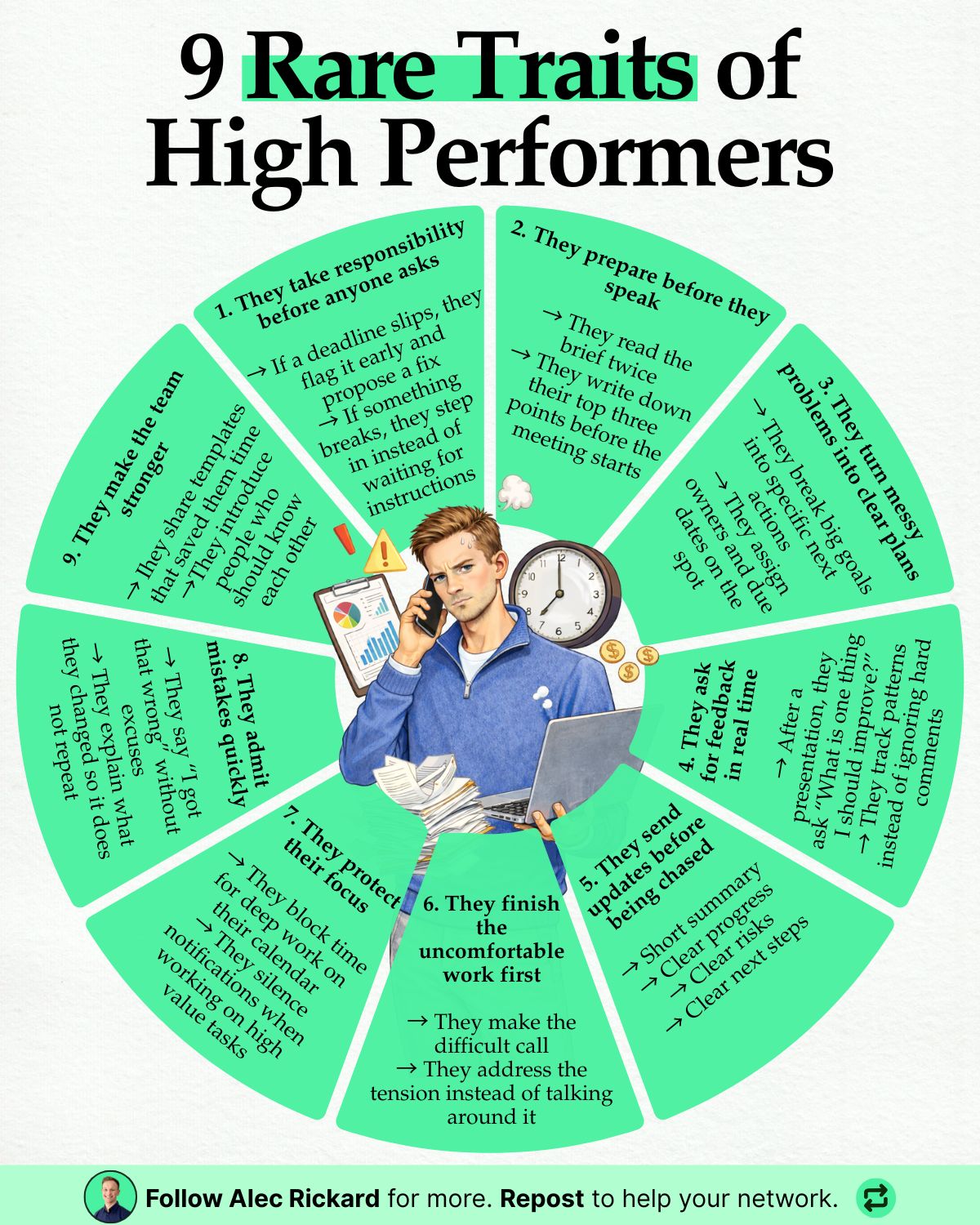
In a recent LinkedIn post, Alec Rickard shares insights on the habits that distinguish high performers and lead to career advancement. Rickard, who states he has helped over 200 professionals secure promotions, emphasizes that these traits are not about innate talent or luck, but rather about consistent, replicable daily practices.
Rickard highlights that these habits are accessible to anyone willing to cultivate them. He writes:
“Not natural talent. Not lucky breaks. Just daily habits anyone can copy.”
According to Rickard, these foundational practices are what leaders look for when deciding to promote an individual. He argues that promotion decisions often hinge on choosing the person who appears most reliable and trustworthy with increased responsibility.
Taking Ownership and Proactive Communication
One of the key traits Rickard identifies is the proactive assumption of responsibility. High performers, as Rickard describes, do not wait to be told what to do, especially when issues arise. Instead, they take initiative to address problems and communicate them early.
Rickard elaborates on this point:
“If a deadline slips, they flag it early and propose a fix. If something breaks, they step in instead of waiting for instructions.”
This proactive approach extends to communication. Rickard notes that top performers consistently provide updates before being prompted, ensuring stakeholders are informed about progress, potential risks, and next steps. This habit, he suggests, builds trust and demonstrates reliability.
Problem-Solving and Continuous Improvement
Another critical area Rickard focuses on is the ability to transform complex challenges into actionable plans. He observes that high performers excel at breaking down large goals into manageable tasks, assigning clear ownership, and setting deadlines, often in real-time during discussions.
Furthermore, Rickard emphasizes the importance of seeking and acting upon feedback. He states that high performers actively solicit constructive criticism and track recurring comments to foster continuous improvement.
“After a presentation, they ask ‘What is one thing I should improve?’ They track patterns instead of ignoring hard comments.”
This commitment to learning and adaptation is crucial for growth, according to Rickard.
Focus, Resilience, and Team Contribution
Rickard also points to the discipline of protecting one’s focus and completing difficult tasks. He suggests that high performers intentionally block time for deep work and minimize distractions. They also tackle uncomfortable situations head-on, whether it’s making a tough decision or addressing interpersonal tension.
In addition to personal effectiveness, Rickard highlights the significance of strengthening the team. Top performers, he argues, share valuable resources like templates and actively facilitate connections between colleagues who could benefit from knowing each other.
Rickard concludes by urging readers to reflect on their own habits:
“Promotion decisions are often simple. Leaders choose the person who feels safe to trust with more.”
He prompts individuals to identify which of these nine traits they excel at and which require further development, encouraging a proactive approach to career growth driven by consistent effort and self-awareness.
📝 About This Content
This article is based on insights shared by Alec Rickard on LinkedIn.
📅 Originally posted on March 1, 2026 | View original post on LinkedIn →