
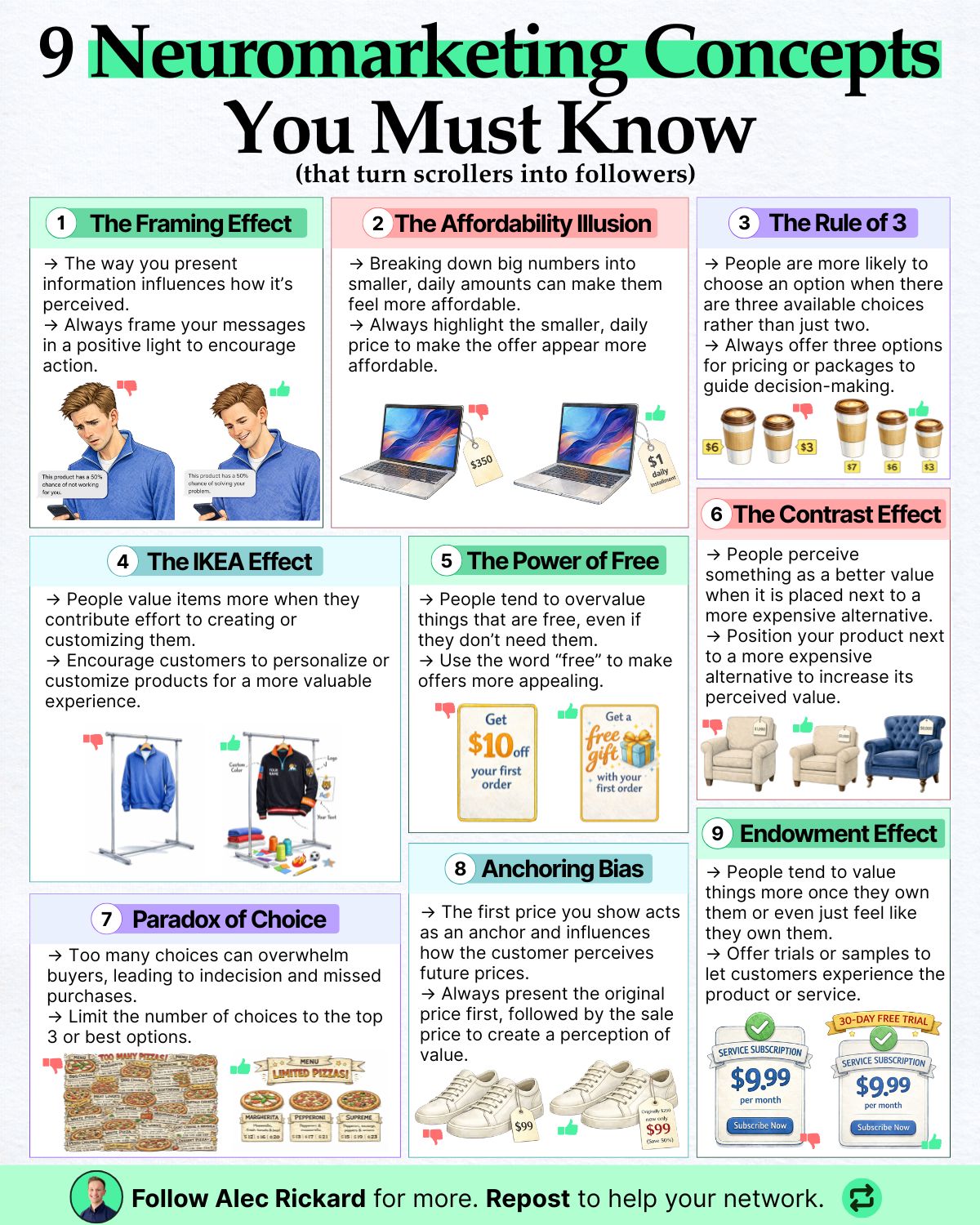
In a recent LinkedIn post, Alec Rickard challenges the conventional wisdom that follower growth is solely about posting more frequently. Instead, Rickard argues that true growth stems from understanding and leveraging fundamental psychological responses that resonate with an audience. He shared his perspective on how a deeper comprehension of human behavior can make content more effective, leading to significant follower gains.
Rickard, who documented his own journey from 3,000 to 90,000 followers in under two years, emphasizes that people are not primarily drawn to content itself, but rather to the emotional connections and patterns that content evokes. “People don’t follow content. They follow patterns that make them feel something,” Rickard states in his post, highlighting the core of his strategy.
The Science of Connection: Rickard’s Framework
Rickard outlines nine psychological concepts that, when applied correctly, can significantly enhance content performance and audience engagement. He posits that understanding how the brain makes decisions is key to creating content that works harder.
Framing and Perception
One of the key principles Rickard discusses is the Framing Effect. This concept suggests that the way information is presented can alter how it is perceived and judged. As Rickard explains, the wording used is often more impactful than the raw facts presented. He provides a practical example: framing a post as “Why your posts are getting ignored” is more likely to capture attention than a generic title like “Tips to grow on LinkedIn.”
Managing Overwhelm and Effort
Rickard also touches upon the Affordability Illusion, noting that people are more receptive to smaller, manageable pieces of information than large, overwhelming totals. He illustrates this by suggesting it’s more effective to state, “I showed up 4 times a week for 104 weeks” rather than simply “I posted for 2 years.” This approach makes the effort seem less daunting. Complementing this is the IKEA Effect, where Rickard points out that people value items more when they have invested effort in them. This concept translates to content by encouraging engagement through questions that prompt the audience to reflect on their own struggles, such as asking, “Which of these are you struggling with?”
“The way you present something changes how it is judged. The brain reacts to wording, not just facts.”
Simplicity and Clarity in Messaging
The Rule of 3 is another concept Rickard highlights, explaining that the human brain processes and remembers information more effectively when it’s presented in threes. This can manifest in structuring posts with three key points, three steps, or three shifts. Furthermore, Rickard addresses the Paradox of Choice, warning against overwhelming the audience with too many options. He advises against multiple calls to action at the end of a post, recommending instead a single, clear next step to avoid decision paralysis.
Value, Comparison, and Ownership
Rickard emphasizes the importance of the Contrast Effect, stating that value is often judged by comparison rather than in isolation. The brain, he notes, is naturally wired to compare options. This is demonstrated by comparing “Posting daily with no plan” against “Posting 3 times a week with a clear theme.” The concept of Anchoring Bias is also crucial, as Rickard explains that the initial piece of information sets a standard for subsequent judgments. Starting a post with a strong anchor, like “From 3K to 90K followers,” can immediately frame the audience’s perception of the advice that follows.
“Most people post information. The ones who grow understand behavior.”
Finally, Rickard touches on the Power of Free, suggesting that offering value without cost removes fear and resistance, thereby reducing perceived risk. He also mentions the Endowment Effect, where people value things more when they feel a sense of ownership. This can be achieved by using possessive language, such as referring to “your growth plan” instead of “a growth plan.”
In conclusion, Rickard’s insights underscore a shift from mere content volume to a more strategic, behaviorally-driven approach to social media growth. “Your job is not to post more. It is to make someone feel curious, understood, or motivated,” he asserts, suggesting that consistent emotional resonance is the true driver of follower acquisition.
📝 About This Content
This article is based on insights shared by Alec Rickard on LinkedIn.
📅 Originally posted on February 26, 2026 | View original post on LinkedIn →