
In a recent LinkedIn post, 🌀 Luca Rossi raises critical questions about the economic viability of current AI integration into the software development lifecycle (SDLC), particularly focusing on the cost of AI-assisted code reviews. Rossi argues that the prevailing approach of simply adding AI to existing processes may not be a sustainable or efficient future for software engineering.
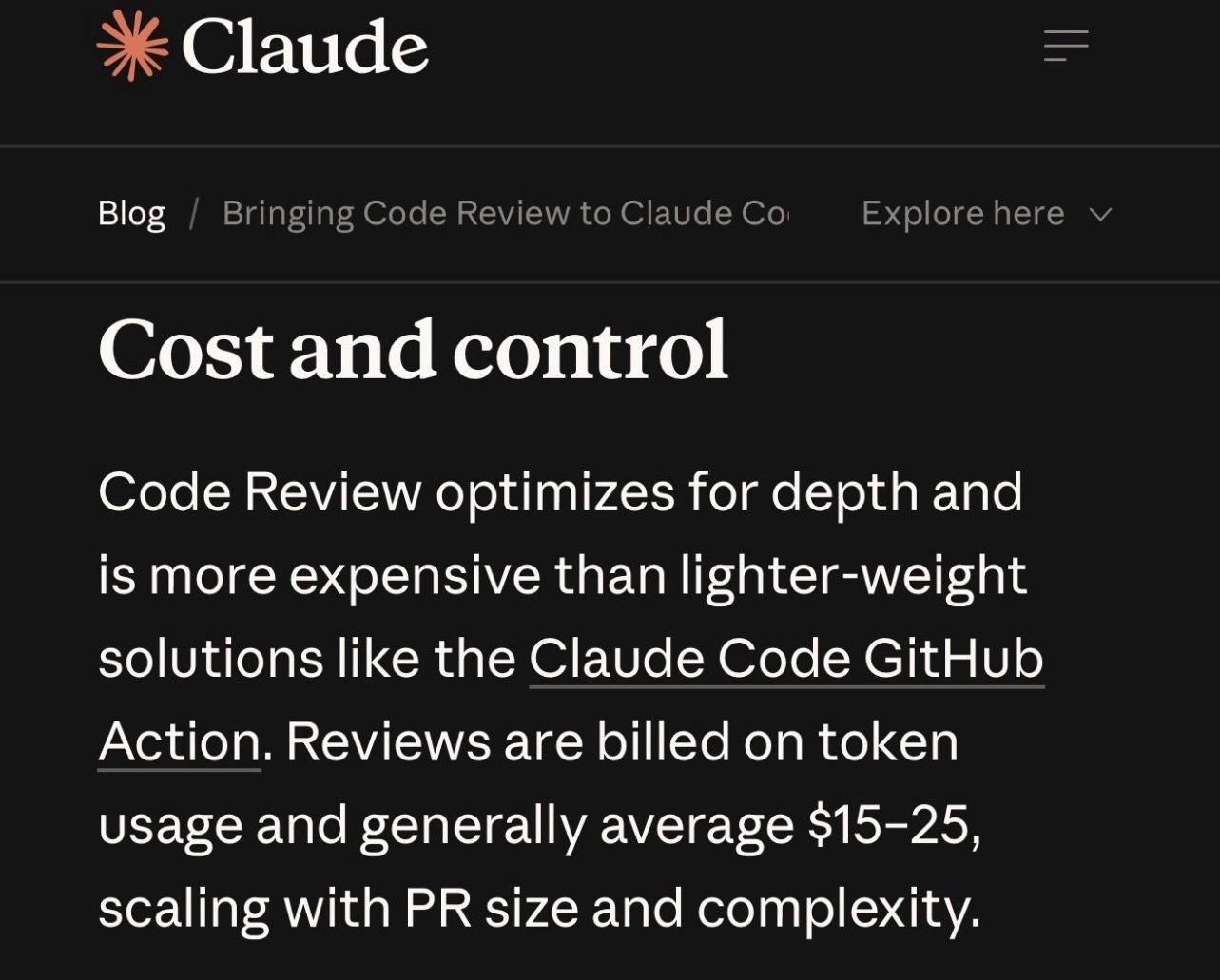
Rossi points to recent calculations regarding the cost of AI code reviews, citing Anthropic’s own estimates. According to Rossi’s analysis of these figures, a single code review by an AI like Claude could amount to approximately $20.
“A code review by Claude is going to cost ~$20, as per Anthropic’s own calculations.”
This cost, Rossi suggests, is presented as a necessary trade-off for a review to be considered meaningful and valuable. However, the implications of this pricing model become more significant when considering the typical output of software engineers.
The Economic Implications of AI Code Reviews
🌀 Luca Rossi draws a stark economic picture by juxtaposing the AI review cost with the reported productivity of engineers. Rossi notes that Anthropic itself claims its engineers ship over 20 pull requests (PRs) per day. If the cost to write a PR is assumed to be equal to the cost of reviewing it – a conservative estimate, according to Rossi – then the daily cost per engineer could escalate rapidly.
“If we assume a PR costs *just as much* to write as to review (which is being conservative), we are sitting on a $40/PR cost, or $800/day/engineer,” Rossi calculates.
This figure, Rossi contends, challenges optimistic views on AI’s impact on productivity and the future employment landscape for software engineers.
“We can talk about ‘elastic demand’ and ‘productivity’ as much as we want, but this model very obviously *cannot be* the future of software, or at least a future in which we keep many engineers employed.”
Rethinking the Software Development Lifecycle
The core of 🌀 Luca Rossi’s argument is that a direct, step-by-step integration of AI into the traditional SDLC is fundamentally flawed. Instead of merely augmenting existing stages, Rossi posits that a more radical rethinking of the entire development process is necessary.
“So I think this is the best possible evidence that taking the classic SDLC model, with all of its steps, and just slapping AI onto all of them, is not the solution,” Rossi states.
Rossi emphasizes the need for a more streamlined and efficient model, suggesting that the industry has yet to arrive at an optimal solution for integrating AI effectively without prohibitive costs or compromising the value of human engineering roles.
The Search for a Leaner Model
According to 🌀 Luca Rossi, the current trajectory, characterized by high per-unit costs for AI-assisted tasks like code review, points towards an unsustainable future if not addressed. The implication is that while AI offers potential benefits, its implementation must be guided by a strategy that prioritizes economic feasibility and long-term sustainability within the software development ecosystem.
In Rossi’s view, the challenge lies in developing a “better, leaner model” that can harness AI’s capabilities without incurring costs that outweigh the perceived benefits or threaten employment. This necessitates innovation not just in AI technology itself, but in how it is architected into the workflows and methodologies of software development.
📝 About This Content
This article is based on insights shared by 🌀 Luca Rossi on LinkedIn.
📅 Originally posted on March 10, 2026 | View original post on LinkedIn →