
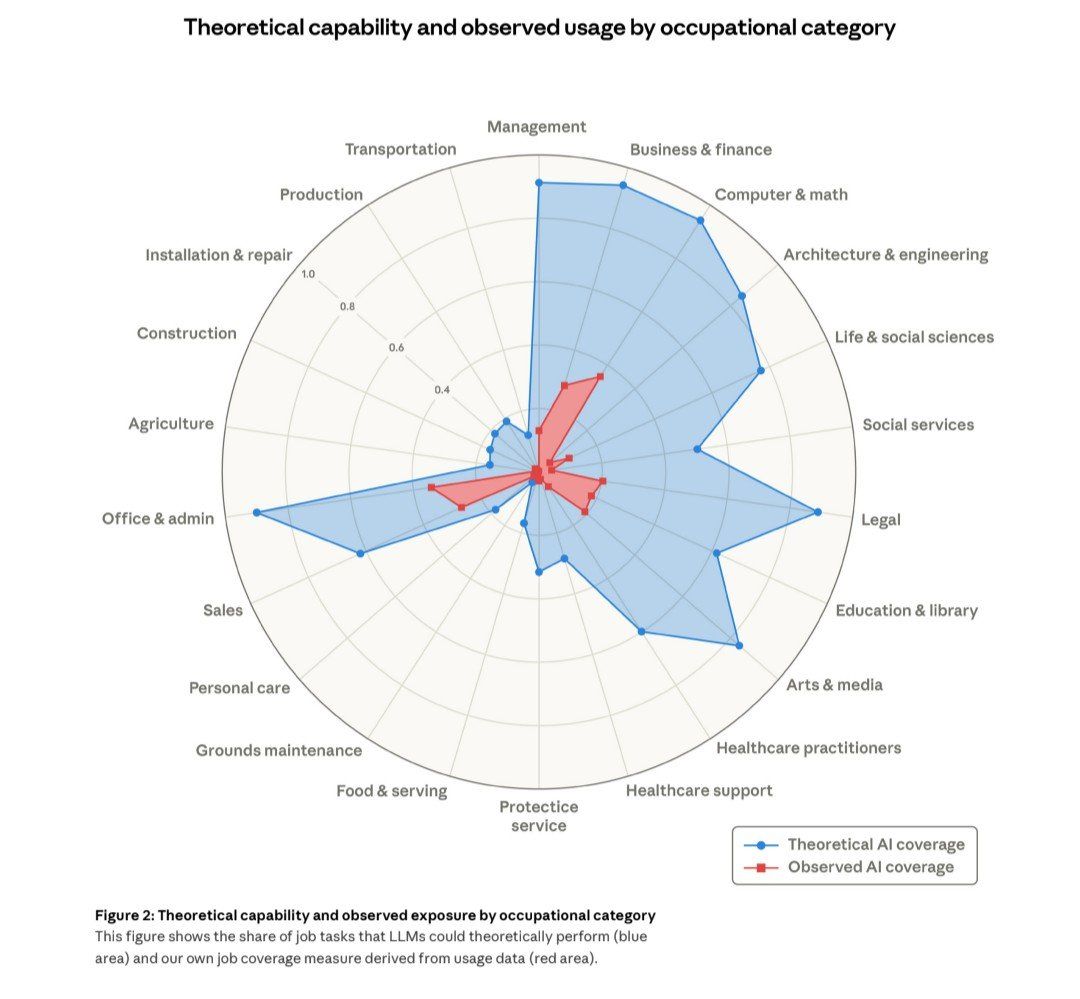
In a recent LinkedIn post, Kieran Flanagan discusses the significant gap between the potential capabilities of Artificial Intelligence and its current application within businesses. Flanagan highlights that the primary hurdle for companies adopting AI is not the technology itself, but rather the lack of skills required to integrate it effectively across existing workflows.
Flanagan uses a historical analogy to illustrate his point, referencing the adoption of electricity in American factories around the turn of the 20th century. He notes that even after electricity became widely available, its transformative impact was delayed.
“By 1900, electricity had been available for nearly 20 years, yet less than 5% of American factories used it. At that stage, electricity was more than sufficient to transform the outputs of those factories. But they kept their old layouts, old processes, and just swapped steam for electricity.”
This period, Flanagan explains, saw minimal adoption because businesses simply replaced existing machinery with electric equivalents without fundamentally altering their operational structures. The true productivity boom only arrived when factories were redesigned with electricity at their core.
The AI Analogy: Redesigning Workflows for Integration
Kieran Flanagan draws a direct parallel between the early adoption of electricity and the current state of AI implementation. He argues that many companies are making a similar mistake with AI, failing to adapt their internal processes to leverage the technology fully.
“AI is the exact same story,” Flanagan states in his post. “The AI model’s theoretical capability dwarfs its actual use.” According to Flanagan, the focus needs to shift from seeking more advanced AI models to developing the human skills necessary for effective integration.
The Need for ‘Factory Floor’ Redesign
Flanagan emphasizes that companies require individuals who can act as architects of this change, akin to those who redesigned factory floors for electricity. These are the people who understand how to reconfigure workflows, retrain staff, and implement AI in a way that genuinely enhances productivity and efficiency.
“Companies don’t need more model capabilities; they need more skills to integrate AI across their workflows. They need people who can redesign the factory floor.”
In Flanagan’s view, this strategic integration and workflow redesign is crucial for gaining a competitive edge. He suggests that the organizations that successfully navigate this challenge will achieve a disproportionately large advantage over their rivals.
The Competitive Advantage of AI Integration Skills
Kieran Flanagan posits that mastering the integration of AI into business operations will be a key differentiator in the coming years. This is not merely about adopting new software but about a fundamental rethinking of how work is done.
“The companies that figure out how to close that gap fastest will have a huge outsized advantage over their competition,” Flanagan writes. He extends this advantage to the individuals who facilitate this integration process, highlighting a significant demand for AI integration specialists.
“The people who help companies do this will have the same advantage.”
Flanagan concludes by underscoring the nascent stage of AI adoption, suggesting that the current challenges and opportunities are just the beginning. The emphasis on workflow redesign and skills development, rather than just technological advancement, offers a clear roadmap for businesses looking to harness the true power of AI.
As Flanagan puts it, “We’re still very very early.” This sentiment suggests a long runway for innovation and adaptation in the AI landscape, with significant opportunities for both companies and professionals who can bridge the gap between AI’s potential and its practical application.
📝 About This Content
This article is based on insights shared by Kieran Flanagan on LinkedIn.
📅 Originally posted on March 9, 2026 | View original post on LinkedIn →