
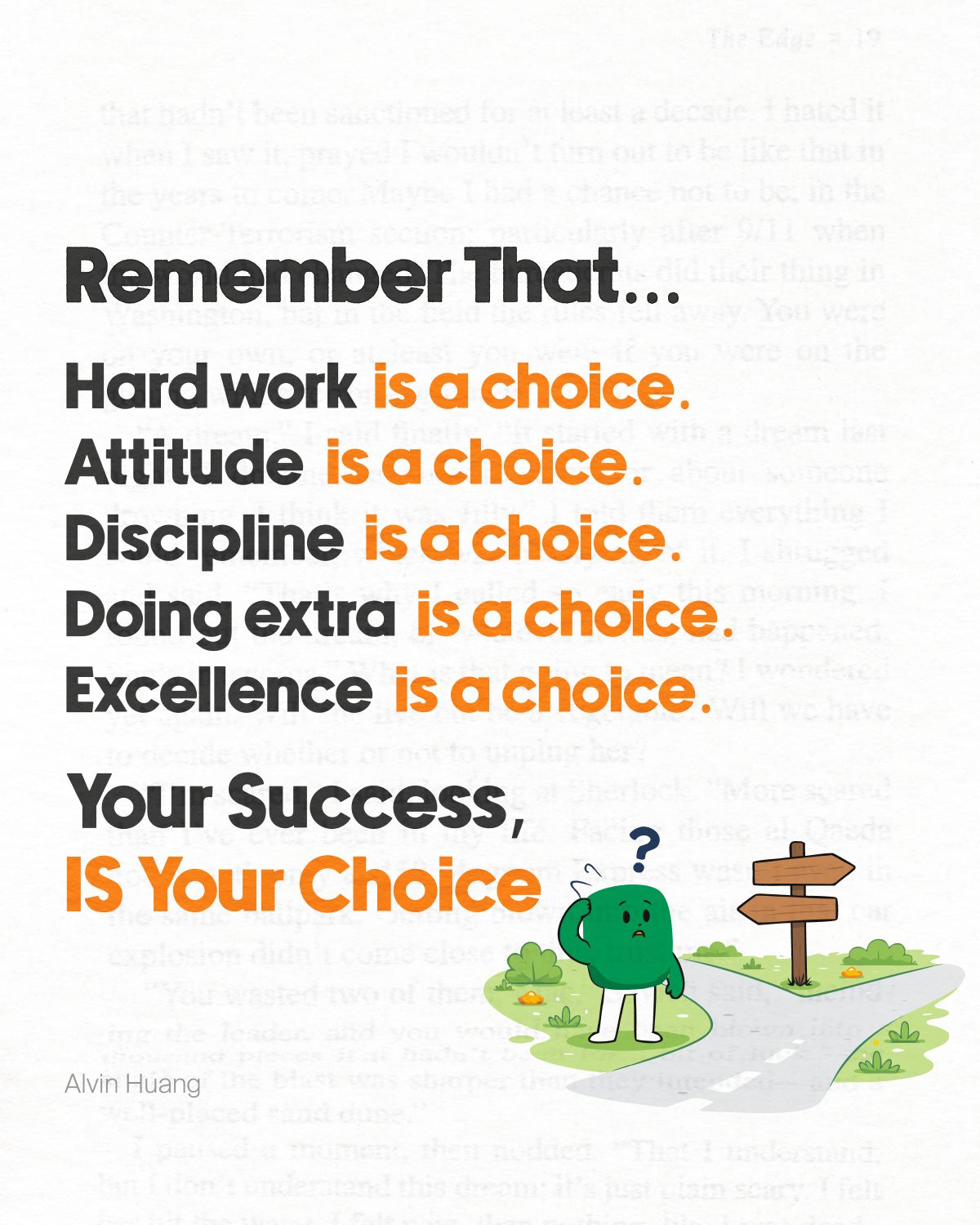
In a recent LinkedIn post, Alvin Huang challenges the common perception of success, arguing that it is not a matter of luck or external factors, but rather a direct result of deliberate, often difficult, choices.
Huang begins by addressing the tendency for people to attribute success to serendipity, suggesting this is a coping mechanism for those who feel they have not achieved their desired outcomes. He states:
Success isn’t a lottery. It’s a series of choices most people don’t want to make.
While acknowledging that elements like luck, talent, and timing can play a role, Huang emphasizes that they are not the primary drivers of the gap between one’s current state and their aspirations. Instead, he posits that this chasm is filled by consistent, everyday decisions that, though perhaps mundane, accumulate significant impact over time.
The Core Components of Deliberate Success
Huang identifies several key areas where these crucial choices manifest, distinguishing high performers from the general population. He highlights five pillars:
Hard Work
According to Huang, hard work involves the commitment to perform necessary tasks even when motivation is low or external observation is absent. It’s about fulfilling a commitment regardless of immediate desire.
Attitude
Huang points out that attitude is about maintaining a solution-oriented mindset, especially when faced with adversity. He notes that while problems are inevitable, the response to them is a matter of choice.
Problems are guaranteed, but your response to them isn’t.
Discipline
Discipline, as described by Huang, is the ability to do what is required, particularly when it is uncomfortable. He stresses that this is especially true in moments of discomfort.
Going the Extra Mile
This involves exceeding expectations, not for external validation like praise, but as a reflection of one’s personal standards, Huang explains.
Excellence
Huang defines excellence as a refusal to settle for mediocrity when one is capable of more. This drive, he argues, is essential for continuous growth.
Refusing to settle for “good enough” when you know you’re capable of more.
The Difficulty and Reward of Harder Paths
Huang acknowledges the inherent difficulty in consistently choosing the more challenging path. He recognizes that these decisions often lack immediate gratification, making them less appealing to many. As he writes:
The reality is, most people know exactly what they should be doing. They just keep choosing the easier path. Whether that’s an extra hour of sleep, or a quick Netflix episode.
However, it is precisely this difficulty and the consequent rarity of such choices that, in Huang’s view, make them so effective. He concludes by presenting a stark dichotomy:
You only got one life. You can spend it making excuses or making progress. Not both.
Huang’s insights offer a compelling perspective for professionals seeking to understand the true mechanics of achievement, framing success not as a fortunate accident, but as the cumulative outcome of intentional, often arduous, personal decisions.
📝 About This Content
This article is based on insights shared by Alvin Huang on LinkedIn.
📅 Originally posted on March 8, 2026 | View original post on LinkedIn →