
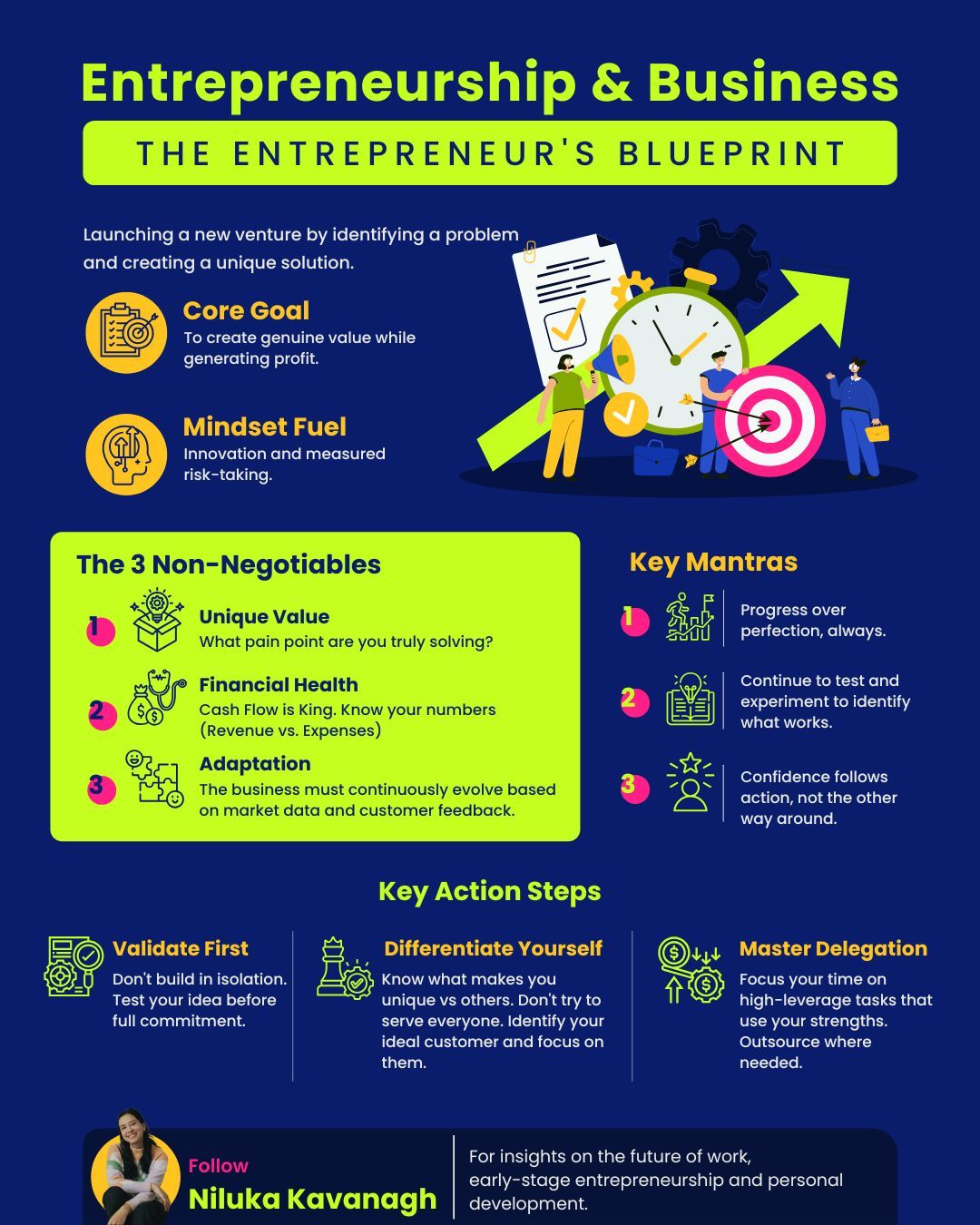
In a recent LinkedIn post, Niluka Kavanagh offers a sharp critique of a common pitfall for new entrepreneurs: mistaking busywork for genuine business progress, a state she terms “playing business.” Kavanagh, drawing from her own startup experiences, argues that many founders stall not due to a lack of passion or effort, but because the perceived safety of “busy work” shields them from the crucial, albeit sometimes uncomfortable, realities of market feedback.
The Illusion of Productivity
Kavanagh recounts a past startup venture where the outward appearance of success—a polished website, a colour-coded calendar—masked a critical absence: profit. The team, she explains, was caught in a cycle of unproductive tasks.
“We’d spend hours tweaking copy instead of speaking to customers. Reworking the brand instead of testing if it was something customers wanted.”
This focus on internal refinements over external validation, Kavanagh points out, created a false sense of productivity. As she elaborates, new founders often avoid direct market engagement because it feels less secure than perfecting their product or brand in isolation. Yet, she stresses, the market is the ultimate arbiter of success.
The Myth of ‘Readiness’
A significant hurdle for many new founders, according to Kavanagh, is the elusive concept of feeling “ready.” This often manifests as delaying crucial steps like charging for services, pitching larger clients, or even self-identifying as a founder.
“I used to wait until I felt more ready. Ready to charge. Ready to pitch bigger clients. Ready to call myself a founder. That ‘ready’ moment never came…”
Kavanagh powerfully counters this mindset by asserting that confidence and readiness are byproducts of action, not prerequisites. She emphasizes that stepping into the discomfort of awkward sales calls, imperfectly shared content, and direct customer conversations is what builds the necessary conviction.
The Three Non-Negotiables for Early-Stage Founders
To guide founders away from “playing business,” Kavanagh highlights three critical, non-negotiable elements that demand obsessive focus:
1. Unique Value
Kavanagh distinguishes between solving minor inconveniences and addressing genuine pain points. While the former might elicit compliments, only the latter attracts paying customers. She advises founders to ensure they are tackling a significant problem that people are willing to pay to solve.
2. Financial Health
Understanding key financial metrics is paramount, Kavanagh argues. Founders must have a firm grasp of their burn rate, profit margins, and future runway. Operating without this knowledge is akin to pure guesswork, a strategy that becomes increasingly costly over time.
3. Adaptation
In Kavanagh’s view, founders must shed the notion that their initial idea is immutable. She strongly advocates for listening to market data and being willing to pivot, tweak, or re-position the offering as needed. Stagnation, she warns, allows more action-oriented competitors to surpass those stuck in perpetual motion without progress.
Ultimately, Niluka Kavanagh’s insights serve as a vital reminder for entrepreneurs to ground their efforts in market reality and decisive action, rather than getting lost in the illusion of productivity.
📝 About This Content
This article is based on insights shared by Niluka Kavanagh on LinkedIn.
📅 Originally posted on March 3, 2026 | View original post on LinkedIn →