
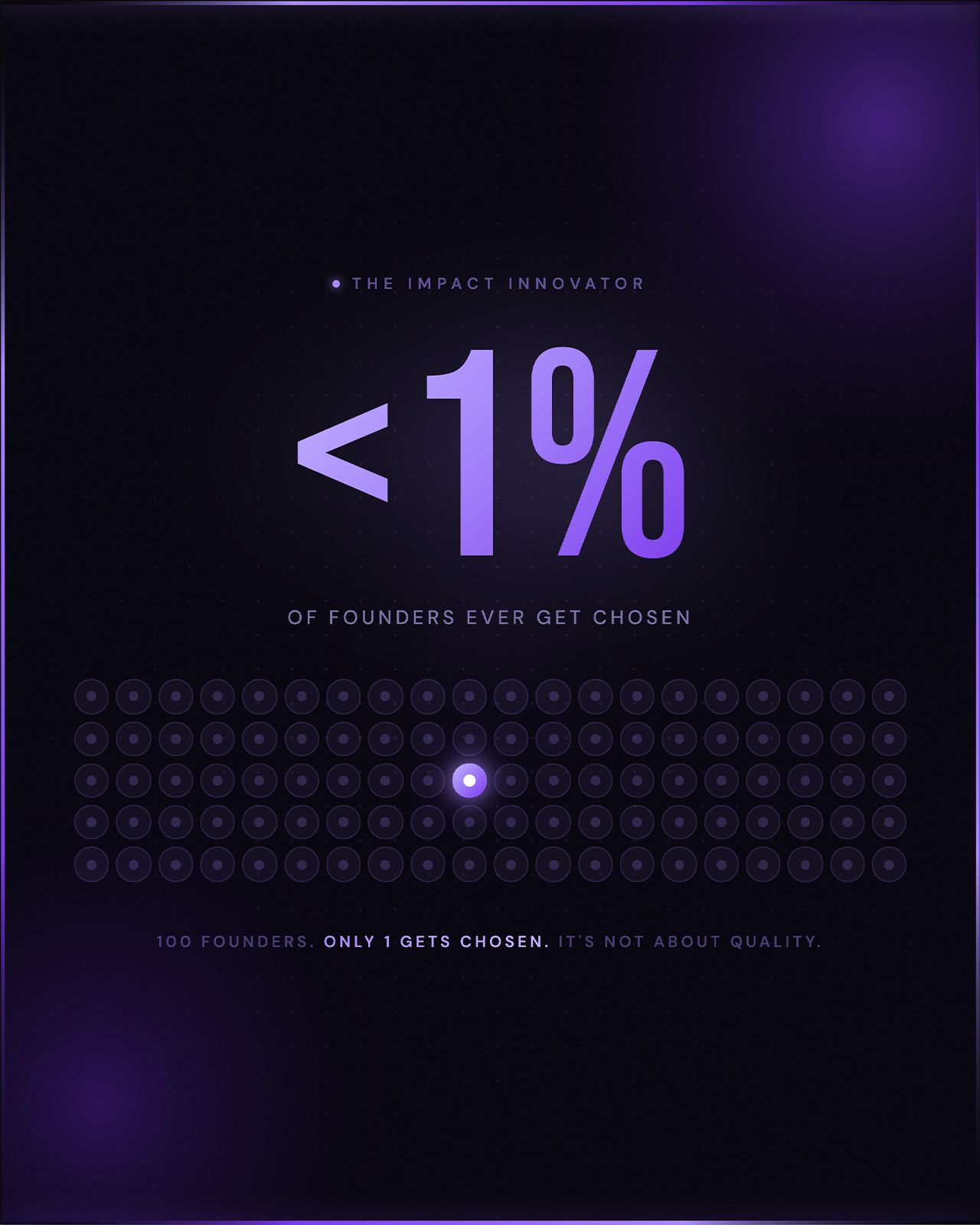
In a recent LinkedIn post, Sara Simmonds discusses a counterintuitive truth about business success: the founder with the inferior product can often outsell more talented or harder-working competitors. Simmonds, sharing insights from her experience controlling over $100 million in purchasing decisions, argues that the deciding factor isn’t always the quality of the offer, but a deeper understanding of buyer psychology.
Simmonds highlights the stark reality of competitive markets, stating:
“Less than 1% of what I reviewed every year actually got chosen.”
This statistic underscores the intense competition and the need for a more strategic approach to sales. Simmonds contends that the products and services that ultimately get chosen are not necessarily the objectively best, but rather those that are most compelling on a psychological level.
The Power of ‘Buyer Psychology Intelligence’
Sara Simmonds introduces the concept of “Buyer Psychology Intelligence” as the key differentiator. She asserts that many founders are unaware of the specific psychological triggers that influence purchasing decisions. According to Simmonds, mastering these triggers can significantly close the gap between a business and less qualified competitors.
She elaborates on this critical concept:
“There is a specific set of psychological triggers that make buyers choose. Most founders have never been shown what they are.”
In Simmonds’ view, this intelligence is not about manipulation but about understanding the underlying motivations and decision-making processes of potential customers. By recognizing and addressing these psychological factors, businesses can make their offerings irresistible, even if they don’t possess the absolute best features or the lowest price.
Why ‘Irresistible’ Wins Over ‘Best’
Simmonds’ analysis suggests a shift in focus from product superiority to persuasive communication. The implication is that a deep understanding of buyer psychology allows a business to frame its offer in a way that resonates with the customer’s needs, desires, and even subconscious biases. This framing can make it incredibly difficult for a buyer to refuse, regardless of minor product differences.
As Sara Simmonds notes, the successful founders are the ones who understand this dynamic:
“The ones I chose were not necessarily the best. They were the ones I could not say no to.”
This perspective challenges traditional sales and marketing wisdom, which often emphasizes product features and benefits. Simmonds’ “Buyer Psychology Intelligence” framework suggests that the emotional and psychological aspects of a sale are paramount. When these are effectively leveraged, the perceived quality of the product becomes secondary to the buyer’s feeling about the offer and the solution it provides.
Closing the Competitive Gap
Simmonds’ post serves as a call to action for founders to assess their understanding of buyer psychology. She proposes that by developing this intelligence, businesses can gain a significant competitive edge. The ability to make an offer that buyers find difficult to decline is presented not as an inherent talent, but as a learnable skill.
Ultimately, Sara Simmonds argues that understanding “Buyer Psychology Intelligence” is essential for any founder looking to outperform competitors, regardless of their product’s objective quality. She concludes by offering a way for businesses to identify their current standing in this regard, indicating that awareness is the first step toward leveraging these powerful psychological triggers.
📝 About This Content
This article is based on insights shared by Sara Simmonds on LinkedIn.
📅 Originally posted on March 11, 2026 | View original post on LinkedIn →