
In a recent LinkedIn post, Lise Kuecker explores the critical role of personal and professional boundaries in building a sustainable and successful business. Kuecker argues that while many entrepreneurs seek autonomy, failing to protect their boundaries can inadvertently lead to a business that feels more like a ‘cage’ than a source of freedom.
Kuecker emphasizes that boundaries are not about being less of a leader, but rather about ensuring longevity and the ability to build something meaningful. As the post states:
“Your boundaries will be tested more than your strategy. Protect them, and your business grows stronger.”
The Foundation of Autonomy
The core of Kuecker’s message revolves around the idea that the autonomy entrepreneurs seek is directly tied to their ability to maintain strong boundaries. She points out that the very reason many start businesses is to gain more control over their work and lives. However, without conscious effort to uphold these boundaries, small compromises can accumulate.
Kuecker highlights common compromises:
- “I’ll stay up later tonight.”
- “I’ll cancel dinner this time.”
- “This weekend I just have to work.”
While acknowledging that occasional deviations are necessary, Kuecker warns that a pattern of sacrificing what is stated as important can undermine the initial goals of starting a business. “But if you regularly give up what you say is important, your business becomes a cage, not freedom,” she writes.
Strategies for Boundary Enforcement
To help leaders and their teams establish and maintain healthy boundaries, Kuecker outlines several practical strategies. These methods are designed to create an environment where boundaries are respected and upheld, fostering both individual well-being and team cohesion.
Innovative Boundary-Building Techniques
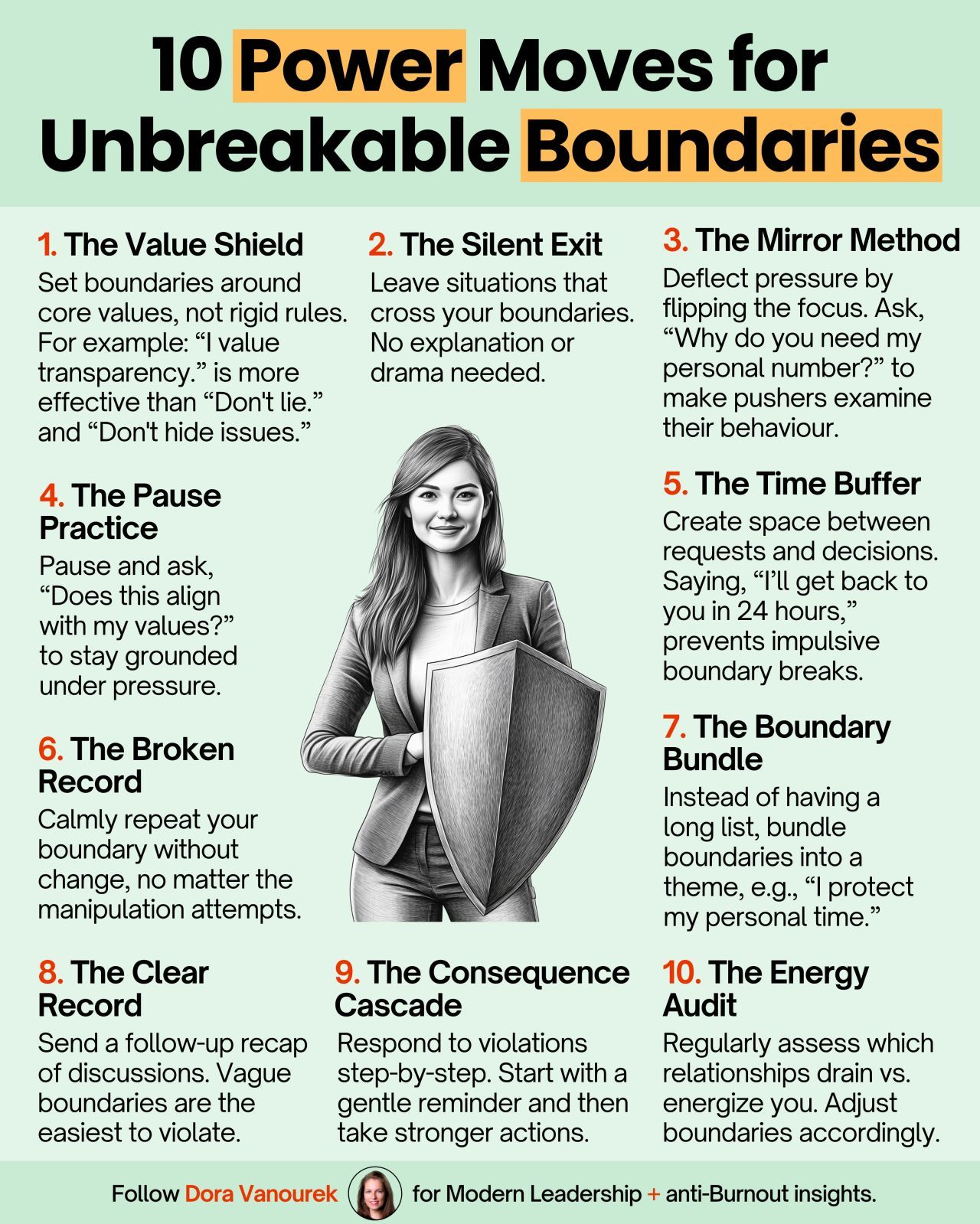
Kuecker introduces a range of techniques, each with a unique approach to boundary management:
- The Value Shield: This involves framing expectations in a positive and value-driven manner. For instance, instead of telling a team not to hide problems, Kuecker suggests asking them to “Bring the mess.”
- The Silent Exit: Kuecker advises removing oneself from situations that consistently cross boundaries. If an issue persists, the problem itself should be addressed or removed.
- The Mirror Method: This technique involves reflecting issues back to the individual. Kuecker suggests asking, “What’s your reasoning behind this?” when a boundary is crossed.
- The Pause Practice: Before making a decision, Kuecker recommends asking, “Does this align with my values?” This encourages mindful choices that honor established principles.
- The Time Buffer: For significant decisions, Kuecker advises creating space by promising a response later, such as “I’ll get back to you by this time tomorrow,” to avoid impulsive actions.
She further elaborates on other strategies like The Broken Record (consistently repeating boundaries), The Boundary Bundle (grouping boundaries into themes), The Clear Record (using follow-up notes), The Consequence Cascade (calmly responding to boundary crossings with escalation if needed), and The Energy Audit (assessing relationships that drain or energize).
“Being firm with your boundaries protects what matters to you and encourages your team to be firm with theirs.”
Leadership and Long-Term Success
Kuecker concludes by reiterating that strong boundaries are fundamental to effective leadership and long-term business success. By protecting what is important, leaders not only safeguard their own well-being but also set a standard for their teams.
“Your boundaries don’t make you less of a leader. They’re how you stay in the game long enough to build something meaningful.”
Ultimately, Kuecker’s insights on LinkedIn underscore the importance of intentional boundary setting as a strategic imperative for any leader aiming to build a resilient and rewarding business.
📝 About This Content
This article is based on insights shared by Lise Kuecker on LinkedIn.
📅 Originally posted on March 11, 2026 | View original post on LinkedIn →