
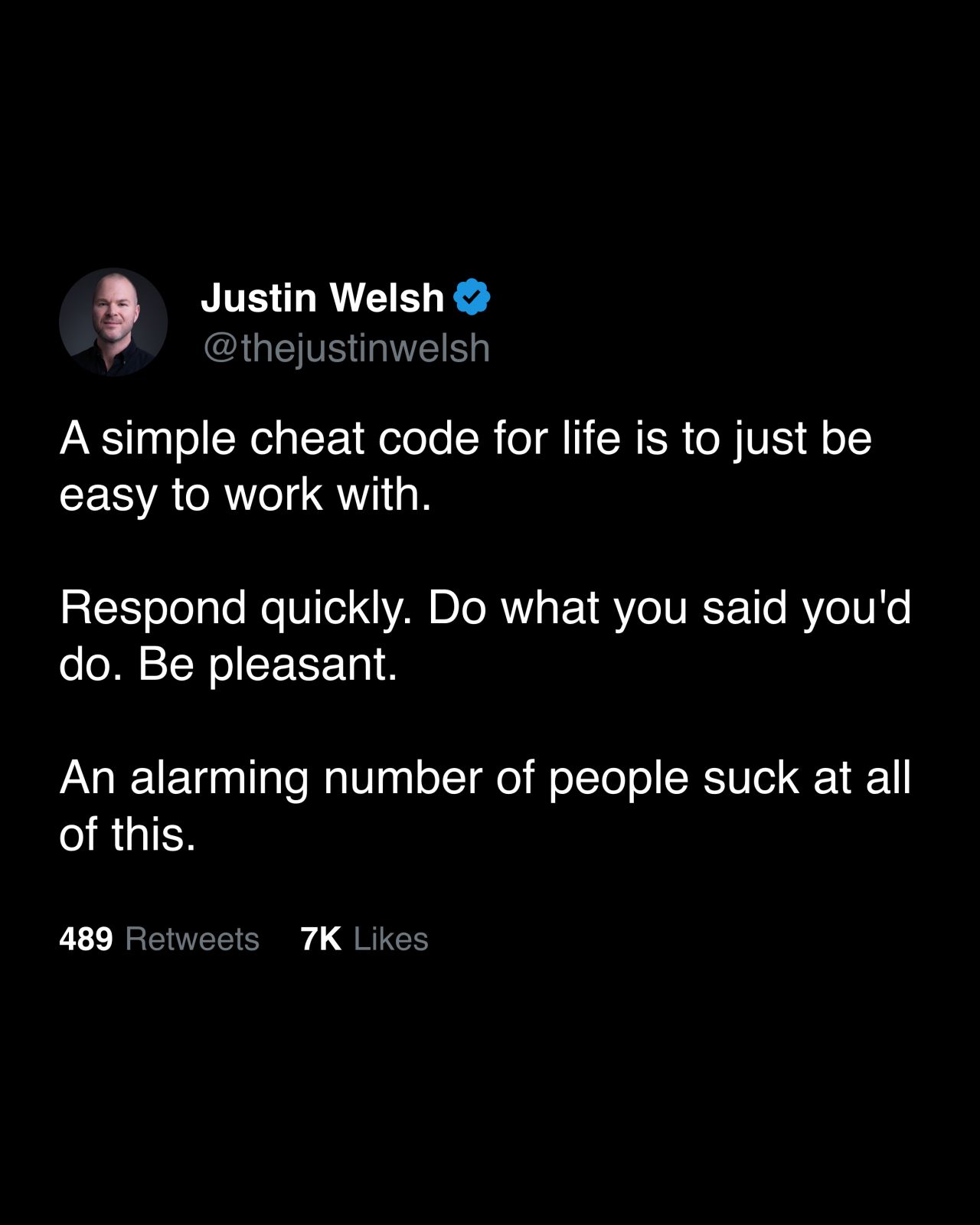
In a recent LinkedIn post, Justin Welsh discusses a deceptively simple yet powerful strategy for standing out in both business and personal life: being exceptionally easy to work with. Welsh argues that while many seek complex tactics for success, the foundational elements of positive professional conduct are often overlooked, creating a significant competitive advantage for those who master them.
Welsh highlights the core components of this approach, stating:
“Be an optimist. Be a pleasant person. Respond quickly to requests. Always do what you said you’d do.”
According to Justin Welsh, these basic principles form the bedrock of a successful professional reputation. He observes that a surprising number of individuals fail to meet these fundamental expectations.
The Downside of Being Difficult
Justin Welsh contrasts the ideal professional with those who exhibit negative traits, painting a picture of individuals who are detrimental to collaborative environments. He points out that these individuals often display pessimism, are unpleasant to interact with, respond with significant delays, and frequently fail to deliver on their commitments.
Welsh notes the common reaction of those who falter in these areas: they tend to blame external factors rather than acknowledging their own shortcomings. He writes:
“Then, when that eventually catches up to them (it always does), they tell the whole world that everyone else is the problem.”
This pattern, in Welsh’s view, is a predictable outcome of neglecting basic professional courtesy and reliability. It ultimately hinders their progress and damages their professional relationships.
Enduring Professional Relationships
Drawing on his extensive experience, Justin Welsh identifies common traits among the most valuable professional contacts he has maintained over 23 years. These individuals, he explains, consistently made his work easier and were highly effective in their roles.
The Competitive Edge of Reliability
Welsh emphasizes that the strategy of being easy to work with is not merely about politeness; it is a strategic advantage. He argues:
“It’s a competitive advantage that costs you nothing but a little time and extra energy.”
This perspective positions reliability, optimism, and prompt communication not as soft skills, but as critical drivers of business success. By consistently meeting these expectations, professionals can differentiate themselves in crowded markets and build stronger, more lasting relationships.
For those seeking to cultivate a more successful professional life, Justin Welsh suggests focusing on these foundational elements. He concludes by inviting readers who find this approach resonant to explore his weekly newsletter, which offers further insights into earning money, reclaiming time, and building a life by choice.
📝 About This Content
This article is based on insights shared by Justin Welsh on LinkedIn.
📅 Originally posted on March 12, 2026 | View original post on LinkedIn →