
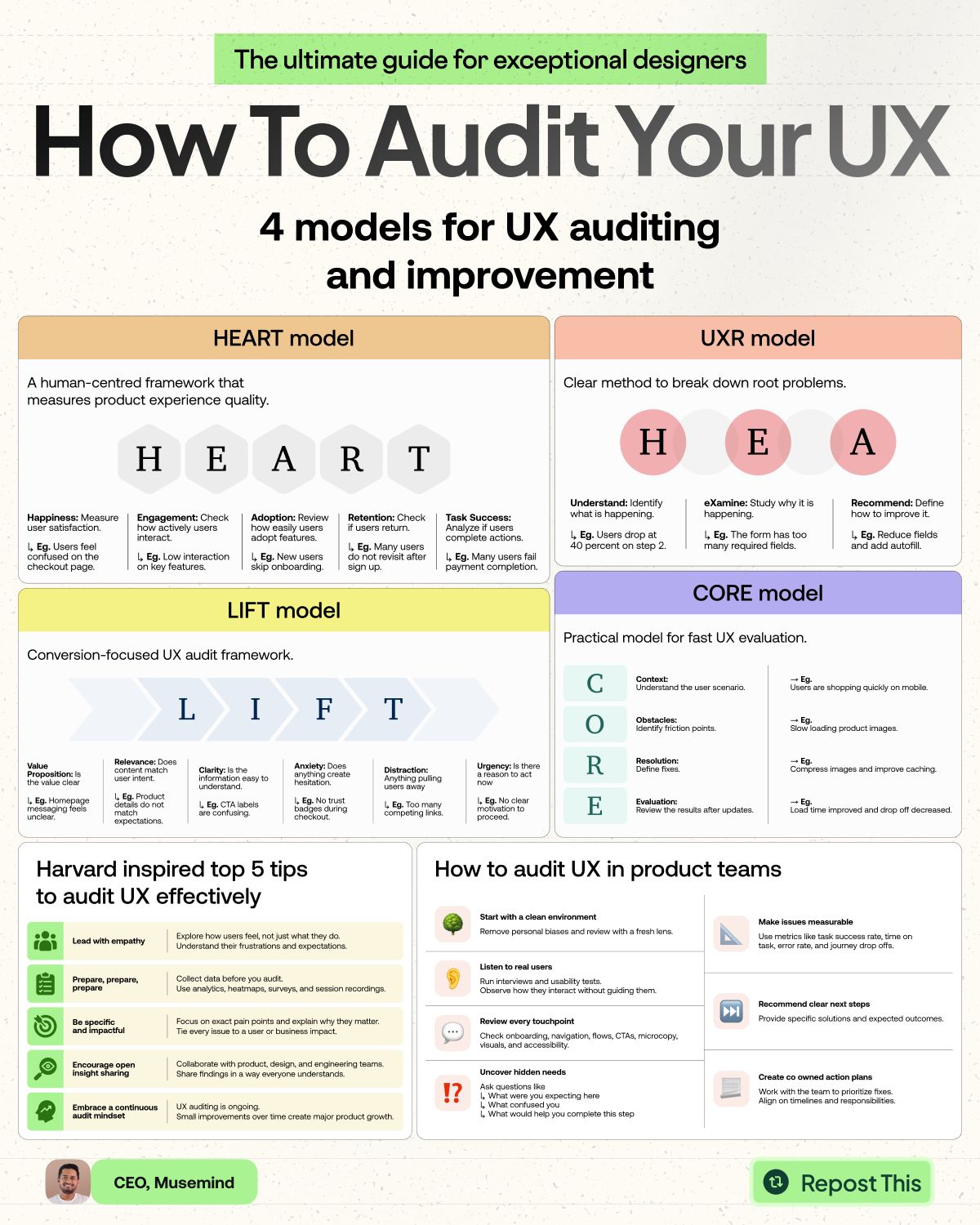
In a recent LinkedIn post, Nasir Uddin discusses a fundamental misunderstanding he observes among many UX designers regarding the core purpose of their work. Uddin argues that while many professionals conduct “UX audits,” they often fail to grasp what UX is ultimately safeguarding for a product. He emphasizes that effective UX is far more than aesthetic elements; it serves as a critical defensive layer for a business.
The True Purpose of UX Defense
Nasir Uddin highlights a common gap in understanding, stating that a significant majority of UX designers struggle to articulate the primary protective function of their discipline when asked by clients. He posits that the focus on superficial elements like pixels, layouts, or animations misses the strategic importance of UX.
“It’s not pixels, layouts, or fancy animations. Great UX is your product’s first line of defense.”
As Uddin explains, this first line of defense is crucial for mitigating various business risks that can derail a product’s success. He identifies several key areas that strong UX actively protects against.
Identifying Key Protections Offered by UX
According to Nasir Uddin, a well-executed UX strategy shields a product from a range of detrimental outcomes that can impact user engagement and business viability. These include:
- Low retention rates
- User drop-offs
- Negative reviews
- High support ticket volume
- Poor conversion rates
Conversely, Uddin points out that when UX is implemented correctly, it actively fosters positive attributes essential for user loyalty and product growth.
“And when you get UX right, it protects User satisfaction, Accessibility, Consistency, Usability, Trust.”
These protective elements are interconnected, as Nasir Uddin elaborates. He breaks down how each component contributes to an overall positive user experience that drives business objectives.
The Interplay of UX Components
Nasir Uddin further details the synergistic relationship between key UX principles:
- Usability: “Usability keeps people moving” through the product.
- Accessibility: “Accessibility includes everyone,” ensuring a broad user base can engage.
- Satisfaction: This “turns users into advocates” for the product.
- Consistency: Building “confidence” through a predictable experience.
- Trust: Ultimately, this is what “brings them back again and again.”
Uddin stresses that if a UX audit does not assess these fundamental protective aspects, it is failing to address the core issues impacting a product’s success. He concludes with a strong assertion about the non-negotiable nature of user experience in today’s market.
“UX isn’t a ‘nice to have.’ It’s mission-critical.”
Nasir Uddin’s insights underscore the strategic business value of UX, positioning it not merely as a design consideration but as a vital component for product survival and growth. He invites further discussion, offering to answer questions about product protection through UX.
📝 About This Content
This article is based on insights shared by Nasir Uddin on LinkedIn.
📅 Originally posted on March 19, 2026 | View original post on LinkedIn →