
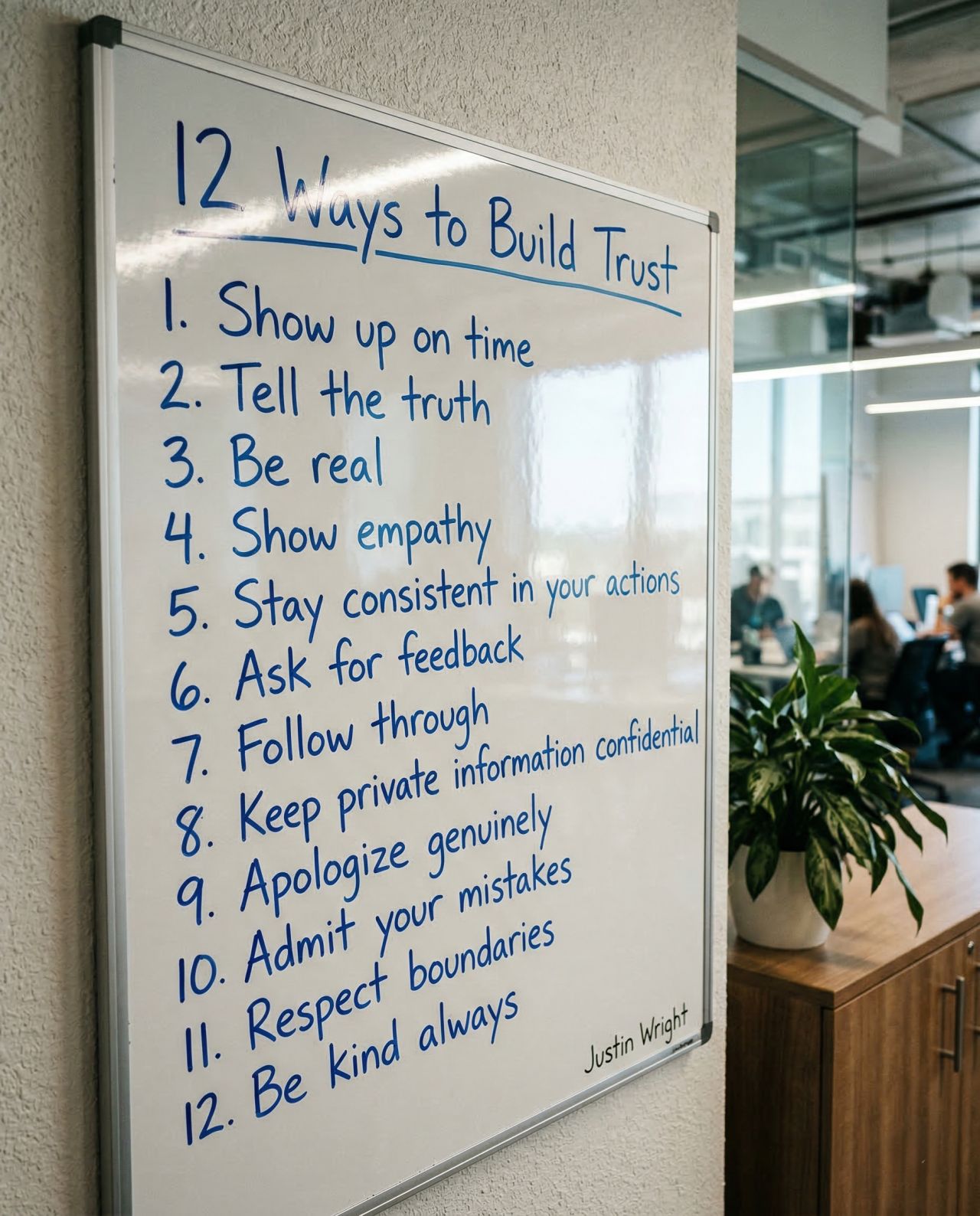
In a recent LinkedIn post, Justin Wright delves into the foundational role of relationships and trust in the business world. Wright emphasizes that at its core, business is entirely dependent on strong interpersonal connections, which are in turn built upon a bedrock of trust.
Wright asserts that trust is not an accidental byproduct of business dealings but a cultivated element, essential for sustained success. He outlines a comprehensive framework for building and nurturing this vital component.
“Business is 100% about relationships. Relationships are 100% about trust.”
The post details twelve actionable steps designed to foster trust between individuals in a professional context. Wright frames these not as mere suggestions, but as fundamental practices for anyone looking to build a reliable and respected professional presence.
The Twelve Pillars of Trust According to Wright
Justin Wright’s framework provides a clear roadmap for cultivating trust. Each point addresses a specific behavior or attitude that contributes to building credibility and reliability.
Foundational Principles
Wright begins by highlighting the importance of punctuality and honesty. He argues that showing up on time is a direct way to respect others’ time and demonstrate that you value them. Similarly, he states that truthfulness is non-negotiable for establishing trust.
“Tell the truth. Honesty lays the foundation for trust.”
Authenticity is another key theme, with Wright suggesting that being genuine encourages others to reciprocate, thereby deepening connections. Empathy, too, plays a crucial role, as understanding and acknowledging the perspectives of others builds stronger bonds.
Consistency and Reliability
A significant portion of Wright’s advice centers on consistency and follow-through. He explains that maintaining consistency in actions helps others develop confidence in one’s reliability.
“Stay consistent in your actions. Being reliable builds confidence in you.”
Furthermore, Wright stresses the importance of following through on commitments. This, he notes, is a tangible proof of trustworthiness.
Integrity and Respect
Wright also touches upon the significance of integrity, particularly in handling sensitive information and admitting fault. He advises keeping private information confidential as a means of earning respect and suggests that genuine apologies and admissions of mistakes are signs of strength and integrity, not weakness.
“Apologize genuinely. Owning up to your errors shows integrity.”
Respecting boundaries is presented as another critical element, fostering mutual respect and demonstrating care. Kindness, in Wright’s view, is the universal language of trust, making it an essential trait in all interactions.
Nurturing Trust for Long-Term Success
Wright concludes his post by reiterating that trust is a long-term endeavor, not built instantaneously. However, he presents these twelve points as a robust starting point for anyone committed to building strong, trustworthy relationships.
He urges readers to actively build, nurture, and protect trust, underscoring its direct correlation with overall success. As Wright puts it, “Because when trust is 100% there, the foundation for success is too.” He encourages the reposting of his message to spread awareness about the importance of these principles.
📝 About This Content
This article is based on insights shared by Justin Wright on LinkedIn.
📅 Originally posted on March 18, 2026 | View original post on LinkedIn →