
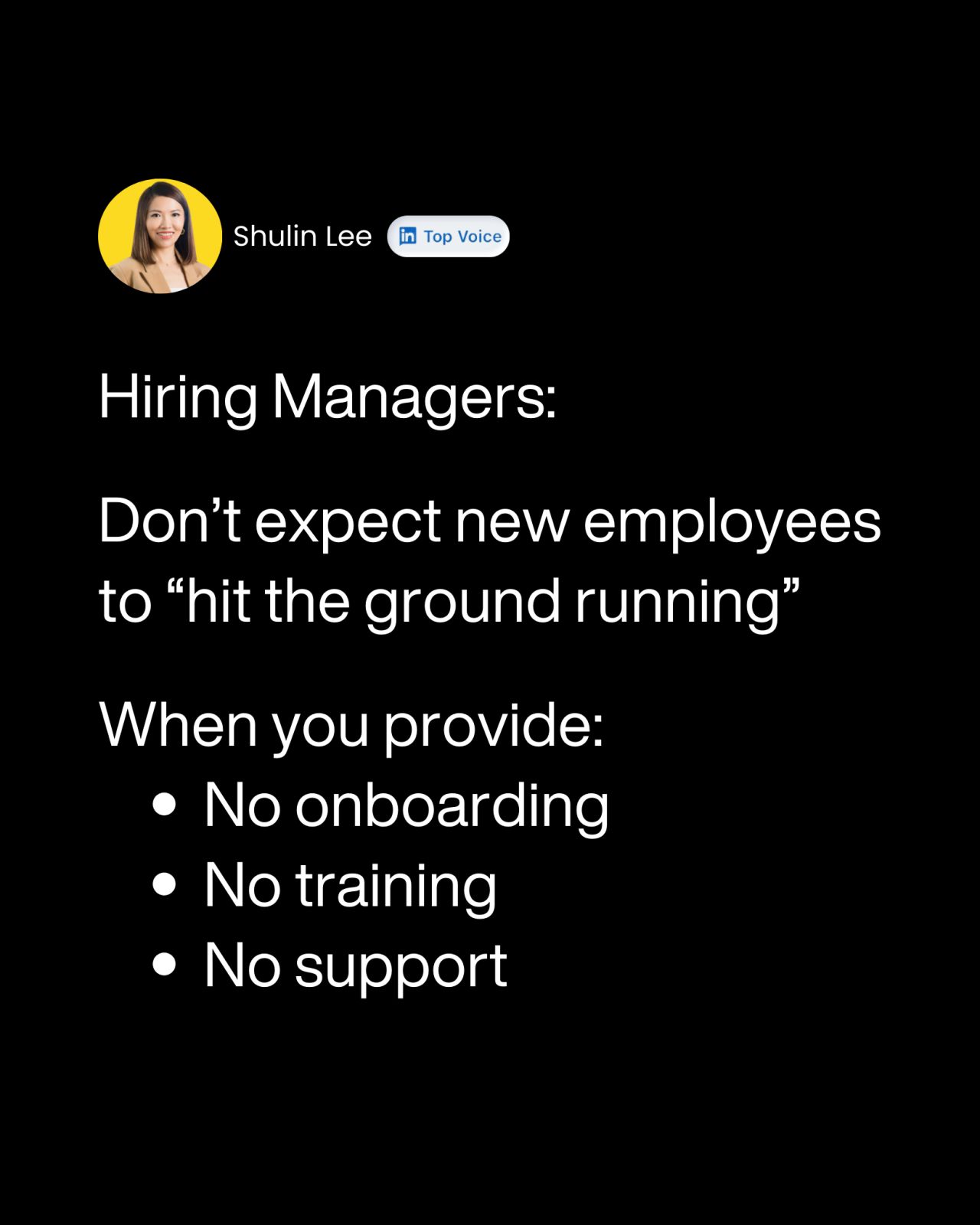
In a recent LinkedIn post, Shulin Lee discusses a common pitfall in the modern workplace: the tendency to blame new hires for underperformance without examining the support systems in place. Lee, a vocal advocate for better employee integration, argues that the narrative of a “bad hire” often masks a more significant issue – inadequate leadership and onboarding practices.
The post highlights a recurring theme Lee encounters from hiring managers. “I hear it from hiring managers all the time: ‘They just weren’t a good fit.’ But when I dig deeper, here’s what I usually find: No proper onboarding. No training plan. No support system,” Lee writes. This lack of foundational support, Lee contends, sets new employees up for failure from the outset.
The Leadership Deficit in Employee Integration
Shulin Lee directly challenges the notion that struggling new hires are inherently the problem. Instead, Lee places the responsibility squarely on leadership. “You can’t throw someone into the deep end, offer no lifeline, and then blame them for drowning,” the post states, drawing a stark analogy for the consequences of neglecting new employee support.
According to Lee, the cycle of blame is detrimental. When a new hire fails to meet expectations, they are often labelled as “not the right fit.” This label, Lee argues, is a misdiagnosis that overlooks the critical role of management in fostering success. The core issue, therefore, is not a flaw in the hiring process itself, but a failure in leadership to provide the necessary environment for new talent to thrive.
Defining Effective Onboarding Practices
Lee outlines key components of a successful onboarding process, emphasizing that it doesn’t need to be overly complicated. The post suggests that effective integration includes:
- Clear expectations established from the first day.
- Assigning a buddy or mentor for guidance and to answer questions.
- Implementing regular check-ins, particularly during the initial 90 days.
- Demonstrating patience as new hires learn company systems and processes.
- Providing constructive feedback aimed at development rather than criticism.
These elements, Shulin Lee posits, create a framework for success rather than a breeding ground for failure. The impact of this approach is profound, influencing how new hires perceive their own capabilities and their belonging within the organization.
The Hidden Cost of Poor Onboarding
A particularly poignant point raised by Lee is the emotional and psychological toll on employees who are not properly onboarded. “The best hires I’ve seen fail weren’t bad hires. They were badly onboarded,” Lee asserts. This highlights the tragic outcome where capable individuals leave a company believing they are insufficient, when in reality, they were never given the tools or support to succeed.
“And the saddest part? They leave thinking they weren’t good enough. When the truth is, they were never set up to succeed.”
Shulin Lee concludes with a direct challenge to organizations struggling with high turnover or consistent underperformance among new staff. “If your new hires keep ‘not working out’… Maybe it’s not them. Maybe it’s you.” This provocative statement serves as a call to action for leaders to self-reflect and re-evaluate their onboarding and support strategies, ultimately advocating for a more supportive and effective approach to integrating new talent into the workforce.
📝 About This Content
This article is based on insights shared by Shulin Lee on LinkedIn.
📅 Originally posted on March 17, 2026 | View original post on LinkedIn →