
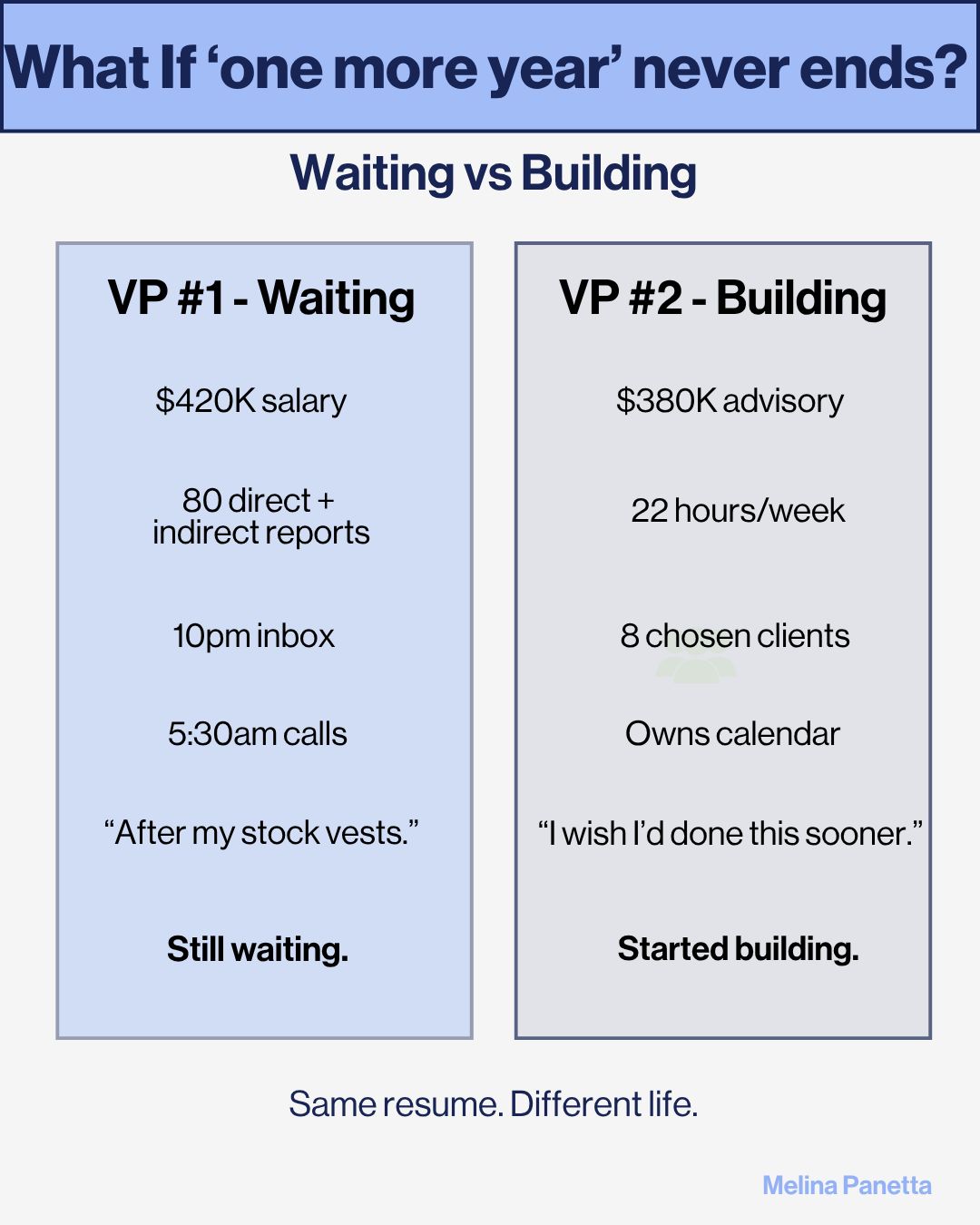
In a recent LinkedIn post, Melina Panetta explores the common trap of delaying career transitions, even when unhappiness is evident, by framing it as a rational choice rather than fear. Panetta contrasts the paths of two Vice Presidents who turned 50 in the same year, highlighting how one stayed on a corporate trajectory while the other built an independent advisory business.
Panetta uses the story of two VPs with identical resumes and salaries at age 50 to illustrate vastly different life outcomes. One VP achieved a promotion to SVP, earning $420K and doubling their team to 80. From an external perspective, this path appears successful. However, Panetta reveals the demanding reality behind the corporate success.
“10pm email clean-up so he doesn’t fall behind. 5:30am global calls from different hotel rooms. Bonus tied to goals he didn’t set. A calendar that runs him. Slack open on vacation.”
This VP, according to Panetta, frequently deferred happiness and fulfillment, using phrases like “After this bonus,” “After the next vest,” or “After my son graduates.” Panetta characterizes these as seemingly responsible, yet ultimately delaying justifications.
The Alternative Path: Building While Employed
In contrast, Panetta describes the second VP who, at the same age of 50, began testing advisory work while still employed. This proactive approach led to securing three clients before formally resigning. Eighteen months after leaving, this individual reported earning $380K working 22 hours a week with eight clients.
The second VP’s reflection, as shared by Panetta, was telling: “I wish I’d done this five years ago.” This highlights a key point Panetta makes: the initial decision to transition or build a parallel career doesn’t always stem from a sudden surge of courage.
“The difference isn’t courage. It’s whether you start building before you have to.”
Panetta argues that the delay in making such a move often doesn’t feel reckless; instead, it is rationalized. This rationalization, where individuals tell themselves “Let’s just get through this year,” becomes a self-perpetuating cycle.
Identifying and Escaping the ‘Rational Delay’ Trap
Panetta identifies this pattern as the core of the “trap.” The perception of the delayed transition as responsible masks the underlying fear or inertia. The post emphasizes that the crucial factor is not necessarily an immediate resignation but a shift in mindset and action.
The advice offered is to “Build while the job funds it.” This strategy allows individuals to create a foundation for their next career stage without the immediate financial pressure of leaving a secure, albeit potentially unfulfilling, job.
“You don’t need to resign tomorrow. But you do need to stop telling yourself the next vesting cycle is the plan.”
According to Panetta, this approach is the key to eventually leaving a role “on your terms.” The narrative serves as a call to action for professionals, particularly those nearing or at mid-career, to proactively plan and build their “Second Act” rather than waiting for external circumstances or perceived opportune moments that may never align perfectly.
Panetta concludes by encouraging readers to follow her for guidance on building their own second acts, underscoring the importance of proactive career planning and transition.
📝 About This Content
This article is based on insights shared by Melina Panetta on LinkedIn.
📅 Originally posted on March 27, 2026 | View original post on LinkedIn →