
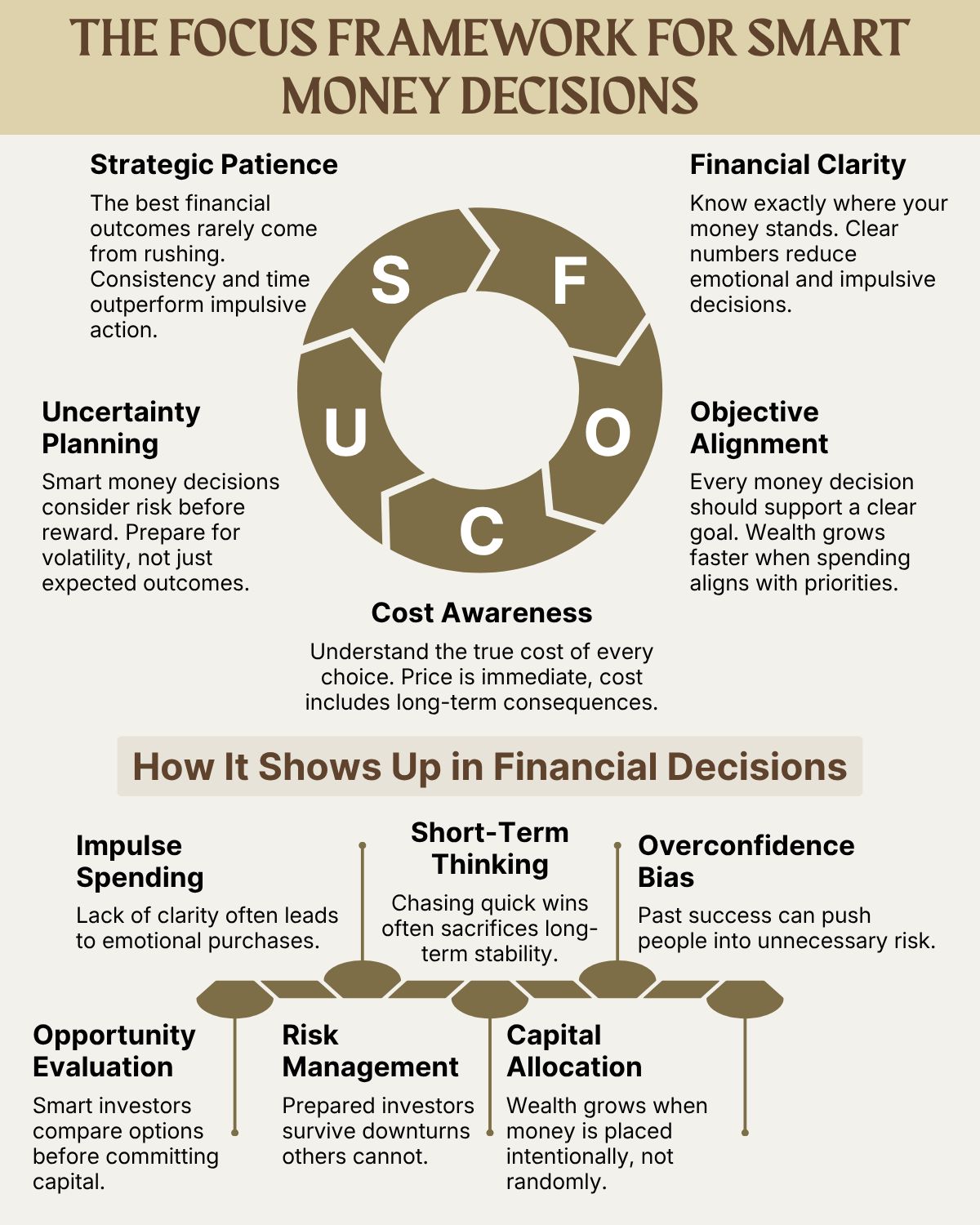
In a recent LinkedIn post, Michael Merlin discusses the common pitfalls in financial decision-making, arguing that emotional reactions, rather than a lack of intelligence, often lead to costly mistakes. Merlin emphasizes the critical need for structure and a systematic approach to managing finances.
As Michael Merlin notes:
“Most financial mistakes don’t come from a lack of intelligence. They come from a lack of a framework.”
Merlin’s post introduces the F.O.C.U.S Framework as a structured method to overcome these emotional biases and foster disciplined financial habits. He posits that without a clear system, money management can quickly devolve into reactive choices that hinder wealth growth.
The Importance of a Financial Framework
Michael Merlin highlights that smart investors do not depend on luck but rather on clear thinking and disciplined systems. He explains that when financial decisions are made reactively, money tends to disappear faster than it can grow. To counter this, Merlin advocates for a deliberate process.
“When decisions are reactive, money disappears faster than it grows.”
This reactive approach, according to Merlin, often stems from a lack of clarity about one’s financial standing and goals. He suggests that establishing a robust framework is key to transforming impulsive actions into strategic wealth-building decisions.
Introducing the F.O.C.U.S Framework
Merlin outlines his F.O.C.U.S Framework, designed to guide individuals toward making more informed and less emotional money decisions. Each component of the framework addresses a specific aspect of financial management:
F — Financial Clarity
This initial step involves understanding precisely where one’s money stands. Merlin argues that clear numbers are essential for reducing the influence of emotions on financial choices.
O — Objective Alignment
Merlin stresses that every financial decision should support a clearly defined goal. Wealth, in his view, grows most effectively when spending aligns with established priorities.
C — Cost Awareness
Moving beyond the immediate price, Merlin encourages an awareness of the long-term consequences of financial decisions. He defines price as what is paid today, while cost encompasses the future implications.
U — Uncertainty Planning
This component focuses on proactively considering risks before pursuing rewards. Merlin advises preparing for volatility rather than solely anticipating success.
S — Strategic Patience
Merlin concludes the framework by emphasizing the importance of time and consistency. He asserts that great financial outcomes are rarely the result of impulsive actions but rather of sustained, disciplined efforts.
“Because wealth isn’t built by one perfect decision. It’s built by hundreds of disciplined ones.”
Merlin illustrates how common financial errors like impulse spending, short-term thinking, and overconfidence manifest when these framework elements are absent. Conversely, he points out that smart investors compare opportunities carefully, manage risks effectively, and allocate resources intentionally to grow capital over time.
Building Wealth Through Discipline
In essence, Michael Merlin’s message is that consistent, disciplined financial decisions, guided by a structured framework, are the true building blocks of wealth. He encourages readers to reflect on their own decision-making processes and consider adopting systematic approaches to enhance their financial longevity.
📝 About This Content
This article is based on insights shared by Michael Merlin on LinkedIn.
📅 Originally posted on April 1, 2026 | View original post on LinkedIn →