
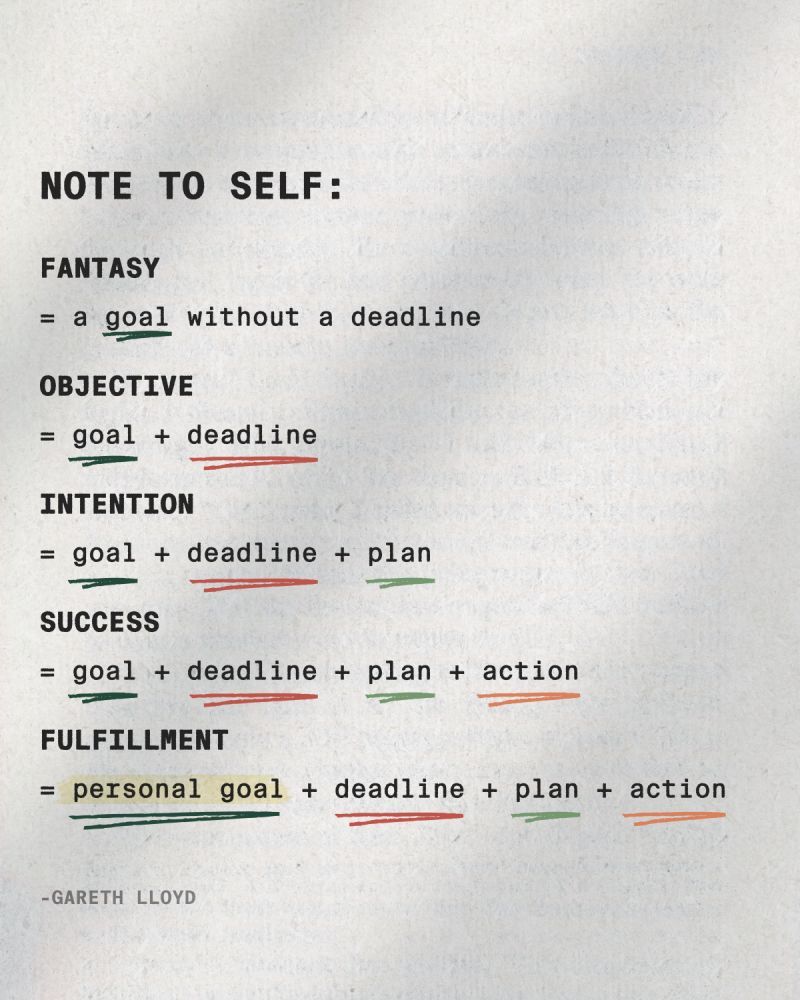
In a recent LinkedIn post, Mark O’Donnell discusses the common pitfalls of goal-setting and offers a structured approach to transforming aspirations into tangible achievements. O’Donnell highlights how many individuals, himself included, have struggled with traditional goal-setting methods, often feeling good about writing down objectives only to abandon them shortly after.
The core of O’Donnell’s message revolves around the idea that a goal without structure is merely a wish. He outlines a progression, emphasizing that adding specific elements transforms a vague desire into a concrete plan of action and, ultimately, personal fulfillment.
“A goal without a deadline is a fantasy.”
This initial statement sets the stage for O’Donnell’s argument that the absence of a timeframe renders any stated goal effectively unattainable. As he elaborates, the mere act of writing down a goal can provide a fleeting sense of accomplishment, but without a structured framework, these intentions rarely translate into meaningful progress.
The Evolution of a Goal: From Fantasy to Objective
O’Donnell breaks down the transformation process into distinct stages. He argues that adding a deadline elevates a fantasy to an objective, giving it a defined endpoint. This is a crucial step, moving beyond abstract wishes to something that can be measured and worked towards.
Furthermore, he explains that incorporating a plan turns an objective into an intention. This involves outlining the specific steps and strategies required to reach the defined goal. According to O’Donnell, this planning phase is where many people falter, focusing on the desired outcome without dedicating sufficient thought to the ‘how’.
“Add action and it becomes progress. Make it personal and it becomes fulfillment.”
The progression continues with the addition of action, which O’Donnell states turns an intention into progress. This is the execution phase, where consistent effort begins to yield visible results. Finally, he posits that making the goal personal transforms progress into fulfillment, connecting the achievement to deeper values and motivations.
The Power of Systems: EOS and Structured Ambition
O’Donnell shares his personal experience, revealing that his breakthrough in achieving goals came not from increased personal discipline, but from adopting a system. He specifically credits the Entrepreneurial Operating System (EOS) for providing the necessary structure.
He elaborates on this transformative experience:
“I didn’t suddenly have more discipline. I had a system. Rocks. Quarterly priorities. A rhythm that turned intentions into results.”
In O’Donnell’s view, structure does not stifle ambition; rather, it provides the necessary framework to channel and achieve it effectively. This system-based approach, as implemented through EOS with tools like ‘Rocks’ (key quarterly priorities), creates a rhythm that ensures intentions are consistently translated into tangible results.
A Call to Action for Coaches and Consultants
Concluding his post, O’Donnell directs his insights towards coaches and consultants who assist leadership teams. He offers a practical resource, the Business Coach Practice Checkup, designed as a self-assessment tool to help these professionals evaluate their effectiveness in helping clients set and achieve goals.
As Mark O’Donnell notes, the goal is to help others turn their aspirations into actionable plans, sharing the post to assist those who need to move beyond the ‘fantasy’ stage of goal-setting.
📝 About This Content
This article is based on insights shared by Mark O'Donnell on LinkedIn.
📅 Originally posted on April 1, 2026 | View original post on LinkedIn →