
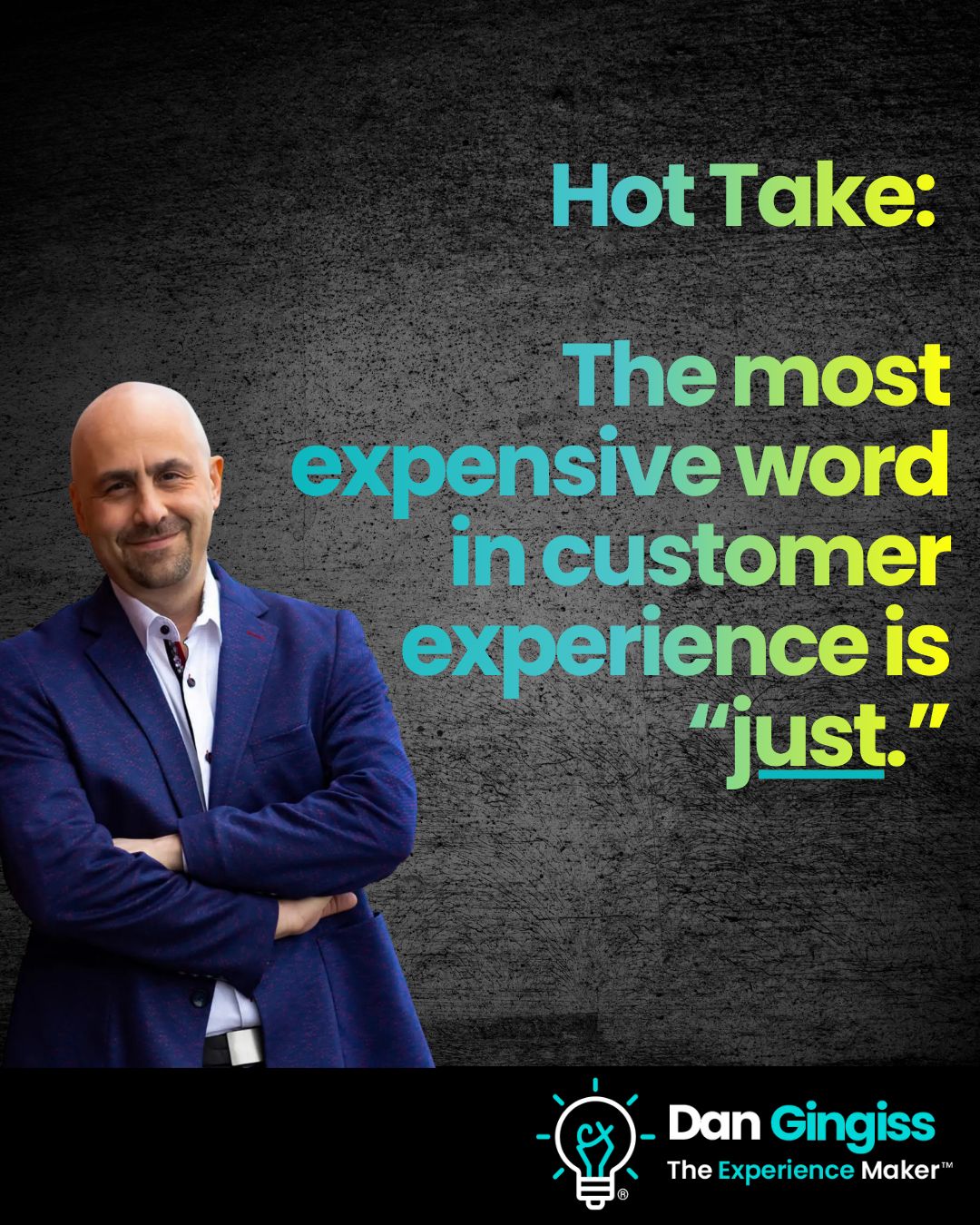
In a recent LinkedIn post, Dan Gingiss, CSP, a recognized expert in customer experience, highlights a seemingly minor linguistic detail that can significantly impact customer perception and satisfaction. Gingiss, CSP identifies the word “just” as the “most expensive word in customer experience,” arguing that its casual use often masks underlying friction for the customer.
The core of Gingiss, CSP’s argument centers on how the word “just” can inadvertently dismiss the customer’s effort or potential difficulty. He points out that phrases like “just reset your password” or “just call support” are typically easy for the person making the request but can be inconvenient or confusing for the recipient.
“‘Just’ is a red flag. Because it usually means the task is only easy for the person saying it… not the person doing it.”
Gingiss, CSP, emphasizes that this seemingly small word can erode trust and create a negative experience. He suggests that by reframing these common customer service interactions, businesses can significantly improve the customer journey.
Eliminating Friction Through Empathetic Language
The thought leader breaks down several examples of how to replace the problematic “just” with more customer-centric language. According to Gingiss, CSP, the goal is to acknowledge the customer’s perspective and provide clear, actionable information rather than minimizing the task at hand.
For instance, instead of telling a customer to “just reset your password,” Gingiss, CSP proposes a more helpful alternative: “Here’s the fastest way to reset your password, it takes about 30 seconds.” This revised phrasing provides context, sets expectations regarding time, and conveys a sense of efficiency.
“Small language changes. Big experience improvements.”
Gingiss, CSP also addresses the common instruction to “just call support.” He advocates for offering alternatives and acknowledging the customer’s potential preference. His suggested replacement is: “The quickest option is to call support. If you’d rather not, here are two other ways.” This approach empowers the customer by offering choices and respecting their time and communication preferences.
Simplifying Form Submissions and Email Instructions
Further illustrating his point, Gingiss, CSP tackles the often-frustrating experience of filling out forms. He argues that instead of a dismissive “just fill out this form,” a better approach is: “This form helps us get it right the first time. Here’s exactly what you’ll need.” This explanation clarifies the purpose of the form and proactively assists the customer by outlining necessary information, thereby reducing potential confusion and errors.
Similarly, when directing customers to check their email, Gingiss, CSP advises against a simple “just click the link in your email.” He suggests a more detailed and reassuring instruction: “Look for an email from ___ with the subject line ___. If you don’t see it in 2 minutes, check spam, or reply here and I’ll help.” This detailed guidance, coupled with a contingency plan, demonstrates a commitment to ensuring the customer successfully completes the required action.
“Small language changes. Big experience improvements.”
In his analysis, Dan Gingiss, CSP, underscores the profound impact that thoughtful communication can have on customer loyalty and overall satisfaction. By understanding and eliminating the friction caused by words like “just,” businesses can foster stronger relationships and create more positive, memorable customer experiences.
📝 About This Content
This article is based on insights shared by Dan Gingiss, CSP on LinkedIn.
📅 Originally posted on April 1, 2026 | View original post on LinkedIn →