
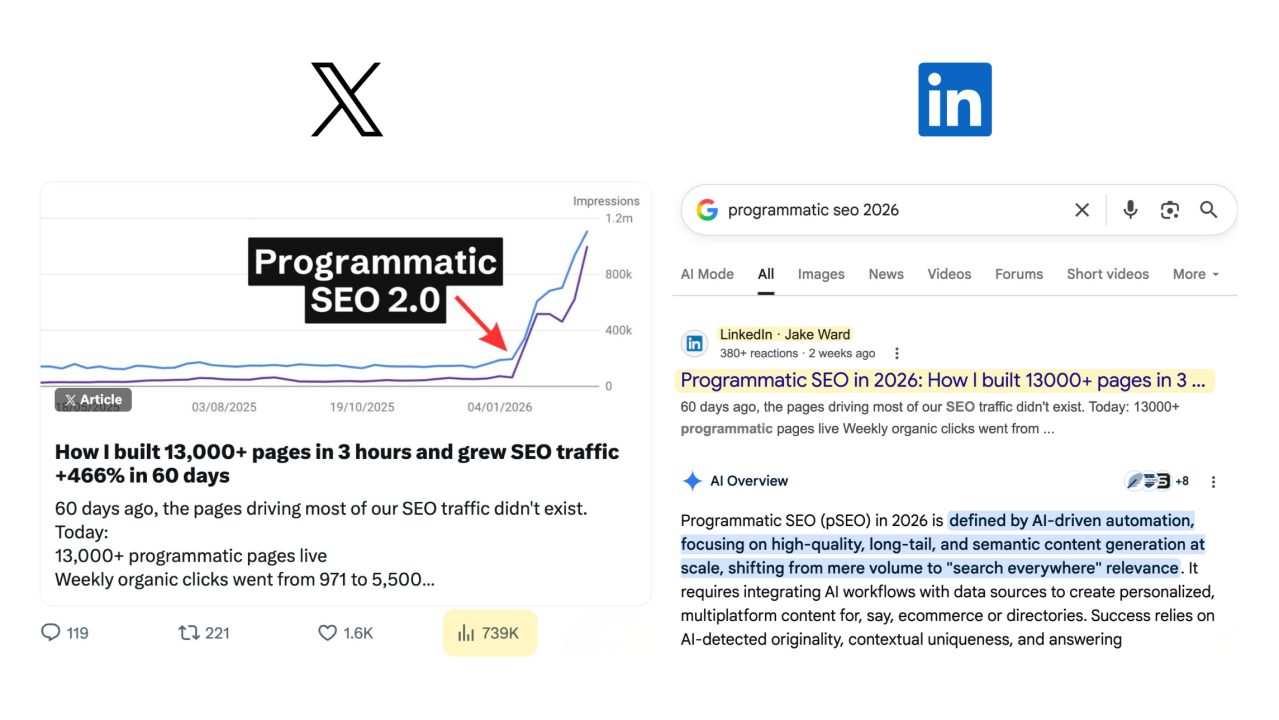
In a recent LinkedIn post, Rob Hoffman discusses the significant, yet often overlooked, leverage available to content creators on platforms like LinkedIn and X (formerly Twitter), particularly through long-form content formats.
Hoffman contrasts the current opportunities on these social networks with traditional blogging, emphasizing the unique advantages offered by LinkedIn’s Pulse articles and X’s evolving approach to long-form content.
“Your blog doesn’t have a Domain Rating of 98. It doesn’t get pushed to non-followers by an algorithmic feed. And it’s not being cited by ChatGPT 4–5x more frequently than it was 12 months ago.”
Hoffman argues that platforms like LinkedIn and X are currently providing a level of reach and algorithmic support that traditional blogs cannot match. He points out that a high Domain Rating (DR) and algorithmic promotion are key differentiators.
The Opportunity in LinkedIn Pulse
A core part of Hoffman’s analysis focuses on the untapped potential of publishing articles directly on LinkedIn via its Pulse feature. He highlights that the limited competition for keyword rankings on a platform with a high DR (like LinkedIn’s own) presents a significant opportunity.
As Hoffman notes:
“But most people aren’t publishing LinkedIn Pulse articles. That means there’s limited competition for keyword rankings on a domain with a 98 DR. Google only rewards one result per query. Once your competitors start publishing Pulse articles targeting the same keywords, the opportunity to claim that #1 spot gets a lot harder.”
This suggests a window of opportunity for early adopters to secure prominent search engine rankings by leveraging LinkedIn’s domain authority and its article publishing feature.
X’s Evolving Content Landscape
Beyond LinkedIn, Hoffman also touches upon the shifts occurring on X, where long-form content is reportedly being rewarded with increased reach and platform incentives. He draws a parallel to past platform changes that benefited early adopters.
According to Hoffman:
“On X, long-form content is being rewarded with reach and incentives. That kind of push from the platform won’t last forever. Early movers on new formats always get disproportionate distribution before the algorithm normalises.”
He uses the examples of LinkedIn carousels, Twitter threads, and Instagram Reels to illustrate a consistent pattern: platforms that introduce new content formats or reward specific types of engagement often provide outsized results for those who adopt them early, before the algorithms mature and competition increases.
The ‘Early Mover’ Advantage
Hoffman’s central thesis revolves around the concept of the ‘early mover’ advantage. He posits that platforms are currently offering disproportionate distribution to content creators who experiment with and adopt new or newly favored formats.
In Hoffman’s view, this playbook is repeating itself. By understanding these platform dynamics and acting proactively, content creators can gain a significant competitive edge before the landscape inevitably changes and becomes more saturated.
📝 About This Content
This article is based on insights shared by Rob Hoffman on LinkedIn.
📅 Originally posted on March 31, 2026 | View original post on LinkedIn →