
In a recent LinkedIn post, Lise Kuecker discusses the essential practice of pivoting a business strategy, demystifying the process for founders and leaders. Kuecker emphasizes that while pivoting can seem daunting, it is a necessary and often data-driven maneuver for sustained success.
“Every founder has a moment where they need to pivot. And it’s not as scary as it seems.”
Kuecker, a seasoned entrepreneur who has built and exited six businesses, shares her personal experience and a structured approach to making strategic shifts. The impetus for her recent deep dive, she explains, stemmed from a noticeable dip in her company’s advertising performance on Meta.
The Importance of Following the Data
At the core of Kuecker’s philosophy is the principle of adhering to data. She states that her team frequently hears her emphasize the mantra, “follow the data.” This data-centric approach was precisely what triggered a significant refresh of their advertising strategy. Kuecker recounts the extensive effort involved, including filming videos and experimenting with various visual elements, all initiated because of declining advertising numbers.
“If there’s one thing my team will constantly hear me say, it’s ‘follow the data.'”
She highlights that business environments are in constant flux, with algorithms changing and broader market dynamics shifting. When expected outcomes aren’t met, Kuecker argues, a pivot is not just an option but a necessity.
A Five-Step Framework for Pivoting
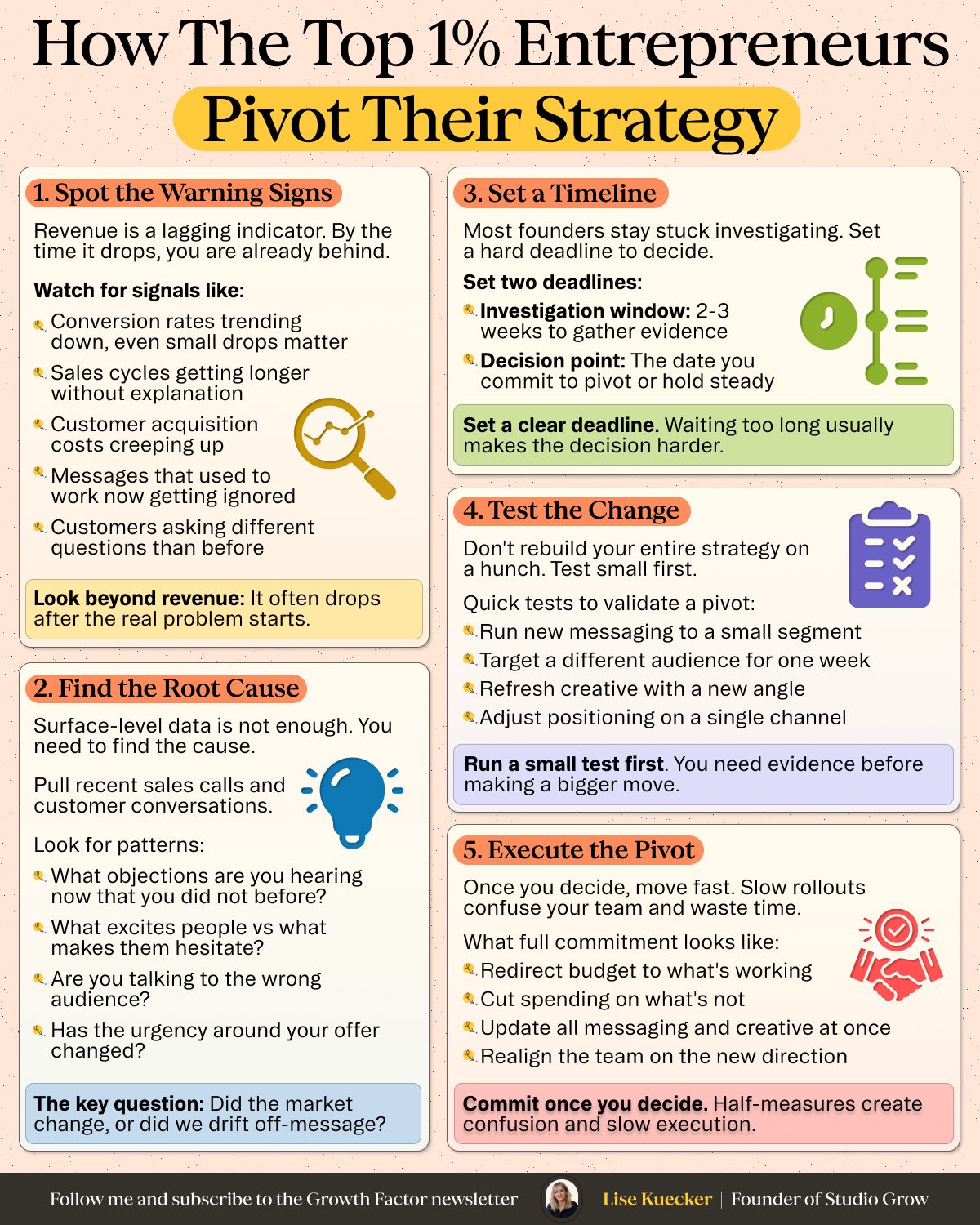
To guide founders through this potentially challenging process, Kuecker outlines a five-step framework:
1. Spot the Early Warning Signs
Kuecker advises vigilance in observing key performance indicators. She lists several signals that warrant investigation:
- Conversion rates going down
- Sales cycles getting longer
- Customer acquisition costs creeping up
- Messages getting ignored
- Customers asking different questions
According to Kuecker, if multiple indicators shift simultaneously, it’s time to investigate further.
2. Find the Root Cause
This step involves a deep dive into the data to pinpoint the exact issues. Kuecker suggests analyzing sales calls and customer conversations to identify recurring patterns that explain the problems.
3. Set a Timeline
Kuecker recommends establishing two critical deadlines: one for the investigation period and another for making a decision on the new direction.
4. Test the Change
Before committing to a complete overhaul, Kuecker advocates for testing. She advises running small, quick tests to gauge the impact of potential changes. If a test shows traction, the next steps can be pursued; if not, another factor should be tested.
“Don’t rebuild your entire strategy on a hunch.”
5. Execute the Pivot
Once a clear direction is identified based on testing, Kuecker stresses the importance of moving decisively. This includes redirecting budget to successful initiatives, cutting spending on underperforming ones, updating messaging and creative assets, and ensuring the team is aligned with the new strategy.
Ultimately, Lise Kuecker’s insights on LinkedIn underscore that while pivoting may feel overwhelming, maintaining a failing strategy is ultimately more costly. Her structured, data-driven approach aims to make the process less daunting and more effective for business leaders.
📝 About This Content
This article is based on insights shared by Lise Kuecker on LinkedIn.
📅 Originally posted on April 2, 2026 | View original post on LinkedIn →