
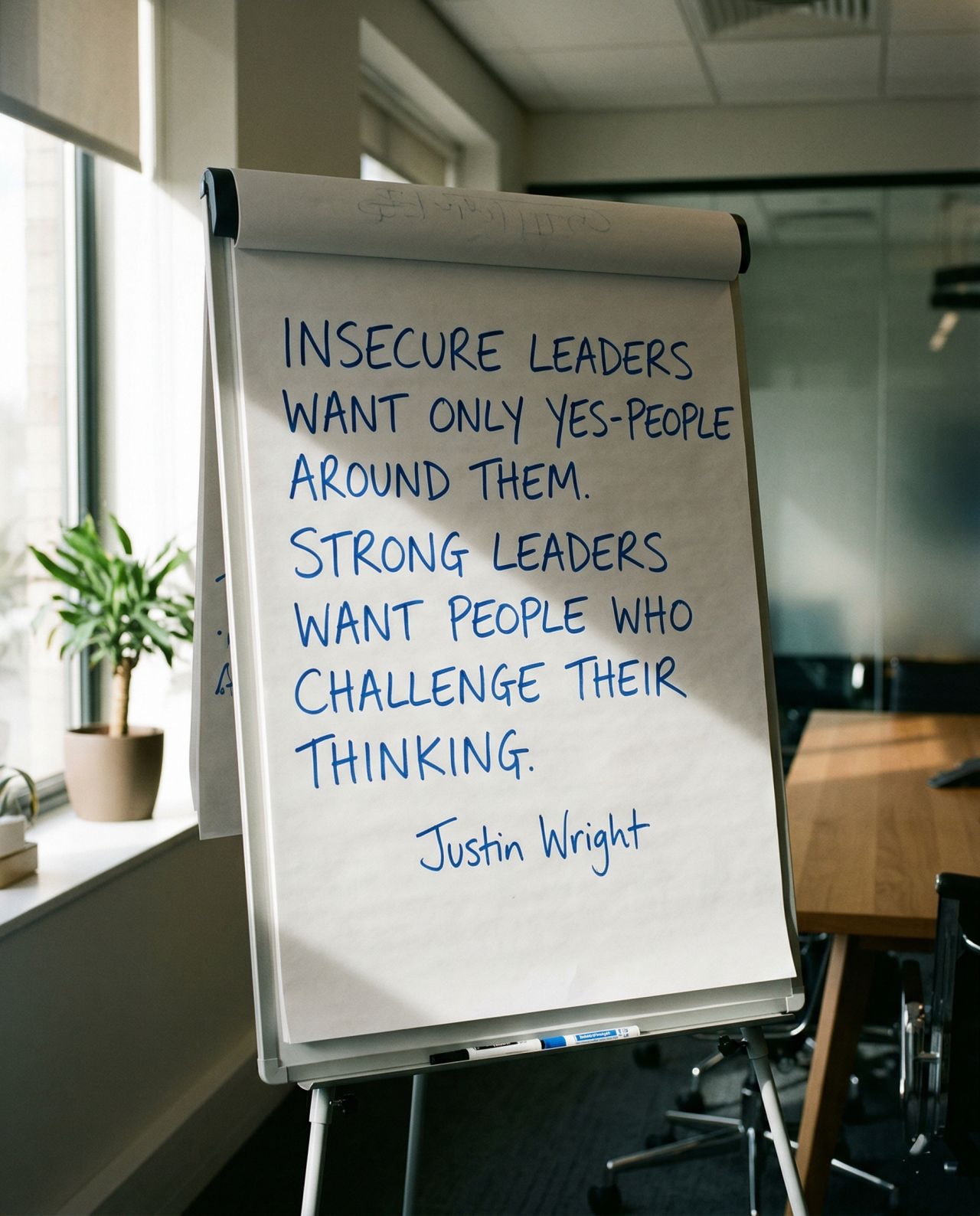
In a recent LinkedIn post, Justin Wright explores a critical, yet often overlooked, aspect of effective leadership: the value of constructive challenge. Wright argues that true strength in leadership isn’t about being right, but about being brave enough to be wrong, and that this bravery is cultivated by welcoming, rather than shunning, dissenting opinions.
According to Wright, the temptation for leaders is often to surround themselves with those who offer easy agreement. However, he posits that this approach is ultimately detrimental to long-term success. He states:
“Yes-people protect your ego. Truth-tellers protect your success.”
Wright emphasizes that genuine innovation and growth stem from environments where individuals feel safe to voice differing perspectives. He contrasts the outcomes of seeking agreement versus embracing challenge:
The Perils of Unchallenged Leadership
Wright highlights the negative consequences that can arise when leaders only hear echoes of their own thoughts. He warns that a lack of challenge leads to significant blind spots, stifles innovation, halts growth, and erodes trust within a team. This environment, where disagreement is absent, can create a false sense of security while undermining the very foundations of a thriving organization.
Embracing Disagreement as a Catalyst for Growth
Conversely, Justin Wright advocates for a leadership style that actively seeks out and values different viewpoints. He suggests that when team members feel empowered to challenge their leaders, it fosters a deeper level of trust and encourages the free flow of ideas. This openness, he argues, is where true team strength is built and sustained success is naturally achieved.
The Role of Honest Feedback
Wright points out that the most impactful ideas rarely emerge from unanimous agreement. Instead, they are often born from moments of genuine inquiry and honest discussion. He elaborates on this by noting:
“From the ‘Actually…’ in morning meetings.
From the ‘What if we tried…’ in casual talks.”
This perspective underscores the idea that challenging questions and alternative suggestions are not signs of disrespect, but rather crucial inputs for effective decision-making and strategic development. Wright asserts that these moments are vital for uncovering potential pitfalls and exploring innovative solutions.
Cultivating a Culture of Courageous Leadership
To foster this environment, Wright advises leaders to intentionally surround themselves with individuals who are willing to question their thinking, identify blind spots, and offer difficult truths. He frames such relationships as invaluable assets for personal and professional development. In his view:
“Your team’s courage to challenge you
shows how good a leader you are.”
Wright concludes by reframing disagreement not as resistance, but as a valuable gift. He encourages leaders to value and retain those who offer such challenging insights, recognizing that their willingness to speak up is a direct indicator of a leader’s own capacity for growth and a testament to the health of the team.
📝 About This Content
This article is based on insights shared by Justin Wright on LinkedIn.
📅 Originally posted on April 2, 2026 | View original post on LinkedIn →