
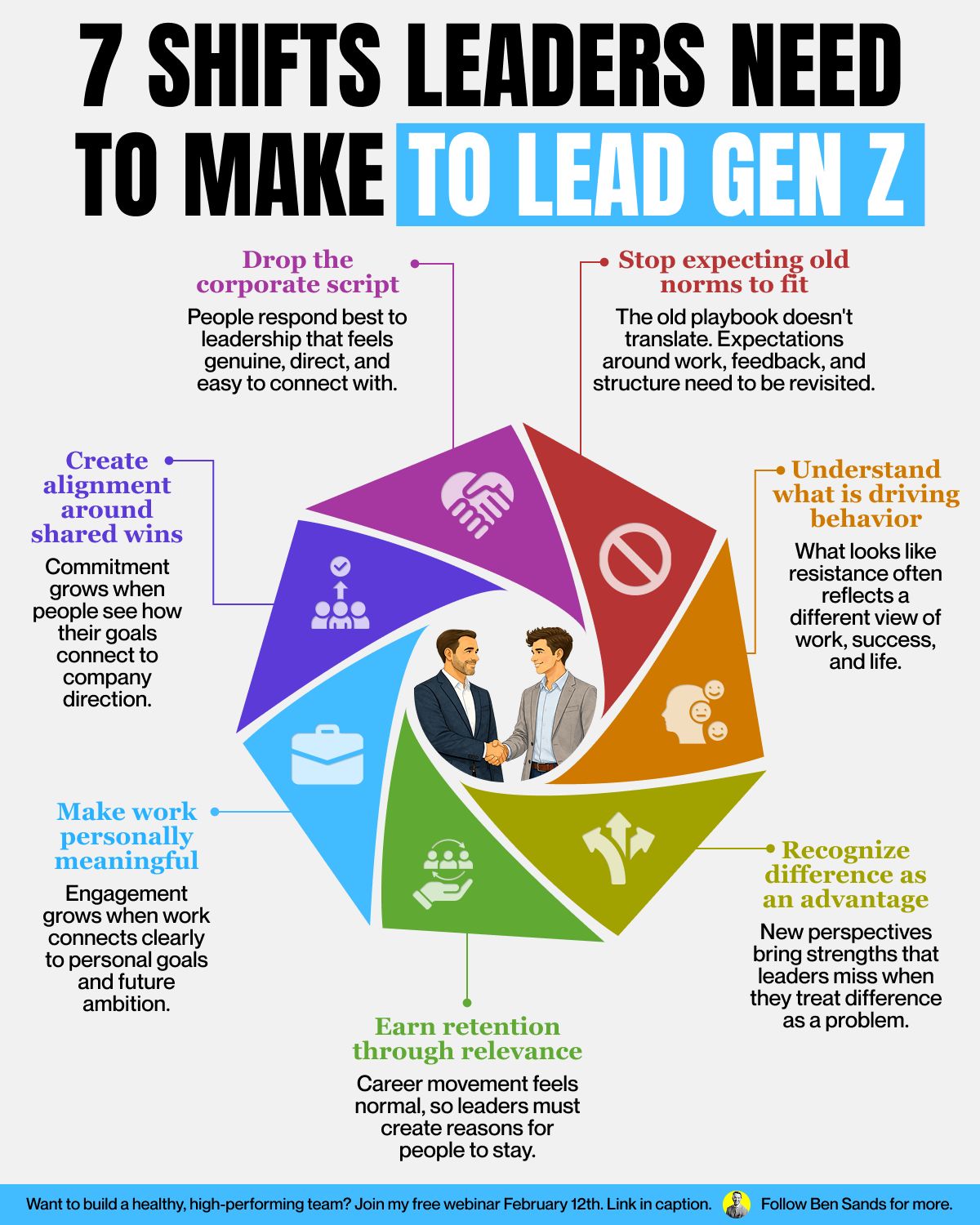
In a recent LinkedIn post, Ben Sands discusses the challenges many leaders face when integrating Gen Z into the workforce, arguing that the issue lies not with the generation itself, but with the outdated systems leaders expect them to adapt to.
Sands highlights a key takeaway from a CEO conference: “Gen Z isn’t rejecting work. They’re rejecting how we’ve been doing it.” This fundamental misunderstanding, he posits, has significant implications for leadership strategies aimed at attracting and retaining talent.
Rethinking Leadership for a New Generation
According to Ben Sands, the solution for leaders struggling with Gen Z engagement isn’t about offering better perks, but rather about revamping the fundamental ‘operating system’ of their organizations. He outlines several actionable shifts leaders should consider:
- Authenticity in Communication: Sands advises leaders to “Drop the corporate script,” emphasizing that people connect with authenticity. Speaking clearly and meaning what you say fosters trust.
- Adapting Old Norms: The old playbook for management and communication is no longer sufficient. Leaders must rethink traditional approaches to feedback and flexibility to accommodate new expectations.
- Understanding Motivations: What might appear as resistance from Gen Z is often a reflection of a different worldview. Ben Sands urges leaders to approach these behaviors with curiosity rather than immediate criticism.
Leveraging Differences for Organizational Advantage
Ben Sands further argues that viewing generational differences as a source of leverage, rather than a threat, is crucial. He suggests inviting diverse input and avoiding the standardization of thinking. As Sands notes, “New perspectives aren’t a threat—they’re leverage.” This approach can lead to more innovative solutions and a stronger team dynamic.
Earning Retention Through Relevance and Meaning
In Sands’ view, loyalty is no longer assumed; it must be earned. This is achieved by creating roles that employees are motivated to stay in and by making work personally meaningful. He states, “Engagement follows meaning, not mandates.” Connecting daily tasks to employees’ values and aspirations is key to fostering genuine engagement.
“Great leaders don’t fight that. They build systems that harness it.”
Sands also points out the importance of creating alignment around shared successes. When employees see how their contributions matter and are recognized, they are more likely to commit to the organization’s goals. He advocates for making success visible and shared, fostering a sense of collective achievement.
Universal Core Needs Across Generations
Reflecting on a recent coaching cohort, Ben Sands observed that different generations fundamentally desire the same core elements: clarity, growth, trust, and meaning. The primary difference lies in how these needs are expressed. He concludes that effective leaders are those who build systems capable of harnessing these diverse expressions, rather than trying to suppress them.
“Different generations don’t actually want different things. They want the same core things—clarity, growth, trust, meaning. They just express them differently.”
Ultimately, Ben Sands suggests that if a team seems harder to motivate, it’s likely because the existing leadership system is not adapting to these generational nuances. He offers his expertise to leaders looking to build more effective, cross-generational leadership systems.
📝 About This Content
This article is based on insights shared by Ben Sands on LinkedIn.
📅 Originally posted on April 5, 2026 | View original post on LinkedIn →