
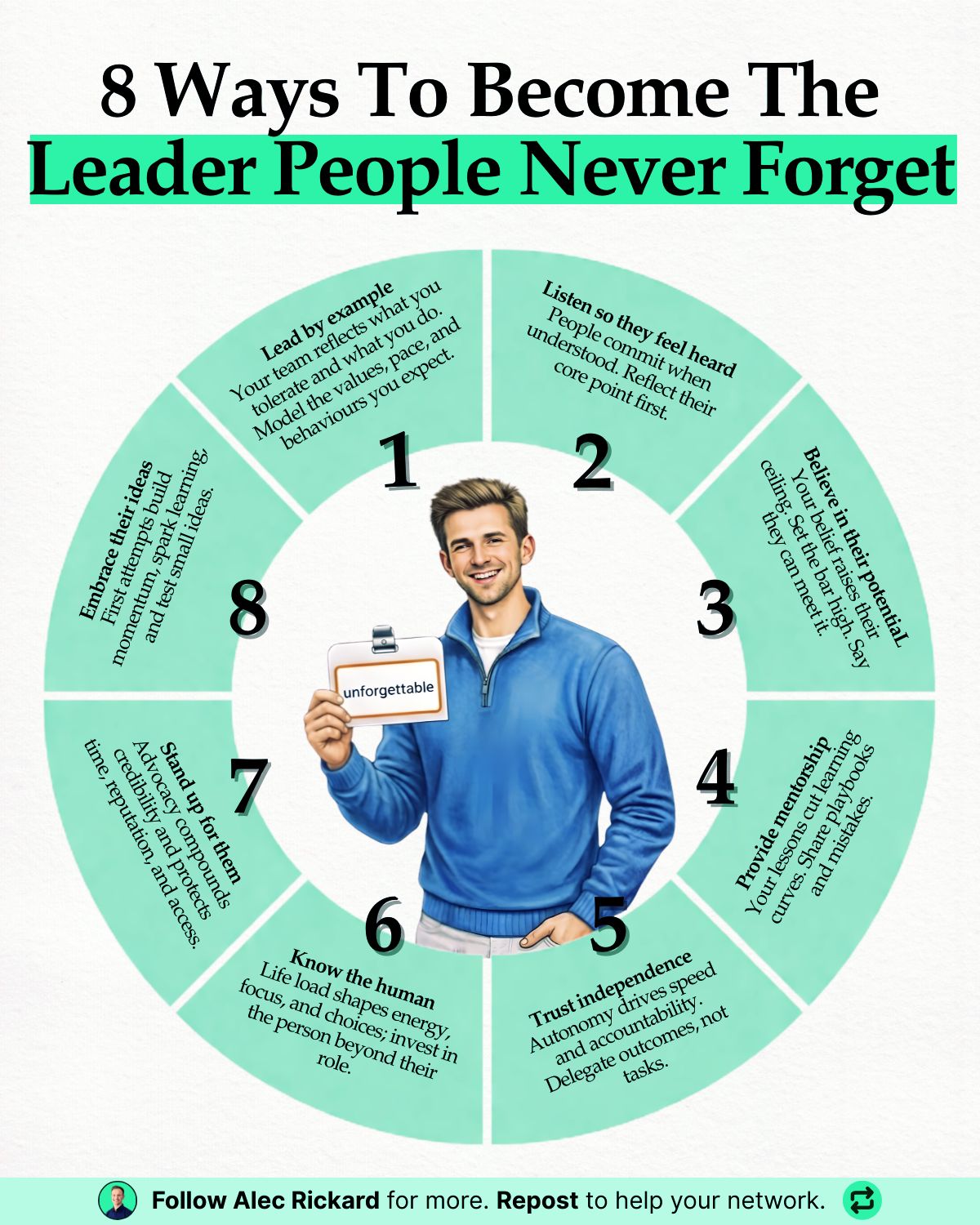
In a recent LinkedIn post, Alec Rickard discusses the fundamental principles of effective leadership, framing it not as an innate mystery but as a cultivable skill that significantly impacts team performance and individual growth. Rickard emphasizes that clarity in leadership standards is crucial for maintaining momentum, reducing errors, and building trust within an organization.
Rickard highlights the lasting impact great leaders have, stating:
“All of us have a leader we remember, who: → Believed in us, when we doubted ourselves. → Understood our life out of work. → Encouraged us to aim higher. → Empowered us to grow.”
The Cost of Ambiguity in Leadership
Alec Rickard argues that vague leadership expectations can lead to detrimental outcomes. According to Rickard, such ambiguity “drain speed, create rework, and burn trust.” This lack of clear direction, he suggests, forces teams to operate with less efficiency and can erode the foundational trust necessary for high-performing teams. The post posits that clear leadership manifests in everyday interactions, and getting these small moments right enables teams to move faster with minimal need for constant oversight.
Eight Pillars of Memorable Leadership
To foster a more impactful leadership style, Rickard outlines eight actionable strategies for managers aiming to make a difference. These points focus on building genuine connection and empowering team members.
Leading by Example and Active Listening
Rickard stresses the importance of role-modeling. As he notes, “Your team mirrors what you tolerate and what you do. Model the values, pace, and behaviors you expect.” This sets the tone for the entire team’s conduct and work ethic. Complementing this is the practice of active listening, where Rickard advises leaders to “Listen so they feel heard” and to “Reflect back the core point before you respond.” This ensures individuals feel understood, fostering commitment.
Belief, Mentorship, and Trust
Cultivating belief in a team’s potential is another key tenet. Rickard explains that “Confidence from you expands their ceiling.” This involves setting high expectations and expressing faith in the team’s ability to meet them. Providing mentorship is also crucial, as “Your lessons cut their learning curve.” This means sharing practical knowledge and lessons learned from mistakes, not just opinions. Furthermore, Rickard advocates for trusting independence, suggesting leaders should “Delegate outcomes, not tasks” to drive speed and accountability.
Understanding the Human Element and Advocacy
Rickard emphasizes the significance of recognizing the individual beyond their professional role. He states, “Know the human → Life load shapes energy, focus, and choices. Invest in the person beyond their role.” Understanding personal circumstances allows leaders to better support their team’s well-being and productivity. Additionally, standing up for team members is vital for building credibility and safety. Rickard advises leaders to “Advocacy compounds credibility and safety. Protect their time and reputation in rooms they cannot access.”
Embracing Ideas for Growth
Finally, Rickard encourages leaders to be open to their team’s ideas. He points out that “First attempts create momentum and learning.” Acknowledging effort and testing nascent ideas, even with small investments, can foster innovation and a proactive team culture. The overarching message from Rickard’s post is to strive to be the kind of leader who leaves a lasting, positive impact on their team members’ careers and lives.
📝 About This Content
This article is based on insights shared by Alec Rickard on LinkedIn.
📅 Originally posted on April 12, 2026 | View original post on LinkedIn →