
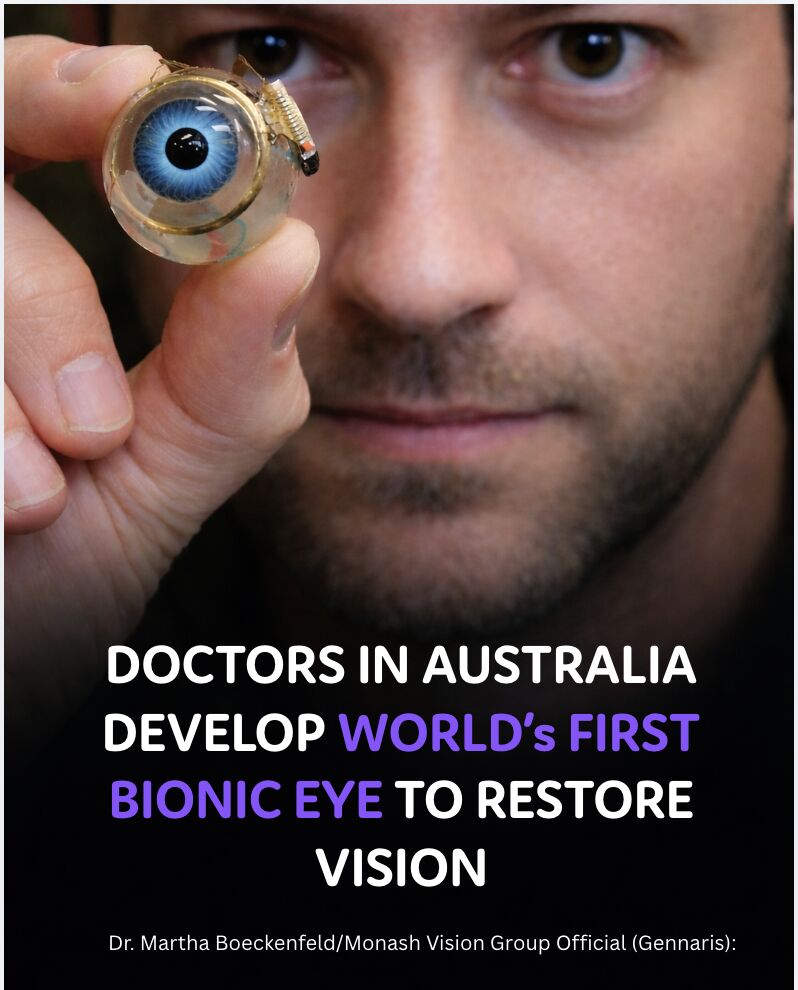
In a recent LinkedIn post, Dr. Martha Boeckenfeld discusses a groundbreaking advancement in bionic vision technology developed by the Monash Vision Group in Australia. This innovative system, named Gennaris, bypasses the traditional visual pathway of the eye and optic nerve to communicate directly with the brain, offering new hope for individuals with severe vision loss.
Dr. Martha Boeckenfeld highlights the core innovation: a head-worn camera that captures visual information, which is then translated by a processor. This processed data is delivered to the visual cortex via up to 11 cortical tiles, each equipped with 43 microelectrodes. These electrodes deliver subtle electrical pulses that the brain interprets as spots of light, enabling a degree of orientation, movement detection, and connection with the environment.
“They bypassed the eye entirely.”
As Dr. Martha Boeckenfeld explains, this approach moves beyond what was previously thought possible for restoring sight.
Analyzing the Potential Impact of Gennaris
The potential implications of this technology are profound, as Dr. Martha Boeckenfeld elaborates on the ‘multiplication effect’ of its successful implementation. The journey from a single patient regaining orientation to widespread global access represents a significant shift in how blindness is perceived and managed.
From Preclinical Success to Human Trials
Dr. Martha Boeckenfeld points to the preclinical evidence, including extensive sheep studies that demonstrated the stability, wireless functionality, and safety of the Gennaris system over several months. These studies showed no infections, providing a solid foundation for human trials, which are targeted for 2026–2027.
“Not perfect vision. But orientation. Movement. Connection.”
This quote from Dr. Martha Boeckenfeld’s post encapsulates the realistic yet transformative goals of the Gennaris system. It’s not about replicating perfect sight, but about restoring crucial functionalities that significantly improve daily life.
The Long Road of Scientific Progress
Dr. Martha Boeckenfeld also reflects on the dedication of the researchers behind Gennaris, emphasizing the decades of persistent work without shortcuts. This sustained effort, driven by curiosity, is presented as a model for progress not just in science, but across various professional fields.
“The researchers who started this work decades ago are still at it. No shortcuts. No viral breakthroughs. Just people who kept asking questions when progress came slowly.”
According to Dr. Martha Boeckenfeld, this illustrates the power of compounding curiosity and the value of perseverance in achieving long-term scientific and technological goals.
Navigating Ethical Considerations
A key tension highlighted by Dr. Martha Boeckenfeld is the inherent unease associated with brain-interfacing technologies, contrasted with their immense potential to restore quality of life. The framing of the ethical considerations surrounding such advancements, she suggests, will be crucial in determining how this technology ultimately benefits humanity.
“But here’s the tension we’ll have to hold: anything connected to the brain still makes us uneasy. But at the same time, this gives people their lives back. How we frame the ethics will determine how this reaches humanity.”
Dr. Martha Boeckenfeld concludes by underscoring that the success of Gennaris and similar technologies hinges not only on scientific achievement but also on thoughtful ethical navigation and public acceptance.
📝 About This Content
This article is based on insights shared by Dr. Martha Boeckenfeld on LinkedIn.
📅 Originally posted on April 12, 2026 | View original post on LinkedIn →