
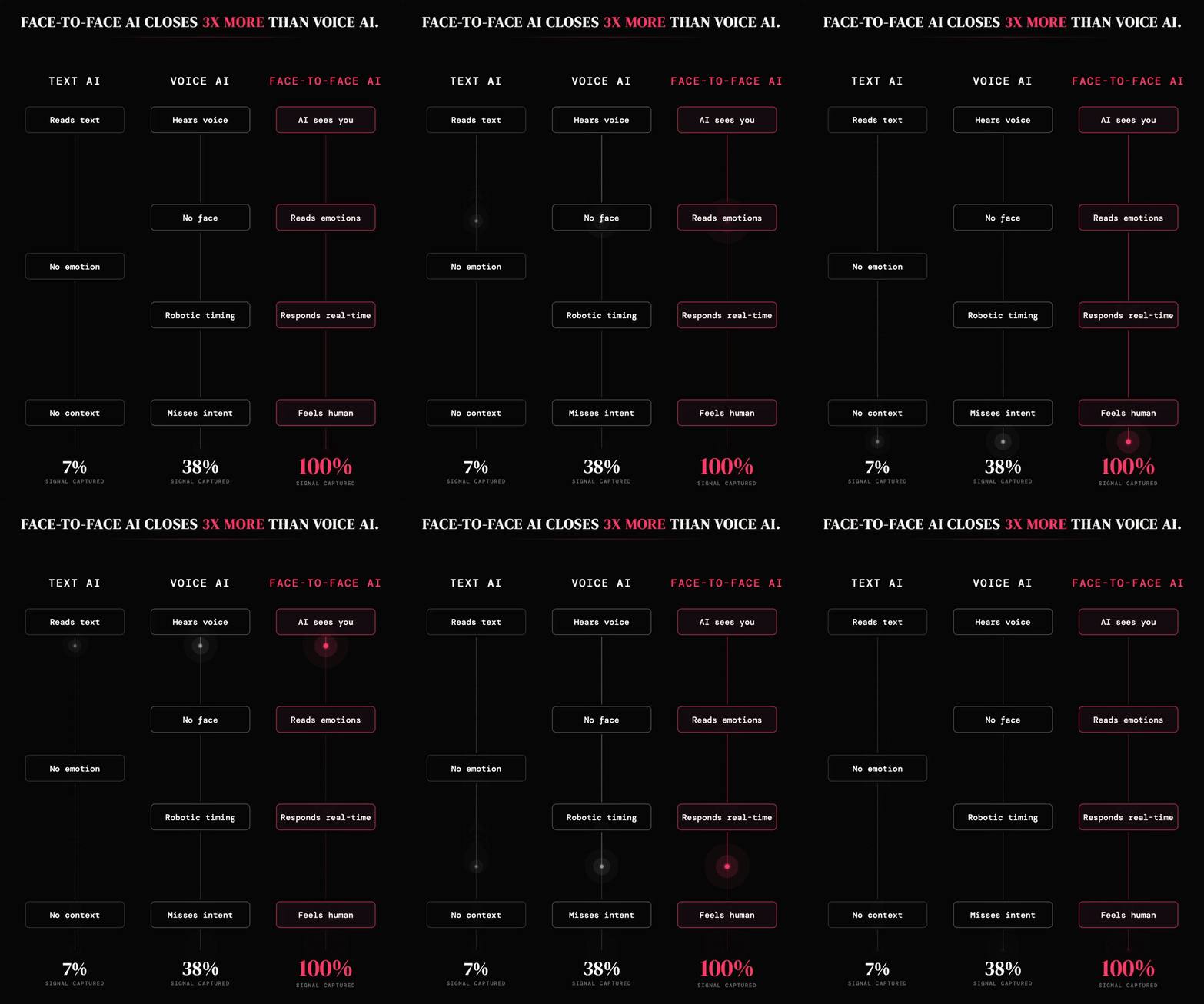
In a recent LinkedIn post, Yonathan Cohen explores the significant performance gap between face-to-face AI interactions and traditional voice AI, highlighting a dramatic increase in engagement and conversion rates for the former. Cohen presents a compelling case for the efficacy of AI that mimics human-to-human visual communication in sales and outreach efforts.
Cohen opens by drawing a parallel to human trust, stating:
You trust a video call more than a phone call.You trust a phone call more than an email.AI works the same way.
This analogy sets the stage for his argument that AI’s effectiveness is directly tied to its ability to replicate the perceived authenticity and trustworthiness of face-to-face communication.
The Power of Visual AI in Prospect Engagement
Yonathan Cohen argues that the inherent advantage of AI that incorporates visual and auditory cues lies in its ability to foster a stronger sense of connection and credibility with prospects. Unlike generic emails or even voice-only AI, a face-to-face AI interaction can process and respond to a prospect’s specific context, making the engagement feel more personal and relevant.
According to Cohen, platforms like Tavus are built on this principle. He explains the core concept:
That’s exactly what Tavus built, AI that sees you, hears you, and responds like a human would.
This approach, as Cohen details, is operationalized through a specific workflow designed to automate personalized video conversations for every prospect. The process begins with adding a prospect to a Google Sheet, after which the AI analyzes their website and business. This data then informs the creation of a personalized video conversation, where the AI directly addresses the prospect’s known business needs and potential solutions.
Quantifiable Results in Sales Workflows
Cohen backs his claims with data from users who have implemented this strategy. He points out the significant improvements in key sales metrics when employing face-to-face AI.
As Yonathan Cohen notes, early adopters have seen remarkable results:
☑ Qualified uses this→ 2x engagement, 6x meetings booked.
Furthermore, Cohen cites a specific test conducted by Careflick comparing voice versus face-to-face AI, which yielded a strong preference for the visual approach:
☑ Careflick tested voice vs face-to-face→ 97% chose face-to-face.
This data underscores Cohen’s central thesis: in an era where cold outreach often goes unanswered, a personalized, face-to-face AI conversation offers a powerful alternative that captures attention and drives action.
Implementing Face-to-Face AI for Outreach
Yonathan Cohen outlines a straightforward workflow for businesses looking to leverage this technology. The process is designed for efficiency and personalization:
- Add a prospect to a Google Sheet.
- The AI reviews the prospect’s website and business details.
- Tavus generates a personalized video conversation tailored to the prospect.
The prospect then engages with an AI that is aware of their business and how the sender can provide value. Cohen contrasts this with the common experience of ignored cold emails, emphasizing that this method delivers a much more engaging and effective form of initial contact.
For those interested in replicating this workflow, Cohen offers a direct call to action, inviting readers to comment “TAVUS” to receive the template.
📝 About This Content
This article is based on insights shared by Yonathan Cohen on LinkedIn.
📅 Originally posted on April 9, 2026 | View original post on LinkedIn →