
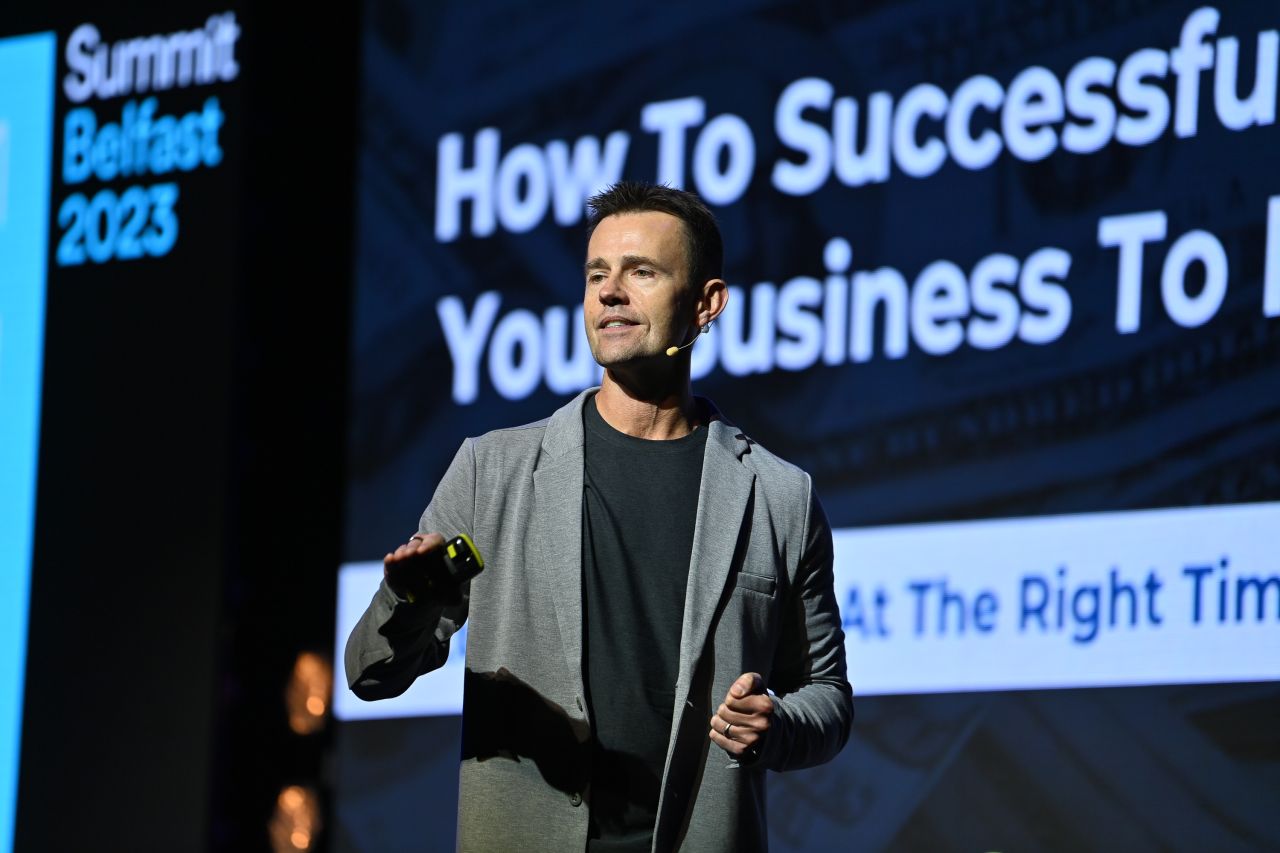
In a recent LinkedIn post, Nick Bradley explores a powerful yet often overlooked strategy for significant business growth: fixing what a company sells rather than solely focusing on acquiring new customers. Bradley, a business advisor, highlights how a client was able to more than double their revenue by fundamentally restructuring their offer, demonstrating that optimizing the commercial model can yield greater results than traditional lead generation efforts.
The core of Bradley’s analysis centers on a client generating $4 million in revenue with a $10,000, 12-month program. Despite having a good product, satisfied customers, and a 40% renewal rate, growth had stagnated. The company struggled to acquire new clients quickly enough to meet its targets. Bradley’s pivotal question, “Why 12 months?”, revealed a critical flaw in their inherited business model.
“That’s what we’ve always done.”
Bradley points out that this common, unexamined assumption about business operations can be incredibly costly. He explains that the client’s actual customer journey was far longer than the sold program duration. The true value realization for customers occurred over 36 months, with distinct foundational, deepening, and result-achieving phases. However, by selling the program in 12-month increments, most customers only experienced a fraction of the total value and never reached the ultimate outcome.
The Problem of Inherited Models
According to Nick Bradley, many founders mistake historical operational methods for strategic decisions. He writes:
“Because ‘what we’ve always done’ is usually not a strategy. It’s just an inherited model.”
This lack of strategic offer architecture meant the business was constantly forced into a high-cost acquisition cycle, trying to replace the 60% of customers who didn’t renew each year, rather than nurturing existing relationships towards full value realization. Bradley emphasizes that the obstacle wasn’t a lack of marketing or sales capability, but a misalignment between the offer and the customer’s desired outcome.
Restructuring for Full Value and Revenue Growth
The solution proposed and implemented by Bradley involved a strategic redesign of the offer. Instead of the $10,000 for 12 months structure, the offer was shifted to $24,000 for 36 months. This new model still encompassed the entire 36-month customer journey, offering a slight discount for a longer commitment. Bradley notes the customer response was overwhelmingly positive.
“Because they didn’t want a third of the solution. They wanted the outcome.”
This shift dramatically impacted the company’s financials. As Nick Bradley illustrates, the revenue went from $4 million to over $8.4 million within a year, achieved with fewer customers (350 instead of 400). This was accomplished without increasing marketing spend, developing new features, or expanding the team.
The Impact of Commercial Design
The key changes, as highlighted by Bradley, were:
- Increased Lifetime Value (LTV)
- Improved Cash Flow
- Enhanced Customer Success and Outcome Achievement
- Significant Revenue Growth (from $4M to $8.4M+)
Bradley concludes his post by posing a critical question to founders: “Are you trying to find more customers for the wrong model… or redesigning the model around the full value you actually create?” He posits that many businesses face an “offer architecture problem” rather than a lead-generation deficit, urging leaders to examine the structure of their offerings to unlock their full revenue potential.
📝 About This Content
This article is based on insights shared by Nick Bradley on LinkedIn.
📅 Originally posted on April 9, 2026 | View original post on LinkedIn →