
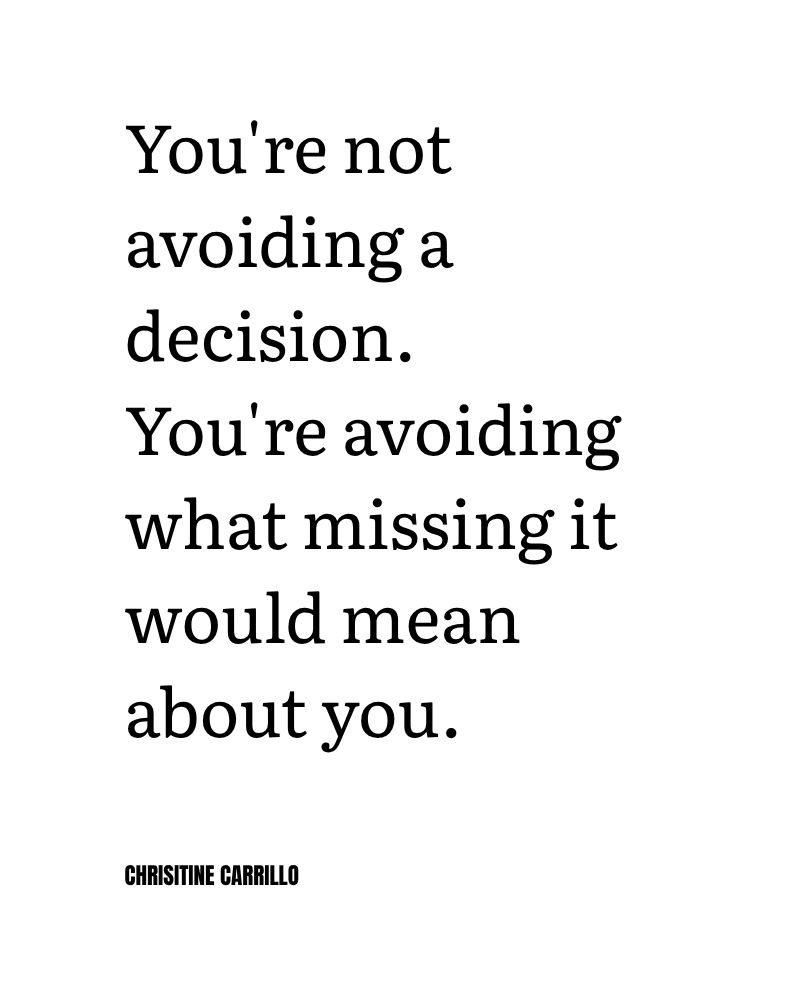
In a recent LinkedIn post, Christine Carrillo dives into a common pitfall for business leaders: mistaking a lack of commitment for a lack of strategy. Carrillo, who works with founders and businesses, argues that many leaders who believe they have a strategy problem are actually grappling with a deeper issue of commitment, often masked by a perception of strategic deficiency.
Carrillo illustrates this point with an anecdote about a founder whose company has already surpassed $50 million in revenue. When asked about the 12-month goal, this visionary leader’s response was notably vague, describing it as “a little fuzzy.” The founder had numerous focus areas, making it impossible to prioritize just three. Carrillo observes that founders who experience stagnation are not necessarily lacking information.
“The founders who stall aren’t missing information. They’re afraid of what picking a number means about them if they miss it.”
The author elaborates on this fear, explaining that for some founders, setting a concrete goal is daunting because of the potential for disappointment if it’s not met. Carrillo recounts a conversation with another founder who stated her goal was simply to “grow revenue.” When pressed for a specific target, the response was “As much as we can.” The underlying reason, as Carrillo uncovered, was the founder’s fear: “I’m afraid I’ll disappoint everyone if I don’t hit it.” This, according to Carrillo, is not a planning gap but rather “self-worth hiding inside a spreadsheet.”
Reframing ‘Goals’ as ‘Bets’
To shift this dynamic, Carrillo shares a personal strategy: she has stopped using the word “goal” and has replaced it with “bet.” This linguistic shift is not merely semantic; it fundamentally alters one’s relationship with numerical targets. Carrillo explains that a goal can feel like a final judgment – success if met, failure if missed. In contrast, a bet is defined as “a decision made with incomplete information.”
“A bet is a decision made with incomplete information. You evaluate the thinking, not just the outcome.”
This perspective aligns with concepts from decision science, particularly the distinction between outcomes and the decision-making process itself. Carrillo references Annie Duke’s concept of “resulting” – the error of judging a decision solely by its outcome rather than the quality of the thought process behind it.
Business as Poker, Not Chess
Carrillo draws a powerful analogy, stating, “Business is poker, not chess.” In chess, perfect moves theoretically lead to a guaranteed win. However, poker, much like business, involves making the best possible decision with limited information, where even a sound decision can lead to an unfavorable outcome due to factors beyond one’s control. This means a lost hand in poker doesn’t invalidate the quality of the call made.
“In chess, the right moves guarantee the right outcome. In poker, you make the best call you can and still lose. That doesn’t make the call wrong.”
Carrillo encourages leaders to change their evaluation metrics. Instead of focusing solely on whether a numerical target was hit, she advocates for assessing the thinking and decision-making process that led to the pursuit of that target. This approach fosters resilience and a healthier relationship with ambition, separating personal worth from the fluctuating results of business endeavors.
📝 About This Content
This article is based on insights shared by Christine Carrillo on LinkedIn.
📅 Originally posted on April 8, 2026 | View original post on LinkedIn →