
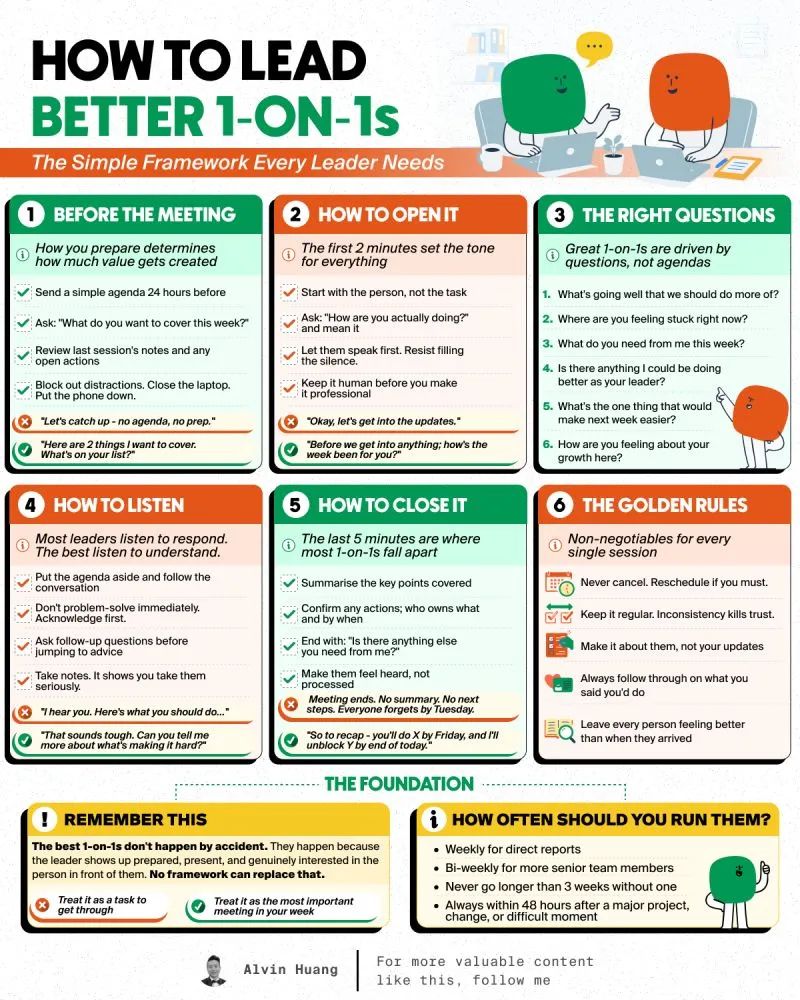
In a recent LinkedIn post, Lise Kuecker shares a structured approach to transforming routine one-on-one meetings from superficial check-ins into powerful opportunities for team development and career growth. Kuecker argues that many current 1-on-1s fail to achieve their full potential, often becoming mere box-ticking exercises rather than deep, developmental conversations.
Kuecker highlights a common, ineffective pattern observed in many workplaces: the leader talks, the team member nods, a few agenda items are checked, and business continues as usual, with no real discussion of challenges or career aspirations. She emphasizes that for founders, these meetings are among the most critical hours spent with their team.
“All-star teams aren’t built on surface-level conversations. But that’s exactly what most 1-on-1s are.”
To combat this, Kuecker outlines a practical, step-by-step framework designed to foster more meaningful dialogue. This approach begins even before the meeting itself.
Preparing for Productive 1-on-1s
According to Kuecker, effective preparation is key to unlocking the potential of 1-on-1s. She advises setting a simple agenda in advance, crucially asking team members what they wish to cover that week, and reviewing any pertinent notes or open action items. This ensures the conversation is collaborative and addresses the team member’s priorities.
Initiating the Conversation
Kuecker suggests a human-centered approach to opening the meeting. The focus should initially be on the individual, not just the tasks. She recommends asking team members how they are doing and genuinely listening, allowing them to speak first and providing them with ample space to share.
“Keep things human before getting into work details.”
This initial phase, as Kuecker points out, sets a tone of trust and psychological safety, making it easier for team members to later discuss more challenging topics or career development goals.
Asking the Right Questions for Deeper Insight
The core of a valuable 1-on-1, Kuecker argues, lies in asking insightful questions that go beyond surface-level updates. She proposes a set of powerful prompts designed to uncover opportunities, identify roadblocks, and clarify needs.
Key Questions for Growth
Kuecker suggests questions such as:
- “What’s going well that we should do more of?”
- “Where are you feeling stuck right now?”
- “What do you need from me this week?”
These questions, according to Kuecker, are designed to elicit thoughtful responses that can inform both individual development and team strategy. They encourage reflection on successes, identification of challenges, and clear articulation of support requirements.
Active Listening and Effective Follow-Through
Kuecker also stresses the importance of how leaders listen and conclude these meetings. She advises resisting the urge to immediately jump into problem-solving, instead allowing the conversation to flow naturally and taking notes on key points. This active listening approach ensures that the team member feels heard and understood.
“Resist the urge to jump into problem-solving.”
Rounding off the meeting involves summarizing key discussion points and confirming action steps before the next session. Kuecker also reiterates the importance of consistency, stating, “Never cancel on them. Reschedule things if needed, but keep those 1-on-1s regular.” This commitment to regularity, she believes, is fundamental to building strong, trust-based relationships and fostering continuous development.
By implementing this structured yet flexible approach, Kuecker concludes, leaders can transform their 1-on-1s from perfunctory meetings into strategic conversations that genuinely contribute to both business progress and individual career trajectories, ultimately building the “all-star teams” she initially referenced.
📝 About This Content
This article is based on insights shared by Lise Kuecker on LinkedIn.
📅 Originally posted on April 7, 2026 | View original post on LinkedIn →