
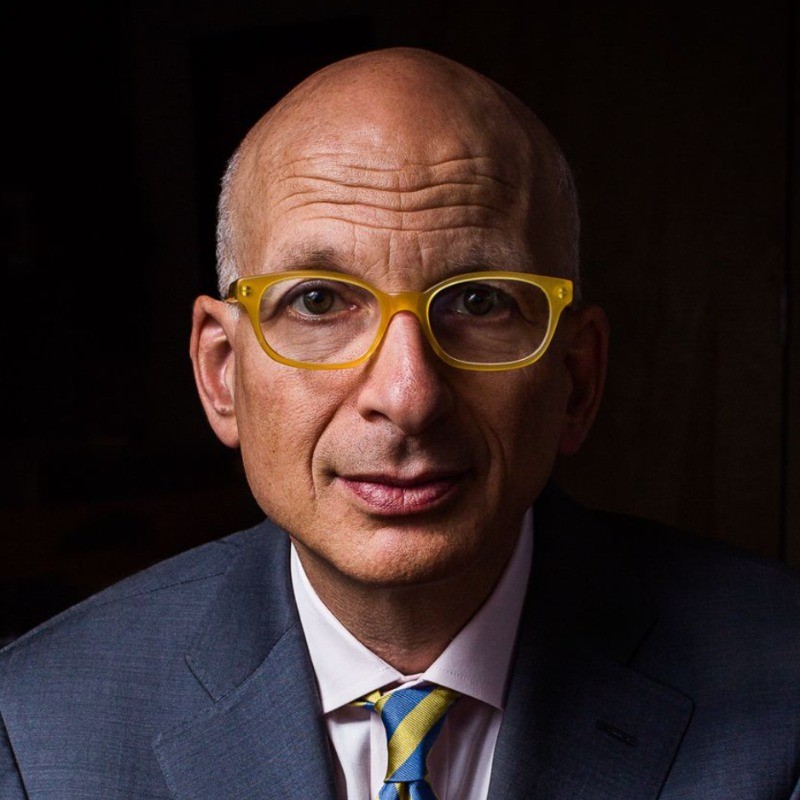
In a recent LinkedIn post, Seth Godin 🌔 delves into the complex and often misunderstood concept of ownership, questioning what it truly means to possess something in a world of shifting landscapes and shared understanding.
Godin 🌔 begins by posing fundamental questions about the nature of ownership, using tangible and intangible examples to illustrate his point. He asks:
“What does it mean for us to own something?”
This central question sets the stage for an exploration that moves beyond simple possession to consider influence, perception, and shared reality.
Deconstructing ‘Ownership’ in a Dynamic World
Seth Godin 🌔 challenges the conventional definition of ownership by examining scenarios where control and possession are not absolute. He uses the analogy of land ownership and environmental impact:
“If we own a piece of land and the rain washes the topsoil downstream, do we go and get the topsoil back?”
This rhetorical question highlights how external factors and natural processes can diminish or alter what we believe we own, suggesting that true ownership may involve a degree of responsibility for forces beyond our immediate command. As Godin 🌔 points out, the boundaries of ownership are not always clear-cut and can be affected by elements outside of our direct influence.
Reputation and Responsibility: The Shifting Sands of Ownership
The discussion extends to more abstract forms of ownership, particularly reputation and responsibility. Godin 🌔 suggests that while we can influence our reputation, its formation is also shaped by external perceptions and actions beyond our control.
He questions:
“Do we own our reputation? We have influence over it, but some of it was gifted to us without our knowledge, and other parts are influenced by forces out of our control.”
Similarly, the concept of responsibility is framed not as something passively held, but as something actively taken or accepted. According to Godin 🌔, even our past, while a significant part of our identity, is less about ownership and more about influencing the future based on past experiences. The ultimate takeaway, as argued by Godin 🌔, is that our ability to shape the future is a more attainable form of ‘ownership’ than claiming absolute control over past events or external perceptions.
Ownership as a Social Construct
Ultimately, Seth Godin 🌔 posits that ownership is not an inherent quality but a social construct. Its meaning and validity can change depending on perspective and context.
“Ownership is a shared understanding, a construct that can shift depending on where we stand.”
This perspective suggests that for ownership to be effective or meaningful, there needs to be a mutual agreement or recognition of that ownership. While acknowledging that not all aspects of ownership are within our complete control, Godin 🌔 emphasizes that recognizing and engaging with this shared understanding often leads to more positive outcomes. His exploration encourages a deeper reflection on what we truly control and what we merely influence in our personal and professional lives.
📝 About This Content
This article is based on insights shared by Seth Godin 🌔 on LinkedIn.
📅 Originally posted on April 15, 2026 | View original post on LinkedIn →