
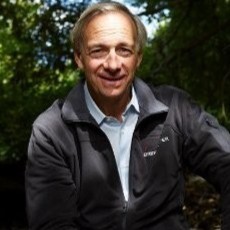
In a recent LinkedIn post, Ray Dalio, founder of Bridgewater Associates, discusses his perspective on current global conflicts, framing them not as isolated incidents but as integral parts of a recurring historical pattern he terms the ‘Big Cycle.’ Dalio, known for his deep analysis of economic and geopolitical trends, asserts that understanding these patterns is crucial for navigating the present and future.
Understanding the ‘Big Cycle’
Dalio draws a parallel between historical events and contemporary geopolitical tensions, suggesting that current developments, such as the conflict involving Iran and the Strait of Hormuz, are symptomatic of a larger, cyclical process. He emphasizes that his view is informed by extensive discussions with global leaders, geopolitical experts, and individuals worldwide.
“Most people look at wars as isolated events. I look at them as part of a Big Cycle that has repeated many times, so for me watching what is happening is like watching a movie I’ve seen many times before.”
This cyclical perspective, according to Dalio, provides a framework for interpreting the significance of current events. He argues that these events are interconnected and possess far-reaching implications that extend beyond regional conflicts.
Global Implications and the Monetary Order
The founder of Bridgewater Associates highlights that the ongoing conflicts have substantial consequences for the global monetary, domestic political, and international geopolitical orders. He notes a broad consensus among the experts he consults regarding these significant repercussions.
“What we’re seeing now with Iran and the battle of the Strait of Hormuz is part of that cycle and is connected to and will have big implications for what happens all over the world.”
Dalio’s analysis suggests that viewing current events through the lens of the ‘Big Cycle’ is essential for grasping their full scope. He believes that this broader context is necessary to understand how these evolving situations will shape the world order.
A Framework for Analysis
To further illustrate his points, Dalio has shared a condensed animation summarizing these patterns and their cause-and-effect relationships. He also references a more in-depth 45-minute video, “Principles for Dealing with the Changing World Order,” available in the comments of his post, for those seeking a more comprehensive understanding.
“That is why I believe it is important to see the war with Iran as part of a greater world war and see to how it is evolving as a big cycle.”
Through his work, Ray Dalio aims to provide a historical and cyclical framework for understanding complex global dynamics, encouraging a more strategic and informed approach to geopolitical analysis. As Dalio points out, the patterns are observable and have repeated throughout history, offering valuable lessons for contemporary challenges.
📝 About This Content
This article is based on insights shared by Ray Dalio on LinkedIn.
📅 Originally posted on April 15, 2026 | View original post on LinkedIn →