
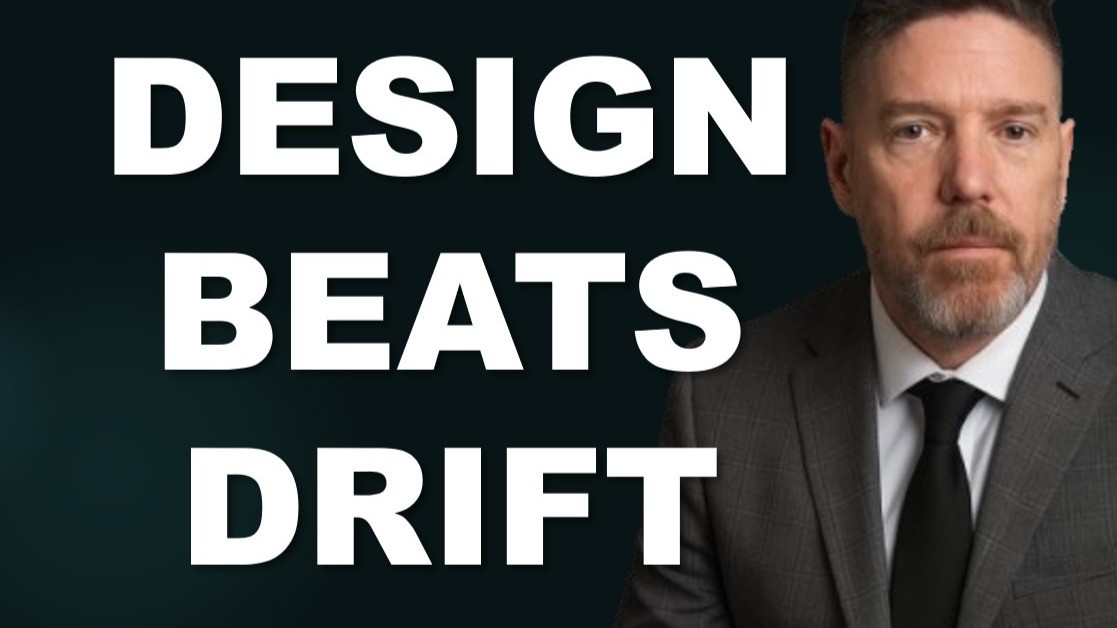
In a recent LinkedIn post, Francisco Gaffney discusses a critical pitfall that can undermine even well-intentioned corporate boards: ‘drift.’ Gaffney argues that the failure isn’t typically a lack of clear purpose or ‘intent,’ but rather a subtle erosion of strategic momentum and coherence over time.
According to Gaffney, boards can find themselves losing confidence despite positive indicators if key areas remain unaddressed. He highlights several common scenarios that contribute to this drift:
“Revenue grows, but repeatability stays fuzzy,”
Gaffney points out as one such indicator. He elaborates that even when financial metrics appear healthy, a lack of clarity on how success is consistently replicated can signal underlying issues.
The Perils of ‘Drift’
Francisco Gaffney emphasizes that ‘drift’ is not merely a matter of increased workload but points to a deeper issue with the fundamental way an organization is run. He states:
“This isn’t a workload problem. It’s an operating system problem.”
This assertion frames the challenge as systemic, suggesting that the core processes and structures governing board operations are insufficient to maintain strategic direction amidst growth and change.
Navigating Growth and Capital Infusion
Gaffney further details how boards can falter even when capital is successfully raised. He notes:
“Capital arrives into a weak structure,”
which implies that without a robust organizational framework, incoming investment may not be effectively utilized, leading to wasted resources and missed opportunities. As Francisco Gaffney suggests, the timing and manner of capital infusion are crucial, but its effectiveness hinges on the underlying strength of the company’s operational foundation.
Resilience and Transformation Challenges
The post also touches upon the often-misunderstood concepts of resilience and transformation. Gaffney observes that:
“Resilience is treated like a policy instead of a test.”
This suggests that resilience is often viewed as a compliance item rather than an actively tested capability. Similarly, he points out that transformation efforts can falter when they become overly complex:
“Transformation turns into too many moving parts.”
The complexity can obscure the core objectives and make effective oversight difficult for the board. Gaffney’s analysis implies a need for a more integrated approach, where these critical functions are not siloed.
An Integrated Operating System for Value Creation
Francisco Gaffney advocates for a unified approach to value creation, where strategy, growth, capital management, controls, and transformation are viewed as interconnected components of a single system. He suggests that the traditional method of reviewing these elements in isolation contributes to the ‘drift’ problem.
In his view, the discipline required from a board involves ensuring these different facets of the business operate in concert, creating a credible and cohesive value-creation engine. This integrated perspective, according to Gaffney, is key to overcoming the challenges of drift and maintaining long-term confidence and success.
📝 About This Content
This article is based on insights shared by Francisco Gaffney on LinkedIn.
📅 Originally posted on April 15, 2026 | View original post on LinkedIn →