
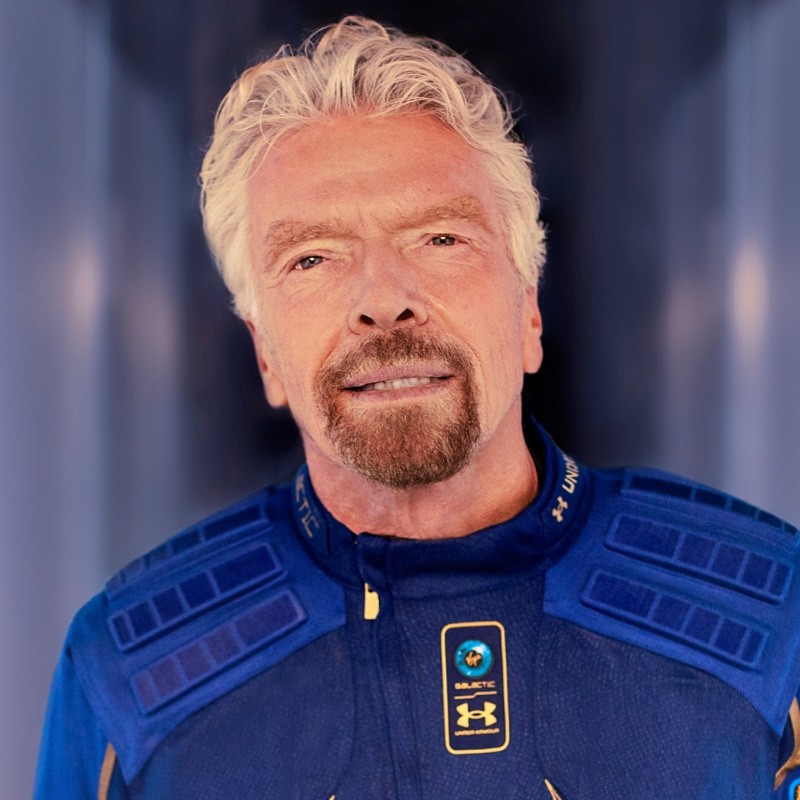
In a recent LinkedIn post, Richard Branson discusses the qualities of brave leadership, drawing upon insights shared by Nobel Peace Prize Laureate Juan Manuel Santos. Branson highlights the profound difficulty of peacemaking compared to conflict, emphasizing the courage required for leaders to stand by their convictions, even when unpopular.
Branson shared the core message from Santos, as conveyed to Holly, stating:
“Making peace is far harder than making war.”
This statement, according to Branson, underscores a critical aspect of effective leadership: the willingness to pursue what is ethically right, regardless of the social or political cost.
The Unpopular Path of Principled Leadership
Richard Branson elaborates on the essence of true leadership, noting that it often involves navigating complex and challenging situations where the easiest path is not necessarily the most principled one. In his post, Branson emphasizes:
“A critical skill in leaderships is doing what is right, even if it is unpopular and even if it is hard.”
This perspective frames leadership not merely as decision-making, but as a moral imperative. Branson, by sharing these insights, positions Santos’s viewpoint as a vital lesson for contemporary business and global leaders. The conversation, as described by Branson, was both “insightful and very timely.”
Navigating Complexity with Integrity
The core of Branson’s message, derived from his engagement with Santos’s ideas, revolves around the concept of moral courage. He suggests that leaders are tested not when decisions are easy or universally supported, but when they require a steadfast commitment to core values. This involves:
- Prioritizing ethical considerations over immediate popularity.
- Understanding that difficult decisions are often necessary for long-term positive impact.
- Drawing strength from principles, even in the face of opposition.
Branson’s sharing of this dialogue serves to amplify a crucial message about the nature of leadership in challenging times. By referencing a Nobel Peace Prize Laureate, he lends significant weight to the argument that true leadership requires a deep well of integrity and a willingness to endure hardship for the sake of a greater good. The emphasis is clear: brave leaders are those who are willing to do what is right, even when it is the hardest thing to do.
📝 About This Content
This article is based on insights shared by Richard Branson on LinkedIn.
📅 Originally posted on April 20, 2026 | View original post on LinkedIn →