
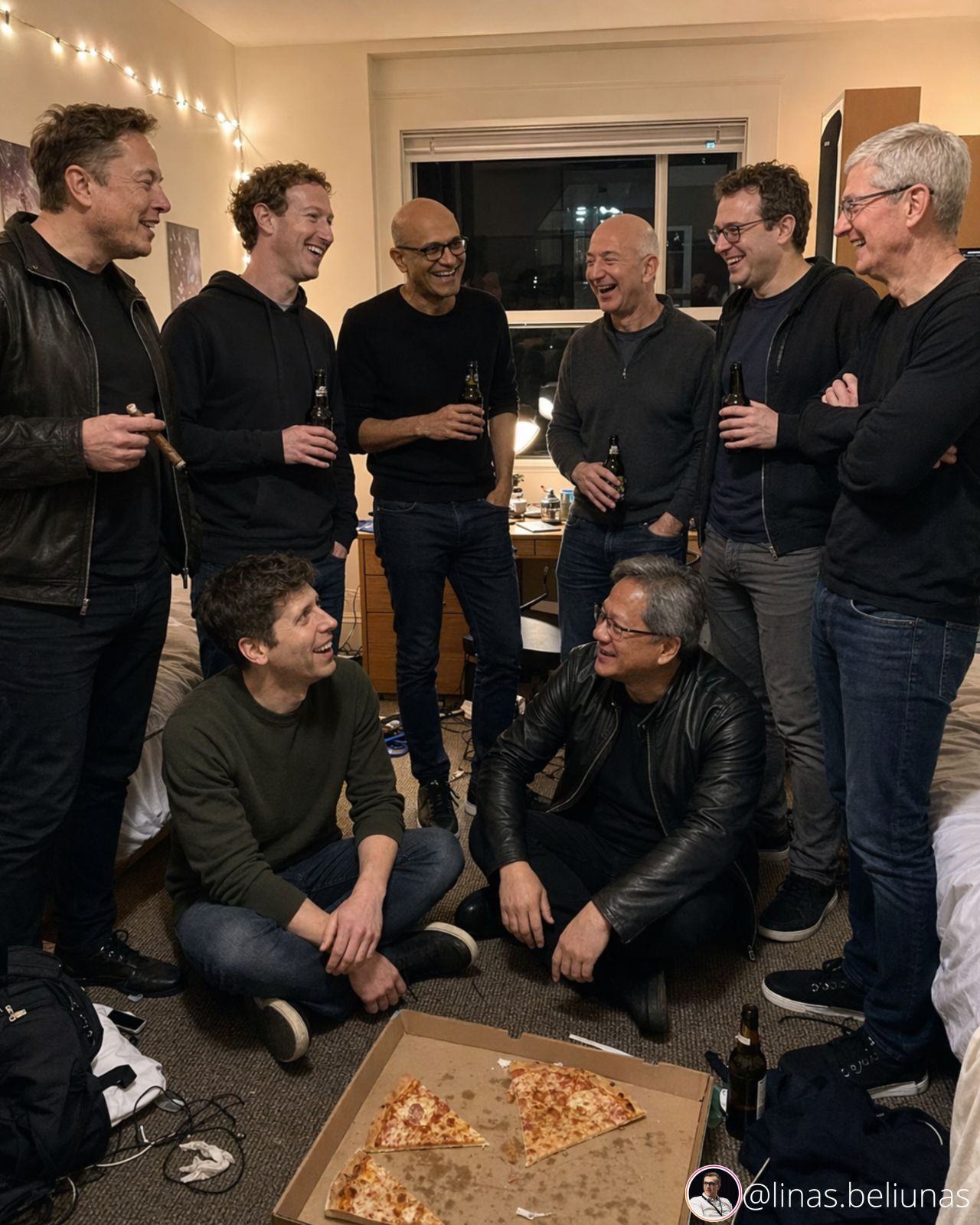
In a recent LinkedIn post, Linas Beliūnas discusses the increasingly sophisticated capabilities of AI image generation, specifically highlighting the potential for hyper-realistic, fabricated scenarios to deceive audiences. Beliūnas shared an AI-generated image depicting a fictional summit of major tech leaders, illustrating how current AI models can create highly plausible, yet entirely unreal, scenes.
Beliūnas used the example to underscore the advanced nature of new AI image models, noting the stark contrast between the imagined high-stakes meeting and the mundane, everyday details present in the generated image. He pointed out the inclusion of common items like an IKEA lamp, tangled chargers, and a pizza box, which lend a false sense of authenticity to the fabricated scene.
“This picture is 100% AI generated using OpenAI’s newest model: ChatGPT Images 2.0.”
The post, which garnered significant attention, serves as a cautionary tale about the evolving landscape of digital content and the challenges of discerning reality from AI-generated fiction. Beliūnas emphasizes the power of these tools to craft seemingly credible situations that never actually occurred.
The Sophistication of AI Image Generation
Beliūnas highlights the rapid advancement in AI image technology, suggesting that the latest models are capable of producing visuals that are nearly indistinguishable from real photographs. This leap in capability means that AI can now convincingly recreate complex scenarios, such as a high-level strategy summit involving prominent figures in the technology sector.
According to Linas Beliūnas, the effectiveness of these AI models lies in their ability to blend the extraordinary with the ordinary. The AI-generated image of the tech summit, for instance, juxtaposes the idea of global leaders with everyday objects and settings. This blend of the improbable and the mundane makes the fabricated scene more believable.
“This image model is so good it can recreate a $10T “strategy summit”… with a $12 IKEA lamp, tangled chargers, and a pizza box on the floor.”
Implications for Trust and Authenticity
The implications of such powerful AI image generation tools extend beyond mere novelty. Beliūnas’s post implicitly raises concerns about the erosion of trust in visual media. As AI becomes more adept at creating realistic fake imagery, distinguishing between genuine and fabricated content will become increasingly difficult.
Linas Beliūnas argues that this technology presents a new frontier in the challenge of digital authenticity. The ease with which hyper-realistic, yet entirely false, scenarios can be created poses a significant risk for misinformation and manipulation. The post serves as a stark reminder of the need for critical evaluation of all digital content encountered online.
“Finally, all the biggest people in AI & tech are united in one tiny dorm room… plotting the future of the world 😳 That would be incredible. Except none of this is real.”
In his post, Beliūnas also shared a link to a resource on using AI for design, suggesting an ongoing engagement with the practical applications of AI tools. However, the core message of his commentary on the AI-generated image is a call for awareness regarding the deceptive potential of these advanced technologies.
The ability of AI to generate such convincing imagery underscores the importance of media literacy and the development of tools and techniques to verify the authenticity of digital content. As Linas Beliūnas points out, the line between reality and AI-generated illusion is becoming increasingly blurred, demanding a more discerning approach from consumers of information.
📝 About This Content
This article is based on insights shared by Linas Beliūnas on LinkedIn.
📅 Originally posted on April 22, 2026 | View original post on LinkedIn →